Hub 03 · Sourdough Baking Gear
Best flour for sourdough bread
One number decides most of this: protein. It is what holds the gas a long ferment produces, and it is the difference between an open crumb and a dense one.
We earn a commission if you buy through our links, at no extra cost to you. We have not tested this equipment. Here is what we did instead.
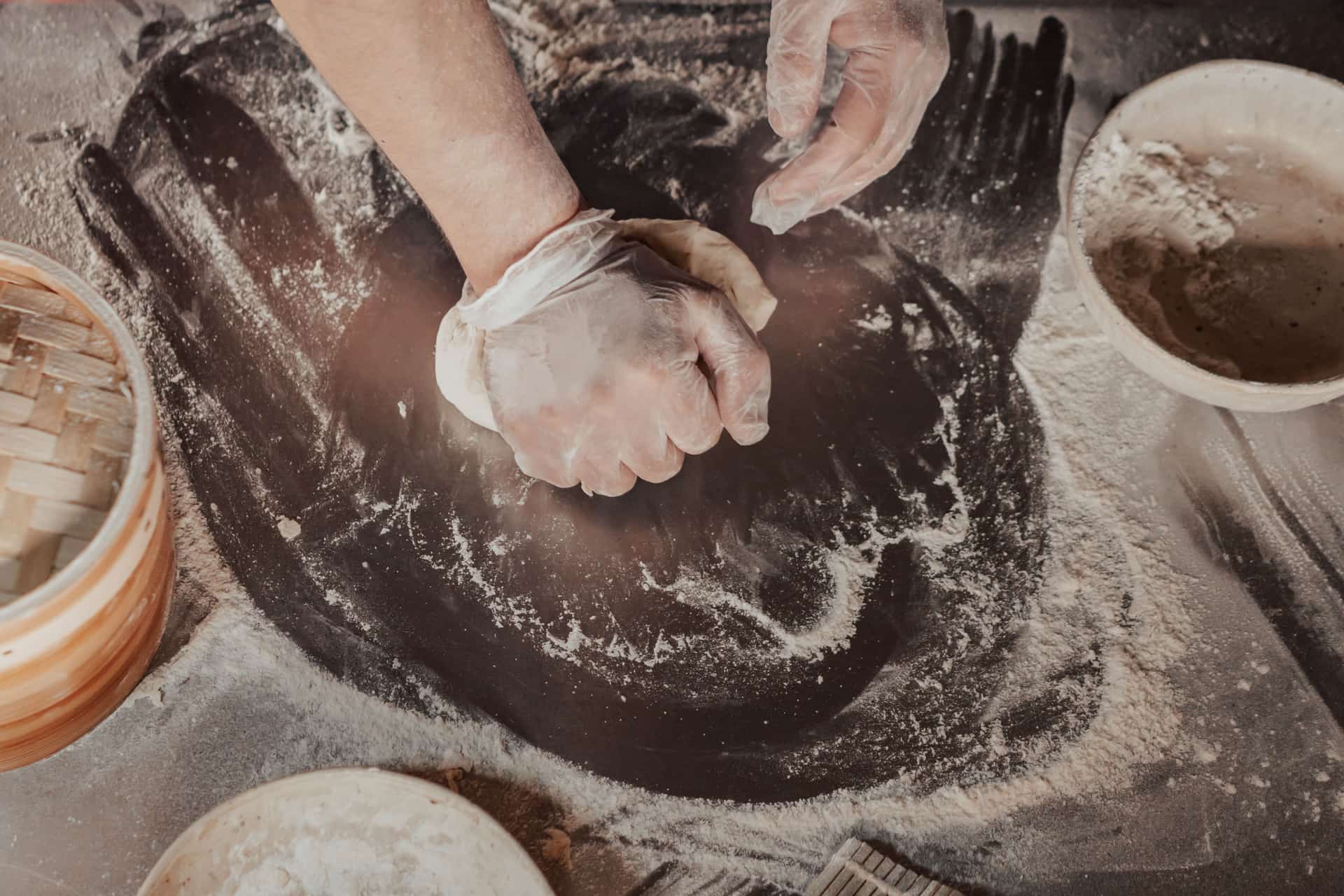
Quick picks
Tap a row for the full write-up · Prices open on Amazon
| # | Product | Best for | Price |
|---|---|---|---|
| 01 | 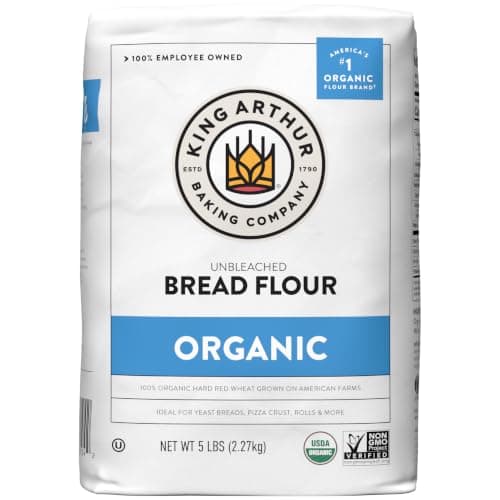 King Arthur Organic Bread Flour, 5 lb King Arthur publishes a protein content of 12.7% for its bread flour, which is the number doing the work: more protein means more gluten, and more gluten is what holds the gas a slow sourdough fermentation produces. | The loaf itself | $7.92 · View on Amazon
|
| 02 | 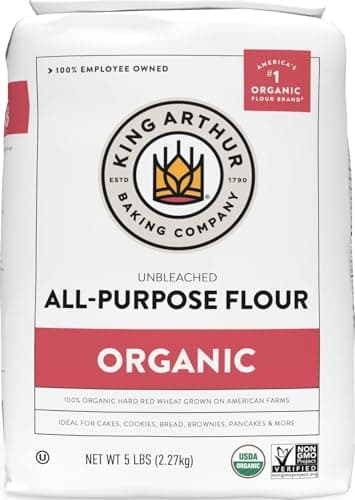 King Arthur Organic All-Purpose Flour, 5 lb At a published 11.7% protein this is stronger than most supermarket all-purpose flour and genuinely bakes sourdough -- a slightly softer crumb and a slightly slacker dough than bread flour, which many people prefer anyway. | One bag for everything | $7.12 · View on Amazon
|
| 03 | 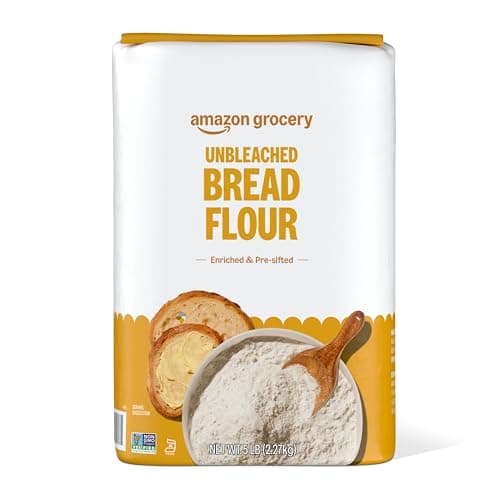 Amazon Grocery Unbleached Bread Flour, 5 lb House-brand bread flour at a fraction of the name-brand price. | The cheapest flour that works | |
| 04 | 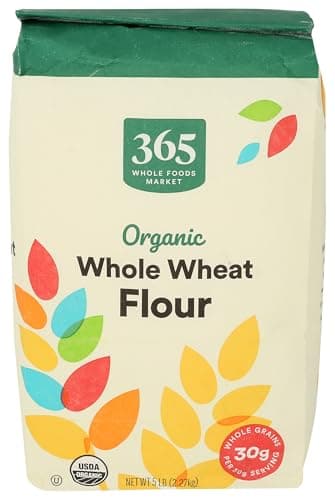 365 Organic 100% Whole Wheat Flour, 80 oz Whole wheat is the flour most first-week starter instructions call for, because the bran carries the organisms a new culture needs. | Starting a starter from scratch | |
| 05 | 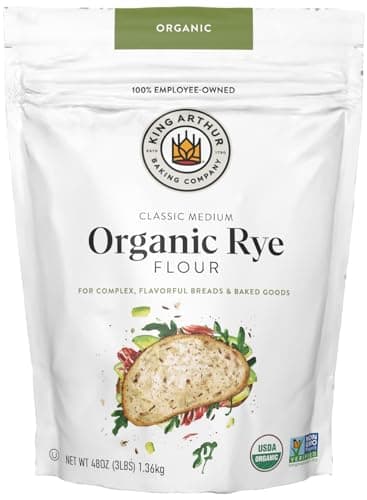 King Arthur Organic Medium Rye Flour, 3 lb Rye is the flour a sluggish starter responds to fastest. | Waking a starter up | |
| 06 | 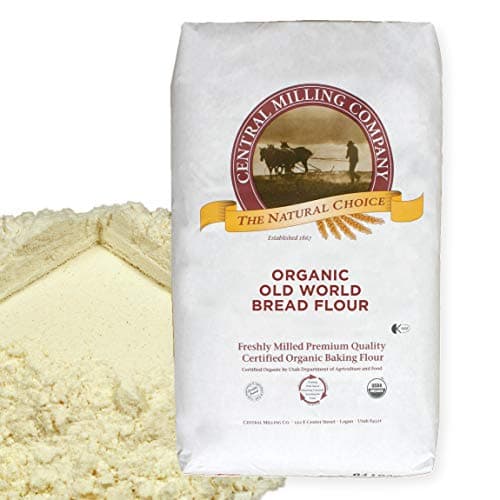 Central Milling Organic Artisan Bread Flour, 25 lb A mill that supplies professional bakeries, sold in the 25 lb sack a professional would buy. | Baking every week, for a year |
#ad · We earn a commission on Amazon purchases. Prices come from Amazon and change.
Sourdough ferments for hours longer than yeasted bread, and all that time the dough has to hold on to the gas the culture is producing. What holds it is gluten, and how much gluten a flour can build is set by its protein content. That is why flour choice shows up in the crumb so visibly.
The picks are ordered for someone baking a weekly loaf at home, which is not the same as ordered by price or by prestige.
How we judged these
- Published protein content. King Arthur publishes 12.7% for its bread flour and 11.7% for its all-purpose. A miller that publishes a number is a miller you can plan around; one that does not is a variable.
- Unbleached. The one non-negotiable, and it costs nothing.
- Batch-to-batch consistency. You are learning to read a dough. If the flour moves under you, every lesson has to be relearned.
- Cost per loaf, honestly. A 900g loaf uses roughly a pound of flour. That makes the difference between a budget bag and a premium one real but small — and it makes a 25 lb sack a genuine saving only if you bake often enough to finish it.
- How it behaves for a beginner. Higher protein means a firmer, more manageable dough. Whole grain means a thirstier, stickier one. The right first flour is the one that is easiest to handle.
Protein, in plain terms
Bread flour sits around 12-13% protein, all-purpose around 10-12%, and cake flour lower still. More protein builds more gluten, which means a dough that holds its shape through a long proof and traps more gas.
The practical consequence for a beginner is handling. A high-protein dough feels firm and behaves predictably. A lower-protein dough at the same hydration feels slack and spreads, which reads as “I did something wrong” when it is really the flour. If your loaves are pancaking, the flour is the second thing to check after proofing time.
Do not buy bleached flour
Bleached flour is chemically treated to whiten it and soften the protein. It is made for cakes and biscuits, not for a loaf that has to hold gas for eighteen hours. Unbleached is available everywhere, costs essentially the same, and is what every flour on this page is.
Whole grain: a percentage, not the whole bag
Whole wheat and rye bring flavor and fermentation activity, and they bring weight. A loaf made entirely of whole wheat is dense, and beginners rarely enjoy the result. The usual approach is a percentage — some whole grain in a mostly white loaf — which gives you the flavor without the brick.
Whole grains also drink more water, so swapping part of a recipe's white flour for whole wheat without adding liquid gives you a stiffer dough than the recipe intended. Change one thing at a time and note what happened.
How much flour a loaf actually uses
A standard beginner recipe is built on roughly 450-550g of flour and produces a loaf around 900g. That is about a pound of flour per loaf, so a 5 lb bag is four or five loaves.
Run that arithmetic before buying in bulk. A 25 lb sack is around twenty-five loaves — excellent value at one loaf a week, and a slow waste at one a month, because flour does go stale and whole grains go off faster than white.
The flour for the jar is a different bag
Everything above is about the dough. Your starter has completely different requirements — it wants bran and minerals, not protein — and feeding it expensive bread flour is money thrown away at every discard. That argument, and the cheap bags that do the job, are in best flour for a sourdough starter.
If you would rather own one bag for both, buy unbleached all-purpose around 11-12% protein and accept a slightly softer loaf. It is a reasonable trade and it is what a lot of good home bakers do.
Every pick, in order
The full write-ups
Pick 01 · The loaf itself
King Arthur Organic Bread Flour, 5 lb
King Arthur Baking
King Arthur publishes a protein content of 12.7% for its bread flour, which is the number doing the work: more protein means more gluten, and more gluten is what holds the gas a slow sourdough fermentation produces. It is the flour to bake with, not the flour to feed with.
Protein
12.7%, per King Arthur
Size
5 lb bag
Milled
Organic, unbleached; Non-GMO Project Verified per the label
Use
The dough, not the starter
Specs compiled from: Manufacturer product listing and product name
What is good
- High protein gives a slack sourdough dough something to hold onto, which is the whole problem with long ferments
- Milled to a tight specification, so one bag behaves like the next -- the variable you most want removed
- Sold nearly everywhere, so your results are reproducible without hunting a specialty mill
What is not
- Costs meaningfully more per pound than supermarket house-brand bread flour
- Wasted on a starter, which does not need the protein and will eat anything
- 5 lb goes quickly at two loaves a week
Pick 02 · One bag for everything
King Arthur Organic All-Purpose Flour, 5 lb
King Arthur Baking
At a published 11.7% protein this is stronger than most supermarket all-purpose flour and genuinely bakes sourdough -- a slightly softer crumb and a slightly slacker dough than bread flour, which many people prefer anyway. If you want to own one flour, own this.
Protein
11.7%, per King Arthur
Size
5 lb bag
Milled
Organic, unbleached
Use
Dough, starter feeding, and everything else in the kitchen
Specs compiled from: Manufacturer product listing and product name
What is good
- High enough in protein to make real sourdough, unlike softer supermarket all-purpose flour
- One bag covers bread, pancakes and the discard you bake with, so nothing goes stale in the cupboard
- The most forgiving choice if you are not yet sure how often you will bake
What is not
- A wetter, slacker dough than bread flour, which is harder to shape in the first month
- Not the strongest option for a very high-hydration loaf
- Still priced above house-brand all-purpose
Pick 03 · The cheapest flour that works
Amazon Grocery Unbleached Bread Flour, 5 lb
Amazon Grocery
House-brand bread flour at a fraction of the name-brand price. It is unbleached bread flour and it makes bread; what you give up is the published protein specification and the batch-to-batch consistency that specification buys you.
Type
Enriched, unbleached bread flour
Size
5 lb bag
Protein
Not published by the seller
Use
Loaf flour on a budget
Specs compiled from: Manufacturer product listing and product name
What is good
- By far the cheapest bread flour on this page
- Unbleached, which is the one thing genuinely worth insisting on
- Perfectly good for learning, when you will attribute every fault to yourself anyway
What is not
- No published protein percentage, so you cannot predict how it compares to a recipe's assumptions
- House-brand flour can change mills between batches, and your dough will notice
- Enriched rather than organic, if that matters to you
#ad Disclosure · Price as of September 14, 2026
Pick 04 · Starting a starter from scratch
365 Organic 100% Whole Wheat Flour, 80 oz
365 by Whole Foods Market
Whole wheat is the flour most first-week starter instructions call for, because the bran carries the organisms a new culture needs. Once the culture is established you can switch it to cheaper white flour; this is the bag that gets you through the first fortnight.
Type
Organic 100% whole wheat
Size
80 oz (5 lb)
Use
Days one to seven of a new starter; a share of a loaf later
Behavior
More active than white flour, and thirstier
Specs compiled from: Manufacturer product listing and product name
What is good
- The standard recommendation for establishing a brand-new starter, and a cheap way to do it
- Doubles as a loaf flour for a percentage of whole grain once the starter is running
- Store-brand pricing on an organic whole grain
What is not
- Absorbs more water than white flour, so a recipe written for white will feel stiff
- Whole grain flours stale faster -- this is a bag to use, not to stockpile
- A wholly whole-wheat loaf is dense, and beginners rarely enjoy it
#ad Disclosure · Price as of September 14, 2026
Pick 05 · Waking a starter up
King Arthur Organic Medium Rye Flour, 3 lb
King Arthur Baking
Rye is the flour a sluggish starter responds to fastest. It carries more of the wild organisms and more of the minerals they feed on, which is why the standard advice for a stalled culture is to feed it rye and keep it warm. A 3 lb bag lasts a long time at 50g a feed.
Type
Medium rye, organic
Size
3 lb bag
Use
Starter feeding, and up to a small share of a loaf
Behavior
Ferments faster and wetter than wheat flour
Specs compiled from: Manufacturer product listing and product name
What is good
- The reliable answer to a starter that has gone quiet, and the cheapest thing to try before panicking
- A small proportion in a loaf adds real flavor without making the dough unmanageable
- 3 lb is the right size -- rye is a supporting flour, not your daily bag
What is not
- Rye has almost no gluten structure, so a high-rye loaf is dense and sticky by nature
- A rye-fed starter is wetter and looser, which makes the rise harder to read at a glance
- Goes rancid faster than white flour; buy small and keep it cool
#ad Disclosure · Price as of September 14, 2026
Pick 06 · Baking every week, for a year
Central Milling Organic Artisan Bread Flour, 25 lb
Central Milling
A mill that supplies professional bakeries, sold in the 25 lb sack a professional would buy. This only makes sense if you bake weekly and have somewhere cool and airtight to keep it; bought for occasional baking it goes stale long before you reach the bottom.
Type
Organic artisan bread flour, Old World line
Size
25 lb sack
Use
Loaf flour, at volume
Storage
Needs an airtight container; the sack is not long-term storage
Specs compiled from: Manufacturer product listing and product name
What is good
- The lowest cost per pound of any bread flour here, by a wide margin
- A mill with a professional reputation, so the specification is consistent bag to bag
- One purchase covers months of weekly baking
What is not
- 25 lb is a serious commitment of both money and cupboard space
- Flour stales; bought by an occasional baker most of this sack is wasted
- You will need an airtight bin, which is another purchase
#ad Disclosure · Price as of September 14, 2026
How we picked
We have not tested any of this equipment. What we did instead: compiled the published specifications from each manufacturer’s own listing, checked them against the task a beginner is actually trying to do, read the care instructions, and named the thing we would skip. Where a pick is a product type rather than a brand, it is because the category is sold mostly unbranded and the type is the real decision.
Frequently asked
Questions
+What is the best flour for sourdough bread?
Unbleached bread flour, at a published protein around 12-13%. The extra protein builds the gluten that holds gas through a long sourdough fermentation, which is what produces an open crumb rather than a flat loaf.
+Can I make sourdough with all-purpose flour?
Yes. Unbleached all-purpose at around 11-12% protein makes genuine sourdough with a slightly softer crumb and a slacker dough. It is the sensible choice if you want one bag for baking and feeding both.
+How much flour does one sourdough loaf use?
Roughly a pound, or 450-550g, for a standard loaf of about 900g. A 5 lb bag is four or five loaves, which is the arithmetic to run before buying a 25 lb sack.
+Is bleached flour bad for sourdough?
It is the wrong tool. Bleaching softens the protein, which is what you are relying on to hold the loaf up through a long proof. Unbleached costs the same and is what you want.
+Should I use whole wheat flour in sourdough?
As a percentage of the loaf rather than the whole thing. Whole grain adds flavor and activity but makes a denser loaf and absorbs more water, so add liquid if you increase it.
Sources
Where the facts on this page came from
Read next