Hub 04 · Fermenting Vegetables
Best fermentation lids for mason jars
Four lid types, and they are genuinely different tools. Ranked by type before brand, because the mechanism is what you are actually choosing.
We earn a commission if you buy through our links, at no extra cost to you. We have not tested this equipment. Here is what we did instead.
Quick picks
Tap a row for the full write-up · Prices open on Amazon
| # | Product | Best for | Price |
|---|---|---|---|
| 01 | 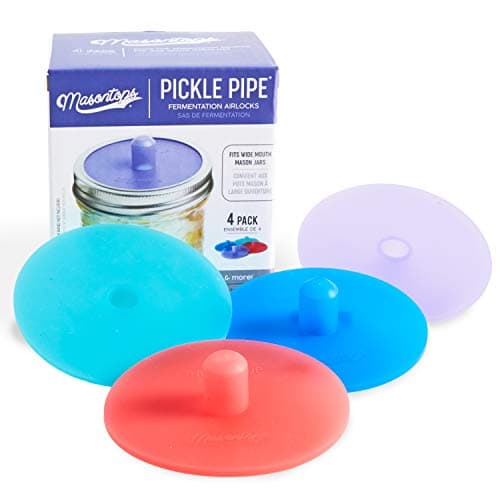 Masontops Pickle Pipe silicone airlock A silicone cap with a molded one-way valve. | Nothing to top up or clean | $23.99 · View on Amazon
|
| 02 | Airlock lid and glass weight set The lid and the weight are two halves of one job, and buying them apart is how people end up with a wide-mouth weight and a regular-mouth lid. | Buying both parts once | |
| 03 | Three-piece water airlock lid The plastic bubbler from home-brewing, fitted through a drilled jar lid. | Watching gas escape | |
| 04 | 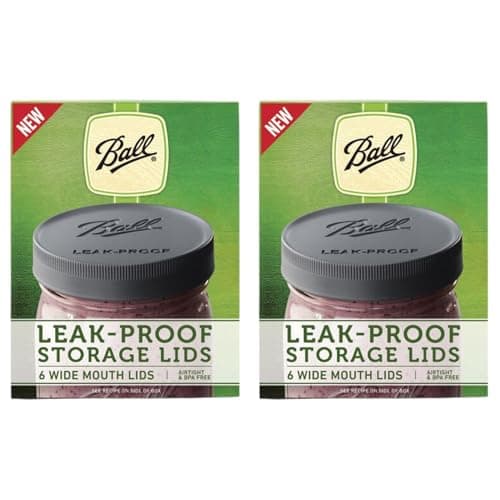 Plastic wide-mouth storage lid Not an airlock, and not for fermenting. | After the ferment is done |
#ad · We earn a commission on Amazon purchases. Prices come from Amazon and change.
A fermentation lid solves one problem with two halves to it. Fermenting vegetables produce carbon dioxide, so a sealed jar builds pressure — but an open jar lets air in, and air at the surface is where every failed ferment fails. The lid has to let gas out without letting air in.
There are four ways to do it, they are genuinely different, and one of them is not a fermentation lid at all but belongs in the same purchase.
Type 1: the silicone waterless valve
A single molded cap with a one-way slit. Gas pushes the slit open from inside; nothing gets in from outside. No water, no assembly, dishwasher safe.
This is the right answer for a first ferment and for most subsequent ones. There is nothing to maintain and nothing to fit incorrectly. Its only real drawback is that it works silently — you get no visual confirmation that anything is happening.
Type 2: the three-piece water airlock
The plastic bubbler from home-brewing, fitted through a drilled lid with a grommet. Gas bubbles out through a small reservoir of water.
Its advantage over a silicone valve is entirely psychological, and that is not a criticism: watching bubbles is genuinely reassuring in week one, when you do not yet know what normal looks like. Its cost is real maintenance — the water evaporates, the seal fails, and it spills if the jar is knocked.
Type 3: the stainless all-in-one
A stainless unit that screws onto the jar and provides both a moat-style airlock and a spring-loaded plate that presses the vegetables down. One part instead of two, no glass weight to fish out, and the spring keeps pressure on as the ferment settles — which a static glass weight cannot.
It is the most expensive per jar and it still has a water moat to top up. Worth it if you ferment constantly in the same one or two jars.
Type 4: the plain storage lid (not for fermenting)
This is the lid the jar wears after fermentation, in the fridge. It is in this roundup because everybody needs one and nobody buys one with their kit.
A two-piece metal canning lid rusts against salt brine. A silicone valve keeps venting, so the jar dries out slowly. A plain plastic storage lid seals properly, does not rust, and costs almost nothing in a multipack.
Never use a solid storage lid during active fermentation. Gas has nowhere to go.
Regular mouth or wide mouth
Buy the mouth size your jars are, and if you are buying jars too, buy wide mouth. Every accessory in the category fits it. Mismatched mouth sizes are the commonest returned purchase in this whole category, which is why a matched lid-and-weight kit is often the better buy.
The free version
Leave the metal band finger-tight and open the jar once a day to let the gas out. That is how this was done before any of these products existed and it works. What you are buying with an airlock is not a better ferment — it is never having to remember.
Every pick, in order
The full write-ups
Pick 01 · Nothing to top up or clean
Masontops Pickle Pipe silicone airlock
Masontops
A silicone cap with a molded one-way valve. No water, no plastic bubbler, no parts. It goes on under a metal band, burps carbon dioxide outward, and washes in a dishwasher. For a first ferment there is nothing better.
Type
Waterless silicone valve cap
Fits
Sold in wide-mouth and regular-mouth versions
Fitting
Sits under a standard metal jar band
Care
Dishwasher safe
Specs compiled from: Manufacturer product listing and product name
What is good
- No water to top up and no bubbler to lose
- One piece, so it cannot be assembled wrong
- Sold in both jar-mouth sizes, so it fits jars you own
What is not
- You still need a separate weight
- Needs a metal band, which is sold with jars but not with the cap
- Silicone eventually takes on color from turmeric or beets
Pick 02 · Buying both parts once
Airlock lid and glass weight set
Type pick -- matched pair
The lid and the weight are two halves of one job, and buying them apart is how people end up with a wide-mouth weight and a regular-mouth lid. A matched set removes the mouth-size mistake entirely.
Contents
Airlock caps plus matching glass weights
Fits
Sold per mouth size -- confirm before ordering
Weights
Glass, usually with a notch or a knob to lift
Quantity
Commonly sets of 4 or 6
Specs compiled from: Product-type description; capacity and material as listed by sellers
What is good
- Mouth sizes are guaranteed to match
- Cheaper per jar than buying the parts separately
- Enough jars in one set to run a few ferments at once
What is not
- Locks you into one mouth size
- Weight designs in bundles are often the knob-less kind, which are hard to lift out
- You may already own half of it
Pick 03 · Watching gas escape
Three-piece water airlock lid
Type pick -- the traditional airlock
The plastic bubbler from home-brewing, fitted through a drilled jar lid. It works, it is cheap, and its one advantage over a silicone valve is that you can see the ferment is alive by watching the water move.
Type
Water-filled three-piece or S-shaped airlock
Fits
Drilled lid with a grommet, in either mouth size
Maintenance
Water level needs checking on a long ferment
Material
Plastic airlock, plastic or metal lid
Specs compiled from: Product-type description; capacity and material as listed by sellers
What is good
- Visible bubbling is genuinely reassuring on a first ferment
- The cheapest airlock in the category
- Parts are commodity items from any brewing supplier
What is not
- The water evaporates and the seal fails if you forget it
- Three parts to disassemble and dry
- Tips over and spills if the jar is moved
Pick 04 · After the ferment is done
Plastic wide-mouth storage lid
Ball, Masontops and equivalents
Not an airlock, and not for fermenting. This is the lid the jar wears in the fridge once fermentation has finished, because a two-piece metal lid rusts against brine and a silicone valve keeps venting.
Type
Solid storage lid, no valve
Fits
Wide-mouth and regular-mouth versions sold
Use
Cold storage after active fermentation
Material
BPA-free plastic, usually with a liner
Specs compiled from: Manufacturer product listing and product name
What is good
- Will not rust against salt brine the way a metal lid does
- Seals properly for a fridge shelf, unlike a vented cap
- Cheap in multipacks, which is how you should buy them
What is not
- Do NOT use this during active fermentation -- gas has nowhere to go
- Plastic stains from brightly colored ferments
- Not airtight enough for long-term canning, and not meant to be
#ad Disclosure · Price as of October 17, 2026
How we picked
We have not tested any of this equipment. What we did instead: compiled the published specifications from each manufacturer’s own listing, checked them against the task a beginner is actually trying to do, read the care instructions, and named the thing we would skip. Where a pick is a product type rather than a brand, it is because the category is sold mostly unbranded and the type is the real decision.
Frequently asked
Questions
+What is the best fermentation lid for mason jars?
A silicone waterless valve cap. There is no water to top up, nothing to assemble incorrectly, and it is dishwasher safe. Its only drawback is that it gives you no visual sign the ferment is active.
+Do I need an airlock lid to ferment vegetables?
No. A metal band left finger-tight and opened once a day releases the gas. An airlock does the same thing without you remembering, and keeps air out at the same time.
+Can I use a normal mason jar lid for fermenting?
Only if you leave it loose and burp the jar daily. A sealed metal lid traps gas, and it will rust against salt brine. Use a plain plastic storage lid once fermentation has finished and the jar goes into the fridge.
+Wide mouth or regular mouth fermentation lids?
Match your jars. If you are buying jars as well, choose wide mouth — every weight and lid in the category is made for it, and you can get a hand inside to pack and clean.
Read next