Hub 01 · Start Here
What a complete first setup actually costs
Three budgets, priced live. The minimum that works, the version most people should buy, and the one you only need if you already know you will keep going.
We earn a commission if you buy through our links, at no extra cost to you. We have not tested this equipment. Here is what we did instead.
Quick picks
Tap a row for the full write-up · Prices open on Amazon
| # | Product | Best for | Price |
|---|---|---|---|
| 01 | 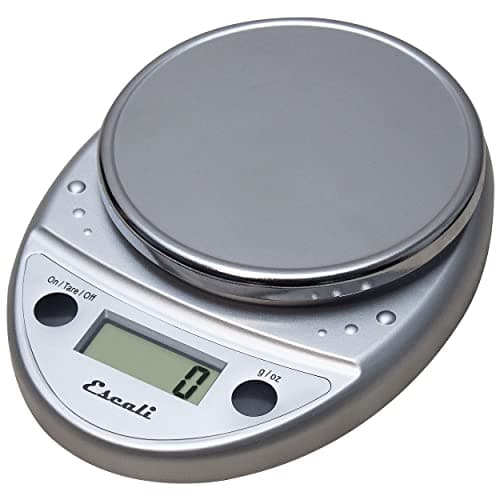 Escali Primo Digital Scale A flat slab that reads in 1g steps up to about 11 lb. | The one thing to buy first | |
| 02 | 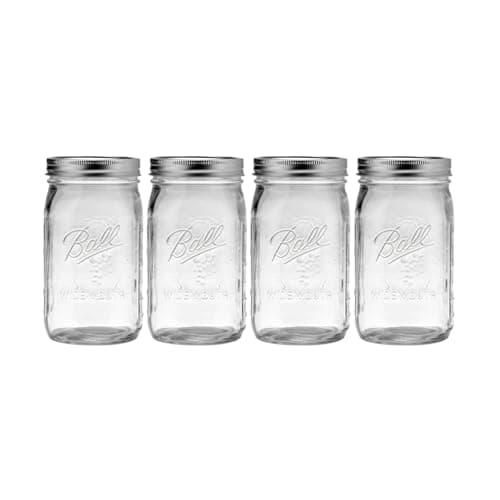 Wide-mouth quart mason jar A quart wide-mouth mason jar costs a few dollars, holds a normal-sized starter or a one-quart batch of vegetables with room to spare, and takes every lid, weight and airlock in the category. | The cheapest jar that works | |
| 03 | 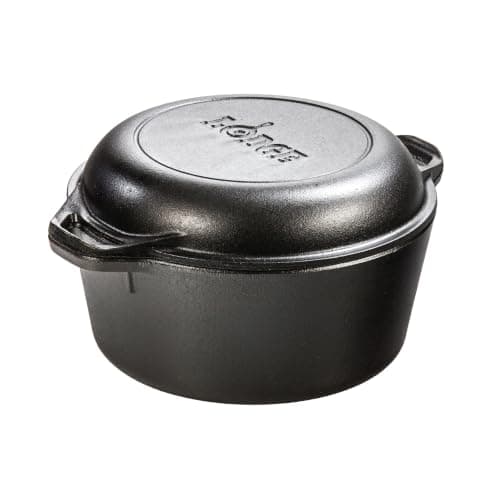 Lodge 5-Quart Double Dutch Oven Bare cast iron, a shallow lid that doubles as a skillet, and the lowest price at which you get a genuinely heavy pot. | A first sourdough loaf | |
| 04 | 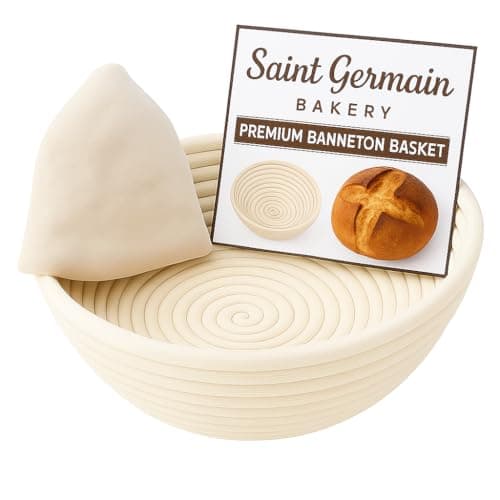 9-inch round rattan banneton with linen liner The default. | A standard 900g boule | |
| 05 | 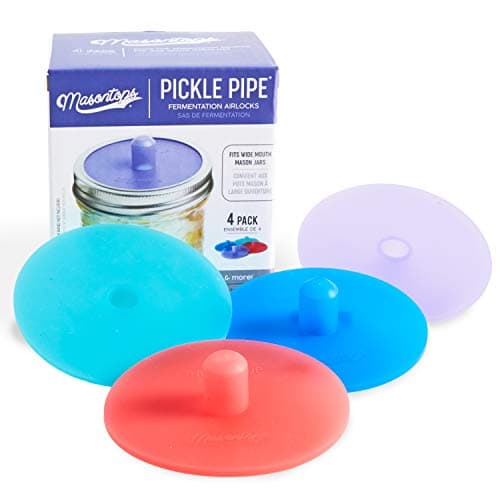 Masontops Pickle Pipe silicone airlock A silicone cap with a molded one-way valve. | Nothing to top up or clean | $23.99 · View on Amazon
|
| 06 | 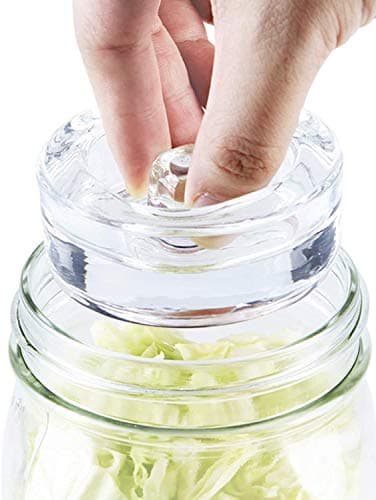 Glass fermentation weight with a lifting knob A glass disc with a raised knob or a notch. | Getting the weight back out | |
| 07 | 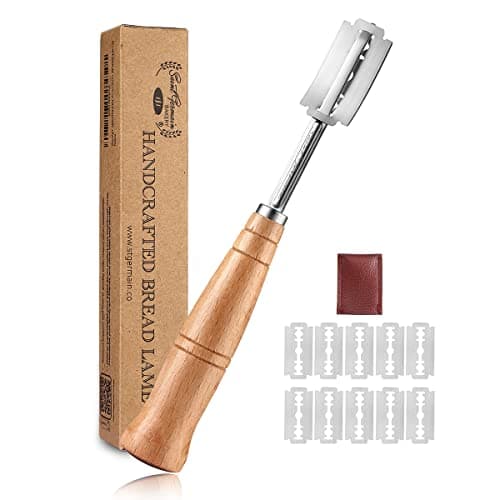 Basic lame with replacement blades A plastic or wood handle and a packet of double-edge blades for a few dollars. | Scoring your first loaves | $7.64 · View on Amazon
|
| 08 | 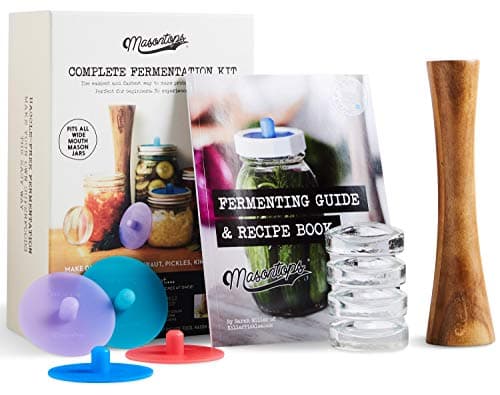 Masontops Complete Mason Jar Fermentation Kit Silicone waterless airlocks, glass weights and a wooden tamper, sized for wide-mouth mason jars you supply yourself. | A first vegetable ferment | |
| 09 | Ohio Stoneware fermentation crock A water-sealed stoneware crock with stone weights, made in the United States and sold in sizes from a few liters upward. | A first real crock |
#ad · We earn a commission on Amazon purchases. Prices come from Amazon and change.
Nobody in this category will tell you what starting costs. We fetched eleven of the sites that rank for these searches and nine of them do not show a single price anywhere. So here is the number, or rather three of them, with every item linked to its current price on Amazon.
The short version: a working sourdough setup needs a scale, a jar, and a heavy pot with a lid. A working vegetable-fermenting setup needs a jar, a lid that lets gas out, and something to hold the vegetables under the brine. Everything else on this page is a convenience, and we will say so each time.
The number nobody else publishes
What a first setup costs, at three budgets
Minimum
$90.84
Everything that changes the outcome, and nothing that does not.
Escali Primo Digital Scale
A 1g scale. The item that matters most.
Wide-mouth quart mason jar
One jar does starter and ferment duty.
Masontops Pickle Pipe silicone airlock
Vents gas, keeps air out, no maintenance.
$23.99 · View on Amazon$26.95· 11% offGlass fermentation weight with a lifting knob
Holds the vegetables under the brine.
Recommended
$160.48
The tier that produces someone still doing this in March.
Escali Primo Digital Scale
Same scale. Do not economize here.
Lodge 5-Quart Double Dutch Oven
The flat lid makes loading a loaf easy.
9-inch round rattan banneton with linen liner
One basket, 9 in round. Not two.
Basic lame with replacement blades
Same razor blade as the expensive ones.
$7.64 · View on Amazon$8.99· 15% offMasontops Complete Mason Jar Fermentation Kit
Matched lids and weights for jars you own.
No compromise
Live total pending
Better ergonomics and more capacity. Not better bread.
OXO Good Grips Stainless Steel Food Scale with Pull-Out Display
Pull-out display, readable under a bowl.
Challenger Bread Pan
Load onto a flat base, not into a well.
10-inch oval rattan banneton
The second shape, once you want it.
Wire Monkey UFO lame
Rigid blade holder. A nicer object.
Ohio Stoneware fermentation crock
Water-sealed, several liters at a time.
Prices as of October 17, 2026. They come from Amazon and change daily. #ad
Tier 1: the minimum that actually works
This is not a compromise tier. It is the list of objects that change the outcome. A digital scale, a wide-mouth quart jar, and a heavy lidded pot will get you a real sourdough loaf; add a silicone airlock cap and a glass weight and the same jar collection ferments cabbage.
A scale first. Sourdough is a ratio, and volume measurements do not hold a ratio: a cup of flour scooped from the bag and a cup spooned in differ by a large enough margin to change the dough. A 1g kitchen scale is the cheapest item on this page and the one that most changes your results.
A jar you can see through. A starter tells you what it is doing by rising and falling. A wide-mouth quart mason jar with a rubber band around it at the post-feed level turns that into a fact you can read rather than a feeling. We cover the alternatives in best sourdough starter jars, but the honest answer is that the cheap jar is fine.
A heavy pot with a lid. The pot is not doing anything magical. It traps the steam the loaf gives off so the crust stays soft long enough for the loaf to expand, then you take the lid off and it browns. Any oven-safe pot with a tight lid does that, which is the whole argument in do you need a Dutch oven for sourdough.
Tier 2: what most people should actually buy
The middle tier adds the things that make the process pleasant rather than possible. A proper banneton instead of a bowl and a tea towel. A lame instead of a kitchen knife. A fermentation kit instead of a jar of cabbage under a folded leaf.
If you are buying for someone else, this is the tier to buy. It is the difference between a setup that works and a setup that someone keeps using in March, which is the actual failure mode of a January hobby.
The one genuine judgment call in this tier is the pot. A bare cast-iron double Dutch oven costs less than an enameled one and its flat lid makes loading easier, at the cost of learning to season it. We rank all of them in best Dutch ovens for sourdough.
Tier 3: only if you already know you will keep going
The top tier is a purpose-built bread pan and a stoneware fermentation crock. Neither makes better bread or better sauerkraut than the tier below it. What they buy is ergonomics and capacity: a pan you load without reaching into a hot well, and a crock that ferments five liters at once with a water seal you never have to think about.
Do not buy this tier in January. Buy it in April, if you are still doing this.
Sourdough or vegetables first?
If you can only buy one setup, buy the vegetable one. It costs less, the first result arrives in about a week rather than a fortnight, and a jar of sauerkraut cannot fail in the demoralizing way a flat loaf can. We make the full case in sourdough or vegetables first.
If you specifically want bread, start with bread. The advice above is about which is a gentler first project, not about which is more worth doing.
Every pick, in order
The full write-ups
Pick 01 · The one thing to buy first
Escali Primo Digital Scale
Escali
A flat slab that reads in 1g steps up to about 11 lb. It has one button you care about -- tare -- and a big enough platform to sit a mixing bowl on. That is the whole specification, and it is enough.
Increment
1 g
Capacity
About 11 lb / 5 kg, per the listing
Platform
Flat, no raised lip; takes a mixing bowl
Units
Grams and pounds/ounces
Specs compiled from: Manufacturer product listing and product name
What is good
- 1g steps are the resolution sourdough actually needs
- Flat platform means a bowl does not overhang the display
- Cheap enough that it is not a decision
What is not
- 1g is too coarse for weighing 2g of yeast or salt precisely
- Auto-off is aggressive if you are slow between additions
- Not waterproof; a flour-and-water splash gets wiped, not rinsed
#ad Disclosure · Price as of October 17, 2026
Pick 02 · The cheapest jar that works
Wide-mouth quart mason jar
Ball, Kerr and equivalents
A quart wide-mouth mason jar costs a few dollars, holds a normal-sized starter or a one-quart batch of vegetables with room to spare, and takes every lid, weight and airlock in the category. There is no functional reason to spend more.
Material
Glass
Capacity
1 quart / 32 oz
Mouth
Wide mouth (about 86 mm outer thread)
Lid
Two-piece metal lid; use it loose, never sealed
Specs compiled from: Manufacturer product listing and product name
What is good
- The cheapest jar in the category, sold everywhere
- Wide mouth fits every accessory made for fermentation
- Buy four and you can keep a starter, a discard jar and a ferment going at once
What is not
- A slight shoulder taper makes the very top of the rise harder to read
- The metal lid rusts if you seal it and forget it
- Plain -- this is a tool, not an object
#ad Disclosure · Price as of October 17, 2026
Pick 03 · A first sourdough loaf
Lodge 5-Quart Double Dutch Oven
Lodge
Bare cast iron, a shallow lid that doubles as a skillet, and the lowest price at which you get a genuinely heavy pot. The lid is the reason to pick it: it lifts off flat, so you can load a boule without reaching down into a deep well.
Material
Bare (seasoned) cast iron
Capacity
5 quarts, per the product name
Lid
Shallow skillet-style lid, not a domed lid
Care
Season and hand-wash; not dishwasher safe
Specs compiled from: Manufacturer product listing and product name
What is good
- The flat, shallow lid makes loading a shaped loaf far less awkward than a deep pot with a domed lid
- Bare cast iron takes bread-oven temperatures without the chipping risk enamel carries
- Doubles as a skillet, so it earns its shelf space when you are not baking
What is not
- Needs seasoning and hand-washing -- it is a maintained object, not an appliance
- 5 quarts is comfortable for a 700-900g loaf and tight above that
- Bare cast iron will stain and darken; that is normal and not a defect
#ad Disclosure · Price as of October 17, 2026
Pick 04 · A standard 900g boule
9-inch round rattan banneton with linen liner
Type pick -- sold by many sellers
The default. Nine inches across takes a loaf made from roughly 500g of flour, and the cane spiral leaves the ring pattern most people picture when they picture sourdough. Buy it with a liner and you own both finishes.
Material
Coiled rattan cane
Size
9 in diameter, listed for around 900g of dough
Shape
Round (boule)
Liner
Removable linen or cotton liner, usually included
Specs compiled from: Product-type description; capacity and material as listed by sellers
What is good
- The size most beginner recipes are written around
- Cane wicks moisture off the skin of the dough, which is the whole point of a basket
- The liner turns the same basket into a smooth-sided proofing bowl
What is not
- Rattan must be dried thoroughly after every use or it will grow mold
- Cheap examples shed cane splinters into the flour on the first few uses
- A 9-inch basket is genuinely too big for a half-batch loaf
#ad Disclosure · Price as of October 17, 2026
Pick 05 · Nothing to top up or clean
Masontops Pickle Pipe silicone airlock
Masontops
A silicone cap with a molded one-way valve. No water, no plastic bubbler, no parts. It goes on under a metal band, burps carbon dioxide outward, and washes in a dishwasher. For a first ferment there is nothing better.
Type
Waterless silicone valve cap
Fits
Sold in wide-mouth and regular-mouth versions
Fitting
Sits under a standard metal jar band
Care
Dishwasher safe
Specs compiled from: Manufacturer product listing and product name
What is good
- No water to top up and no bubbler to lose
- One piece, so it cannot be assembled wrong
- Sold in both jar-mouth sizes, so it fits jars you own
What is not
- You still need a separate weight
- Needs a metal band, which is sold with jars but not with the cap
- Silicone eventually takes on color from turmeric or beets
Pick 06 · Getting the weight back out
Glass fermentation weight with a lifting knob
Type pick
A glass disc with a raised knob or a notch. The knob is not decoration -- a flat glass disc at the bottom of a jar of brined cabbage is genuinely difficult to retrieve without tipping the jar over the sink.
Material
Glass
Fits
Sized per jar mouth -- wide and regular both sold
Feature
Raised knob or finger notch
Care
Dishwasher safe
Specs compiled from: Product-type description; capacity and material as listed by sellers
What is good
- The knob solves the one real problem with glass weights
- Glass is inert, so nothing leaches into an acidic brine
- Cheap in multipacks
What is not
- The knob takes up headspace you might want for brine
- Glass chips, and a chipped edge in food is not acceptable
- Must match the jar mouth exactly, or it is useless
#ad Disclosure · Price as of October 17, 2026
Pick 07 · Scoring your first loaves
Basic lame with replacement blades
Type pick -- sold by many sellers
A plastic or wood handle and a packet of double-edge blades for a few dollars. It scores bread. Buy it, use it for a year, and only replace it if the handle flexes when you cut.
Blade
Standard double-edge razor blades
Handle
Plastic or basic wood
Included
Usually 5-10 spare blades
Storage
Often a small case or blade cover
Specs compiled from: Product-type description; capacity and material as listed by sellers
What is good
- Costs less than the flour for one bake
- Same commodity blade as the expensive ones
- Spare blades included, so it works out of the box
What is not
- A flexing handle makes a shallow, wandering cut
- Blade-change mechanisms at this price are fiddly
- No blade guard on some models -- respect that
Pick 08 · A first vegetable ferment
Masontops Complete Mason Jar Fermentation Kit
Masontops
Silicone waterless airlocks, glass weights and a wooden tamper, sized for wide-mouth mason jars you supply yourself. It is the kit that turns jars you already own into fermenting vessels, which is the cheapest good answer.
Fits
Wide-mouth mason jars (jars not usually included)
Airlock
Silicone waterless valve -- no water to top up
Weights
Glass weights sized for wide-mouth jars
Included tool
Wooden tamper for packing
Specs compiled from: Manufacturer product listing and product name
What is good
- Waterless valves mean nothing to refill and nothing to spill
- Uses jars most kitchens already have
- Each part is sold separately, so a lost weight is not a new kit
What is not
- Jars usually not included -- read the listing before ordering
- Wide-mouth only; regular-mouth jars need different parts
- The tamper is the least necessary item in the box
#ad Disclosure · Price as of October 17, 2026
Pick 09 · A first real crock
Ohio Stoneware fermentation crock
Ohio Stoneware
A water-sealed stoneware crock with stone weights, made in the United States and sold in sizes from a few liters upward. The water channel is the whole mechanism: fill it, and gas leaves while nothing gets in.
Material
Glazed stoneware
Seal
Water channel around the rim; lid sits in the water
Weights
Stone weights, usually two half-moons
Sizes
Sold in a range; check the listed capacity
Specs compiled from: Manufacturer product listing and product name
What is good
- The water seal handles the entire airlock problem with no valve to fail
- Stoneware holds temperature steadily, which a glass jar does not
- Stone weights come sized to the crock, unlike generic glass discs
What is not
- The water channel must be topped up or the seal breaks
- Opaque -- you cannot see what is happening inside
- Heavy, expensive and awkward to store between batches
How we picked
We have not tested any of this equipment. What we did instead: compiled the published specifications from each manufacturer’s own listing, checked them against the task a beginner is actually trying to do, read the care instructions, and named the thing we would skip. Where a pick is a product type rather than a brand, it is because the category is sold mostly unbranded and the type is the real decision.
Frequently asked
Questions
+What is the cheapest way to start making sourdough?
A 1g kitchen scale, a wide-mouth quart mason jar, flour, and any oven-safe pot with a tight-fitting lid that you already own. If you grow your own starter from flour and water rather than buying a dried culture, the scale and the jar are the only things you have to buy.
+Do I need to buy a sourdough starter?
No. A starter grows from flour and water in about two weeks. A bought culture buys you a shorter, better-documented first week, not a better loaf. We compare both routes in buying a starter versus growing one.
+What is the single most useful thing to buy first?
A digital scale that reads in 1g steps. It is the cheapest item in this whole category and the one that most changes whether your dough behaves the same way twice.
+Can I ferment vegetables in a jar I already have?
Yes, if it is glass, wide-mouthed and undamaged. You need a way to let carbon dioxide out and a way to keep the vegetables under the brine — a silicone airlock cap and a glass weight, or a folded cabbage leaf and a loosened lid you burp daily.
+Why do the prices on this page change?
They come from a live feed that refreshes daily, so what you see is what the retailer is charging now rather than what we typed months ago. Where we have no current price, the button reads “check price” rather than showing a stale number.
Read next