Hub 03 · Sourdough Baking Gear
Best kitchen scales for sourdough
The cheapest genuinely necessary object in this hobby, and the one most beginners skip. You need 1g steps and a flat platform. That is nearly the whole specification.
We earn a commission if you buy through our links, at no extra cost to you. We have not tested this equipment. Here is what we did instead.
Quick picks
Tap a row for the full write-up · Prices open on Amazon
| # | Product | Best for | Price |
|---|---|---|---|
| 01 | 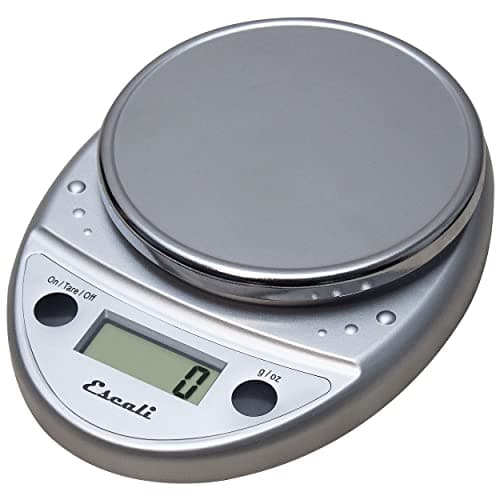 Escali Primo Digital Scale A flat slab that reads in 1g steps up to about 11 lb. | The one thing to buy first | |
| 02 | OXO Good Grips Stainless Steel Food Scale with Pull-Out Display It solves one specific annoyance: a wide bowl covering the readout. | Weighing under a wide bowl | |
| 03 | 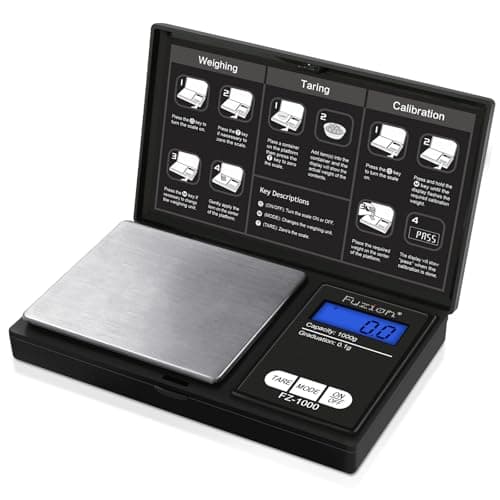 0.1g pocket scale A second, small scale that reads to a tenth of a gram. | Weighing salt and yeast |
#ad · We earn a commission on Amazon purchases. Prices come from Amazon and change.
Sourdough is a set of ratios — flour to water, starter to flour, salt to flour. A ratio needs a weight, and volume measures do not give you one. A cup of flour scooped straight from the bag and a cup spooned in gently differ by enough to visibly change a dough.
This is why a scale is the first thing to buy and why it is genuinely frustrating that almost no starter kit includes one.
The specification, in full
- 1g increments. Not 5g, not “grams and ounces” with no stated resolution. 1g.
- A tare button that is easy to press. You will press it a dozen times per bake, often with flour on your hands.
- A flat platform. A raised lip or a bowl-shaped top means you cannot sit your own mixing bowl on it.
- At least 5kg capacity. A bowl plus a batch of dough adds up faster than you would think.
That is the entire list. Bluetooth, app connectivity, recipe modes and built-in timers are all things that can break on a device whose job is to display a number.
Why a second, smaller scale
A 1g kitchen scale cannot honestly weigh 2g of instant yeast or 4g of salt for a small batch — at that mass the rounding error is a large fraction of the amount. A cheap 0.1g pocket scale solves it for the price of a bag of flour.
You do not need this on day one. You need it the first time a recipe calls for a couple of grams of something and you find yourself squinting.
Tare, and how to use it properly
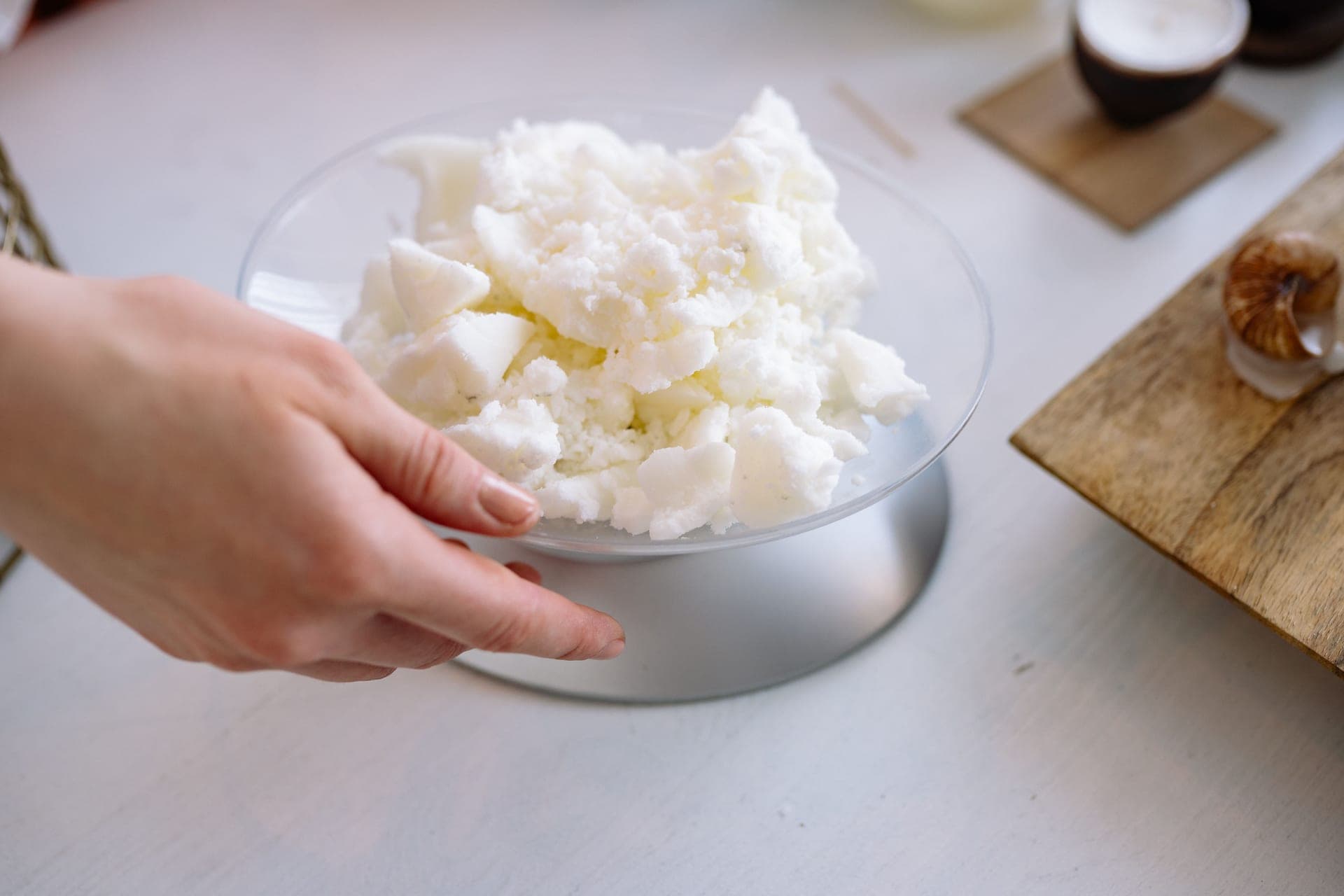
Put the empty bowl on, press tare, add flour. Press tare again, add water. Press tare again, add starter. You never wash a second measuring vessel and you never carry a number in your head.
The one failure mode: many scales power off after a couple of minutes of no change, which loses your tare mid-recipe. Check the auto-off behavior before you buy if you are a slow, deliberate baker.
Where it sits in the shopping order
First. Before the pot, before the basket, before the culture. If your budget for this hobby is one item, it is this one — the reasoning is laid out alongside everything else in what a complete first setup costs.
The second instrument, once the scale is bought, measures temperature rather than mass: dough temperature at the mix sets how long bulk fermentation will actually take, and internal temperature tells you the crumb is set. Our thermometer picks cover both readings.
Every pick, in order
The full write-ups
Pick 01 · The one thing to buy first
Escali Primo Digital Scale
Escali
A flat slab that reads in 1g steps up to about 11 lb. It has one button you care about -- tare -- and a big enough platform to sit a mixing bowl on. That is the whole specification, and it is enough.
Increment
1 g
Capacity
About 11 lb / 5 kg, per the listing
Platform
Flat, no raised lip; takes a mixing bowl
Units
Grams and pounds/ounces
Specs compiled from: Manufacturer product listing and product name
What is good
- 1g steps are the resolution sourdough actually needs
- Flat platform means a bowl does not overhang the display
- Cheap enough that it is not a decision
What is not
- 1g is too coarse for weighing 2g of yeast or salt precisely
- Auto-off is aggressive if you are slow between additions
- Not waterproof; a flour-and-water splash gets wiped, not rinsed
#ad Disclosure · Price as of October 17, 2026
Pick 02 · Weighing under a wide bowl
OXO Good Grips Stainless Steel Food Scale with Pull-Out Display
OXO
It solves one specific annoyance: a wide bowl covering the readout. The display slides forward on a tray so you can read it with a mixing bowl on top. If you have ever squinted around a bowl, that is worth the premium.
Increment
1 g
Capacity
About 11 lb / 5 kg, per the listing
Display
Pull-out display on a slide-out tray
Surface
Removable stainless platform
Specs compiled from: Manufacturer product listing and product name
What is good
- The pull-out display genuinely fixes the wide-bowl problem
- Stainless top lifts off to be washed
- Zero/tare button is large and easy to hit with a floury hand
What is not
- Costs noticeably more than a basic slab scale
- Still 1g resolution -- the premium buys ergonomics, not precision
- The slide-out tray is another moving part to gum up with flour
Pick 03 · Weighing salt and yeast
0.1g pocket scale
Type pick -- sold by many sellers
A second, small scale that reads to a tenth of a gram. You do not need it for flour and water. You need it the moment a recipe calls for 2g of instant yeast, which a 1g kitchen scale cannot resolve honestly.
Increment
0.1 g
Capacity
Typically 200-500 g
Platform
Small -- a spoon or a lid, not a bowl
Power
Usually AAA or coin cells
Specs compiled from: Product-type description; capacity and material as listed by sellers
What is good
- The only way to weigh small salt and yeast amounts accurately
- Costs about the same as a bag of good flour
- Fits in a drawer alongside the main scale
What is not
- Far too small a capacity to weigh a batch of dough
- Cheap load cells drift; re-zero every session
- A second object to keep batteries for
#ad Disclosure · Price as of October 17, 2026
How we picked
We have not tested any of this equipment. What we did instead: compiled the published specifications from each manufacturer’s own listing, checked them against the task a beginner is actually trying to do, read the care instructions, and named the thing we would skip. Where a pick is a product type rather than a brand, it is because the category is sold mostly unbranded and the type is the real decision.
Frequently asked
Questions
+Do I need a scale for sourdough?
Effectively yes. Sourdough is a set of ratios, and volume measures do not hold a ratio — a scooped cup of flour and a spooned cup differ enough to change the dough. It is the cheapest item in the hobby.
+What resolution kitchen scale do I need for bread?
1g steps, with at least 5kg capacity. For weighing small amounts of salt or yeast accurately, add a separate 0.1g pocket scale — a 1g scale cannot resolve 2g honestly.
+Is an expensive kitchen scale worth it?
Only for ergonomics. A pull-out display that stays readable under a wide bowl is a genuine improvement. App connectivity and recipe modes are not — the job is to show a number in grams.
Read next