Hub 02 · Sourdough Starter
Best sourdough starter jars
A starter jar has to do three things: be clear, be straight-sided, and not seal. Everything past that is preference, and one of the best options costs a few dollars.
We earn a commission if you buy through our links, at no extra cost to you. We have not tested this equipment. Here is what we did instead.
Quick picks
Tap a row for the full write-up · Prices open on Amazon
| # | Product | Best for | Price |
|---|---|---|---|
| 01 | 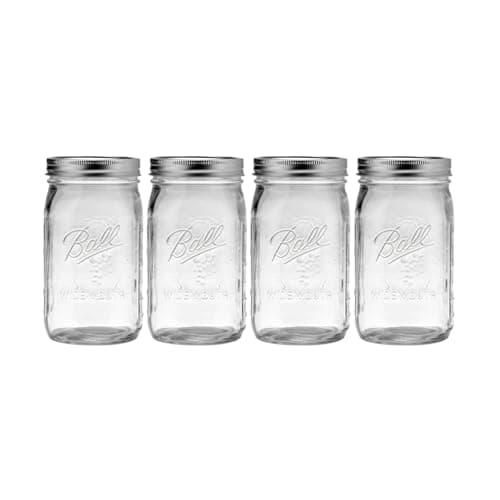 Wide-mouth quart mason jar A quart wide-mouth mason jar costs a few dollars, holds a normal-sized starter or a one-quart batch of vegetables with room to spare, and takes every lid, weight and airlock in the category. | The cheapest jar that works | |
| 02 | 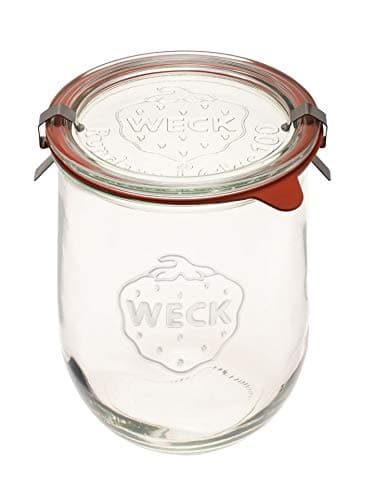 Weck tulip jar, roughly 1 liter Straight-sided, wide-mouthed and completely clear, which is the entire specification a starter jar needs. | Watching the rise | |
| 03 | Sourdough starter jar with rise band and marker A straight-sided jar sold with a silicone band and often a dated marker, so you can mark the level after feeding and see the peak instead of estimating it. | Reading the rise without guessing | |
| 04 | 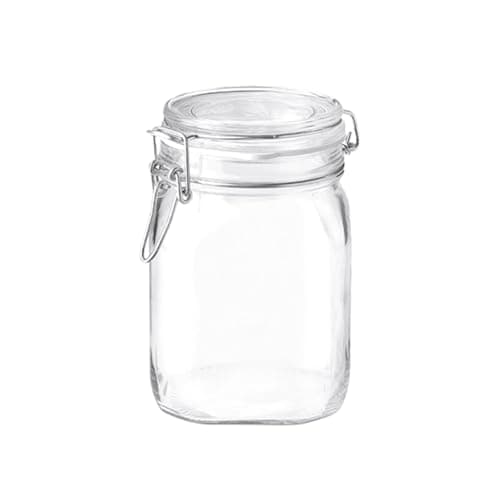 Bormioli Rocco Fido clamp-top jar The clamp lid with a rubber gasket vents gas outward under pressure and reseals, which makes it a legitimate one-jar answer to both a starter and a small vegetable ferment. | Fermenting as well as starter | $16.96 · View on Amazon
|
| 05 | 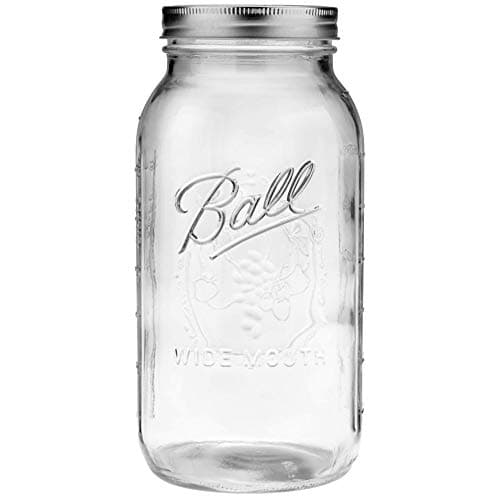 Half-gallon wide-mouth jar Only buy this if you bake often enough to keep a large starter. | A starter you bake from weekly |
#ad · We earn a commission on Amazon purchases. Prices come from Amazon and change.
The best sourdough starter jar for a beginner is a wide-mouth quart mason jar. It costs a few dollars, it is sold everywhere, and it does everything a jar in this category has to do. We have put it first deliberately, ahead of jars that cost several times as much, because that is the honest ranking.
The more expensive jars here are better objects. None of them produces a better starter.
The three specifications that decide it
- Clear glass. A starter communicates by rising, falling and changing texture. An opaque crock hides all three, which is a real problem in your first fortnight even though crocks look better on a worktop.
- Straight sides. You judge a rise by comparing the level to a mark. A shouldered or tapered jar distorts that comparison at exactly the point you care about — the top.
- A lid that does not seal. A starter produces gas. A sealed jar builds pressure. Every workable answer here either rests a lid on, vents through a gasket, or asks you to leave a band finger-tight.
Size is the fourth consideration and it goes wrong in one direction: too big. A quart is right. Half a gallon gives a modest starter far too much cold glass to warm up and too much surface to dry against.
Wide mouth or regular mouth?
Wide mouth, every time. You will be scraping a stiff paste off the sides with a spatula and, later, getting a hand in to clean it. Wide-mouth is also the size every fermentation lid and weight is made for, which matters if the same jars later do duty on the vegetable side of the kitchen.
The rubber band is the actual feature
A silicone rise band, a rubber band, or a mark from a grease pencil at the post-feed level converts a vague impression into a measurement. It is the single most useful habit of the first two weeks, and it is why the purpose-sold starter jars — which bundle a band — are worth a look even though a rubber band from the kitchen drawer does the same job.
Without it, “has it risen?” is a guess, and that guess is behind a large share of the questions in why your starter is not rising.
Do not seal the lid
This is the one genuine safety point in this roundup. A screw-band metal lid tightened down on an active starter traps carbon dioxide. Leave the band finger-tight, rest the lid on unscrewed, or use a jar whose gasket vents outward under pressure. Every jar above works this way when used correctly; none of them works if you seal it and walk away.
Every pick, in order
The full write-ups
Pick 01 · The cheapest jar that works
Wide-mouth quart mason jar
Ball, Kerr and equivalents
A quart wide-mouth mason jar costs a few dollars, holds a normal-sized starter or a one-quart batch of vegetables with room to spare, and takes every lid, weight and airlock in the category. There is no functional reason to spend more.
Material
Glass
Capacity
1 quart / 32 oz
Mouth
Wide mouth (about 86 mm outer thread)
Lid
Two-piece metal lid; use it loose, never sealed
Specs compiled from: Manufacturer product listing and product name
What is good
- The cheapest jar in the category, sold everywhere
- Wide mouth fits every accessory made for fermentation
- Buy four and you can keep a starter, a discard jar and a ferment going at once
What is not
- A slight shoulder taper makes the very top of the rise harder to read
- The metal lid rusts if you seal it and forget it
- Plain -- this is a tool, not an object
#ad Disclosure · Price as of October 17, 2026
Pick 02 · Watching the rise
Weck tulip jar, roughly 1 liter
Weck
Straight-sided, wide-mouthed and completely clear, which is the entire specification a starter jar needs. The glass lid sits on rather than sealing, so gas escapes without you having to remember to loosen anything.
Material
Glass body, glass lid
Capacity
About 1 liter / 34 oz in the common tulip size
Mouth
Wide -- a spatula and a hand both fit
Seal
Rubber ring and clips, optional; lid rests otherwise
Specs compiled from: Manufacturer product listing and product name
What is good
- Straight sides make the rise readable against a rubber band
- Lid resting rather than sealing means no pressure build-up to manage
- Glass throughout, so nothing stains or holds smell
What is not
- The clips and rubber ring are extra parts to lose
- Glass lids chip if you are careless
- Costs more than a mason jar that does the same job
#ad Disclosure · Price as of October 17, 2026
Pick 03 · Reading the rise without guessing
Sourdough starter jar with rise band and marker
Type pick -- beginner starter jar
A straight-sided jar sold with a silicone band and often a dated marker, so you can mark the level after feeding and see the peak instead of estimating it. That single habit fixes most first-fortnight confusion.
Material
Glass, straight-sided
Capacity
Commonly around 1 liter / 34 oz
Included
Silicone rise band; often a spatula and a cloth cover
Lid
Loose-fitting or vented
Specs compiled from: Product-type description; capacity and material as listed by sellers
What is good
- The band turns 'has it risen?' into a fact rather than a feeling
- Straight sides throughout, unlike a shouldered mason jar
- The bundled narrow spatula genuinely helps scrape a stiff starter
What is not
- You can achieve the same thing with a mason jar and a rubber band
- Bundle contents vary widely between sellers
- Some kits pad the box with a cloth cover you will never use
Pick 04 · Fermenting as well as starter
Bormioli Rocco Fido clamp-top jar
Bormioli Rocco
The clamp lid with a rubber gasket vents gas outward under pressure and reseals, which makes it a legitimate one-jar answer to both a starter and a small vegetable ferment. Leave the gasket out entirely for a starter.
Material
Glass, steel clamp, rubber gasket
Capacity
33.75 oz (1 liter); the range runs from about 0.5 to 3 liters
Seal
Gasketed clamp lid that vents under pressure
Mouth
Wide
Specs compiled from: Manufacturer product listing and product name
What is good
- One jar that genuinely does starter duty and small-batch ferment duty
- The gasket vents rather than holding pressure, which is the safe behavior
- Available in a size range, so a small starter is not swimming in a big jar
What is not
- Gaskets perish and need replacing eventually
- The clamp is one more thing to knock
- Costs several times a plain mason jar
Pick 05 · A starter you bake from weekly
Half-gallon wide-mouth jar
Ball and equivalents
Only buy this if you bake often enough to keep a large starter. Two liters of glass gives a small starter far too much surface to dry against, and it is a nuisance to store.
Material
Glass
Capacity
Half gallon / 64 oz
Mouth
Wide mouth
Lid
Standard wide-mouth two-piece or plastic storage lid
Specs compiled from: Manufacturer product listing and product name
What is good
- Enough headroom that an active starter cannot climb out
- Doubles as a bulk-ferment container for a single loaf's dough
- Same commodity lid fit as every other wide-mouth jar
What is not
- Far too large for a beginner's starter, which will look lost in it
- Awkward on a fridge shelf
- More glass to warm up, which slows the starter in a cold kitchen
#ad Disclosure · Price as of October 17, 2026
How we picked
We have not tested any of this equipment. What we did instead: compiled the published specifications from each manufacturer’s own listing, checked them against the task a beginner is actually trying to do, read the care instructions, and named the thing we would skip. Where a pick is a product type rather than a brand, it is because the category is sold mostly unbranded and the type is the real decision.
Frequently asked
Questions
+What size sourdough starter jar do I need?
One quart, or about a liter. That holds a normal working starter with enough headroom to double without climbing out. Half-gallon jars are too large for a beginner’s starter and slow it down in a cold kitchen.
+Can I use a mason jar for a sourdough starter?
Yes, and a wide-mouth quart mason jar is our top pick. Use the metal band finger-tight or rest the lid on top — never sealed, because an active starter produces gas that needs somewhere to go.
+Should a starter jar have a lid?
It should have a cover that keeps dust and insects out without sealing. A resting glass lid, a finger-tight band, a vented plastic lid or a cloth under a band all work. A tightly sealed lid does not.
+Do I need a special sourdough starter jar?
No. The purpose-sold jars bundle a rise band and a spatula, which are genuinely useful, but a mason jar and a rubber band do the same job for much less.
Read next