Hub 04 · Fermenting Vegetables
Best jars for fermenting vegetables
The jar is the cheapest part of a ferment and the one that quietly decides everything else, because the mouth size dictates which lids and weights will ever fit it.
We earn a commission if you buy through our links, at no extra cost to you. We have not tested this equipment. Here is what we did instead.
Quick picks
Tap a row for the full write-up · Prices open on Amazon
| # | Product | Best for | Price |
|---|---|---|---|
| 01 | 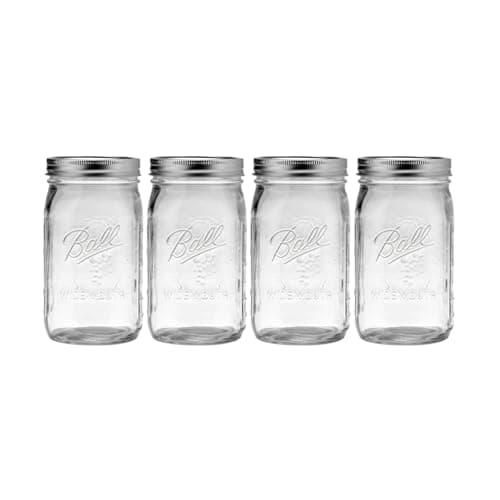 Wide-mouth quart mason jar A quart wide-mouth mason jar costs a few dollars, holds a normal-sized starter or a one-quart batch of vegetables with room to spare, and takes every lid, weight and airlock in the category. | The cheapest jar that works | |
| 02 | 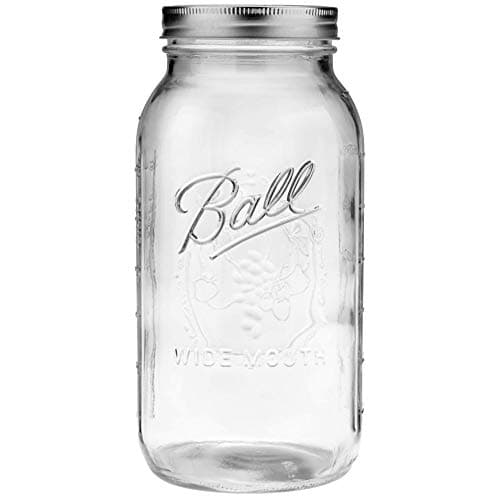 Half-gallon wide-mouth jar Only buy this if you bake often enough to keep a large starter. | A starter you bake from weekly | |
| 03 | 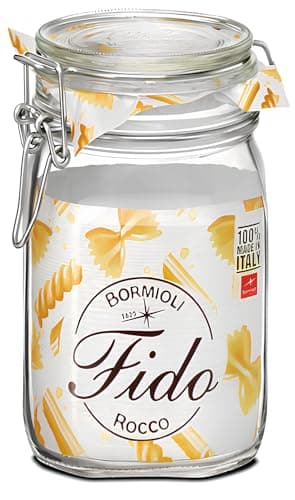 Bormioli Rocco Fido clamp-top jar The clamp lid with a rubber gasket vents gas outward under pressure and reseals, which makes it a legitimate one-jar answer to both a starter and a small vegetable ferment. | Fermenting as well as starter | |
| 04 | 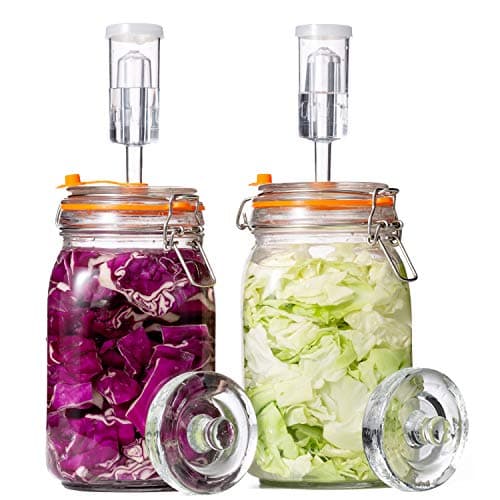 Glass fermentation crock with airlock A crock-shaped glass vessel with a water seal or a lid airlock. | Seeing inside a crock | |
| 05 | 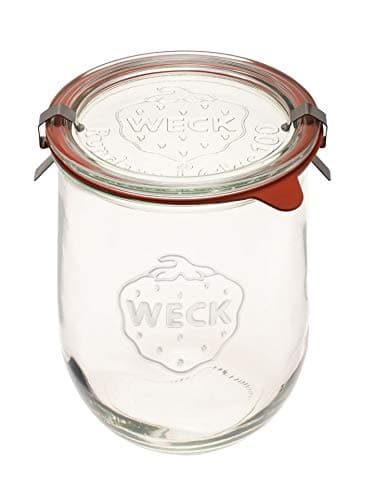 Weck tulip jar, roughly 1 liter Straight-sided, wide-mouthed and completely clear, which is the entire specification a starter jar needs. | Watching the rise | $14.99 · View on Amazon
|
#ad · We earn a commission on Amazon purchases. Prices come from Amazon and change.
Vegetable fermenting asks four things of a jar: that it is glass, that the mouth is wide, that you can see through it, and that it is the right size for the batch. Everything beyond that is preference, and the jars that satisfy all four start at a couple of dollars.
The picks are ordered for someone fermenting at home rather than provisioning a cellar. The first two will cover almost everything most households ever make.
Mouth size is the decision, not the jar
This is the part worth understanding before you spend anything. Fermentation lids and weights are made to fit standard mason-jar mouths — regular or wide. Buy a jar with a proprietary or non-standard mouth and you have quietly opted out of the entire accessory ecosystem.
Wide mouth, every time. You are packing shredded vegetables in with your fist and getting a weight back out of a full jar afterwards. Mismatched mouth sizes are the commonest return in this category, which is why we say it on the lids page and on the weights page too.
How we judged these
- Glass. Inert against a salty, acidic brine for weeks. Plastic stains and holds smells; metal reacts.
- Wide, standard mouth. So the lids and weights you buy later fit the jars you bought first.
- Straight sides where possible. A shouldered jar makes it harder to hold vegetables below the brine, because the weight sits above the shoulder rather than on the ferment.
- Sized to a real batch. One cabbage shreds down to roughly two to three quarts. A quart jar is a test batch; a half gallon is a cabbage.
- A closure that vents. Fermentation makes gas. Either the lid lets it out, or you open the jar daily, or it pushes brine past the seal.
What size to buy
Start with quarts. A quart is the right size for a first batch of anything: enough to be worth eating, little enough that a failure costs you one cabbage quarter and a spoonful of salt.
Move to half gallons once you know you like the result, because a whole cabbage fits one comfortably and shredding half a cabbage is a nuisance. Beyond that you are into crock territory, which is a different purchase with different trade-offs — that comparison is crock or mason jar.
Bail-top jars: the lid that burps itself
Clamp-top jars with a rubber gasket vent by themselves: pressure lifts the gasket slightly, gas escapes and it reseats. That is an airlock without an airlock, and it is genuinely convenient.
The trade is that the mouth is not a mason fitting, so your mason-jar weights and airlock lids will not fit, and there is no bubbler to watch — you cannot tell at a glance whether anything is happening. For a second or third jar it is a pleasant thing to own. For your first, buy the fitting that everything else in the category is built around.
Jars you already own
If there are wide-mouth mason jars in your cupboard, you have everything you need to start today. Buy a vented lid and a weight for them and skip this page entirely — the whole first-batch equipment list is in what you actually need to start fermenting vegetables, and if you have no weight yet, a cabbage leaf and a small jar will hold the ferment down, as the alternatives page explains.
Kimchi is the one case where a jar is not the obvious answer, because the batch shrinks as it ferments and a press lid handles that better than a weight does — the containers are compared here.
Every pick, in order
The full write-ups
Pick 01 · The cheapest jar that works
Wide-mouth quart mason jar
Ball, Kerr and equivalents
A quart wide-mouth mason jar costs a few dollars, holds a normal-sized starter or a one-quart batch of vegetables with room to spare, and takes every lid, weight and airlock in the category. There is no functional reason to spend more.
Material
Glass
Capacity
1 quart / 32 oz
Mouth
Wide mouth (about 86 mm outer thread)
Lid
Two-piece metal lid; use it loose, never sealed
Specs compiled from: Manufacturer product listing and product name
What is good
- The cheapest jar in the category, sold everywhere
- Wide mouth fits every accessory made for fermentation
- Buy four and you can keep a starter, a discard jar and a ferment going at once
What is not
- A slight shoulder taper makes the very top of the rise harder to read
- The metal lid rusts if you seal it and forget it
- Plain -- this is a tool, not an object
#ad Disclosure · Price as of September 14, 2026
Pick 02 · A starter you bake from weekly
Half-gallon wide-mouth jar
Ball and equivalents
Only buy this if you bake often enough to keep a large starter. Two liters of glass gives a small starter far too much surface to dry against, and it is a nuisance to store.
Material
Glass
Capacity
Half gallon / 64 oz
Mouth
Wide mouth
Lid
Standard wide-mouth two-piece or plastic storage lid
Specs compiled from: Manufacturer product listing and product name
What is good
- Enough headroom that an active starter cannot climb out
- Doubles as a bulk-ferment container for a single loaf's dough
- Same commodity lid fit as every other wide-mouth jar
What is not
- Far too large for a beginner's starter, which will look lost in it
- Awkward on a fridge shelf
- More glass to warm up, which slows the starter in a cold kitchen
#ad Disclosure · Price as of September 14, 2026
Pick 03 · Fermenting as well as starter
Bormioli Rocco Fido clamp-top jar
Bormioli Rocco
The clamp lid with a rubber gasket vents gas outward under pressure and reseals, which makes it a legitimate one-jar answer to both a starter and a small vegetable ferment. Leave the gasket out entirely for a starter.
Material
Glass, steel clamp, rubber gasket
Capacity
Sold from about 0.5 to 3 liters
Seal
Gasketed clamp lid that vents under pressure
Mouth
Wide
Specs compiled from: Manufacturer product listing and product name
What is good
- One jar that genuinely does starter duty and small-batch ferment duty
- The gasket vents rather than holding pressure, which is the safe behavior
- Available in a size range, so a small starter is not swimming in a big jar
What is not
- Gaskets perish and need replacing eventually
- The clamp is one more thing to knock
- Costs several times a plain mason jar
#ad Disclosure · Price as of September 14, 2026
Pick 04 · Seeing inside a crock
Glass fermentation crock with airlock
Type pick -- glass water-seal vessel
A crock-shaped glass vessel with a water seal or a lid airlock. It gives you the one thing stoneware cannot -- you can watch the ferment -- at the cost of the temperature stability thick stoneware provides.
Material
Glass body
Seal
Water channel or lid-mounted airlock
Weights
Glass weights, usually included
Capacity
Commonly 3-5 liters
Specs compiled from: Product-type description; capacity and material as listed by sellers
What is good
- You can see the brine level and the ferment without opening it
- Glass does not stain or hold smells between batches
- Usually lighter than stoneware at the same capacity
What is not
- Light reaches the ferment; keep it in a dark cupboard anyway
- Thin walls track room temperature swings closely
- Glass at this size breaks in ways stoneware does not
#ad Disclosure · Price as of September 14, 2026
Pick 05 · Watching the rise
Weck tulip jar, roughly 1 liter
Weck
Straight-sided, wide-mouthed and completely clear, which is the entire specification a starter jar needs. The glass lid sits on rather than sealing, so gas escapes without you having to remember to loosen anything.
Material
Glass body, glass lid
Capacity
About 1 liter / 34 oz in the common tulip size
Mouth
Wide -- a spatula and a hand both fit
Seal
Rubber ring and clips, optional; lid rests otherwise
Specs compiled from: Manufacturer product listing and product name
What is good
- Straight sides make the rise readable against a rubber band
- Lid resting rather than sealing means no pressure build-up to manage
- Glass throughout, so nothing stains or holds smell
What is not
- The clips and rubber ring are extra parts to lose
- Glass lids chip if you are careless
- Costs more than a mason jar that does the same job
How we picked
We have not tested any of this equipment. What we did instead: compiled the published specifications from each manufacturer’s own listing, checked them against the task a beginner is actually trying to do, read the care instructions, and named the thing we would skip. Where a pick is a product type rather than a brand, it is because the category is sold mostly unbranded and the type is the real decision.
Frequently asked
Questions
+What size jar is best for fermenting vegetables?
A wide-mouth quart for a first batch, and a half gallon once you know you like the result — one cabbage shreds down to roughly two to three quarts, so a half gallon takes a whole one comfortably.
+Do I need wide-mouth jars for fermenting?
Practically, yes. Fermentation lids and weights are sized to standard mason mouths, and wide mouth is what most are made for. It is also far easier to pack vegetables into and to get a weight back out of.
+Can I use a regular mason jar lid for fermenting?
Only if you open it daily to release gas. The flat metal disc will also corrode against the brine over a long ferment. A vented silicone or airlock lid, or a plastic storage lid, is the better answer.
+Are clamp-top jars good for fermenting?
Yes — the gasket vents pressure by itself, which is convenient. The catch is that the mouth is not a mason fitting, so mason-jar weights and airlock lids will not fit it.
+Can I ferment in plastic containers?
Glass is the better default: inert, sanitizable and transparent. The exception is kimchi, where purpose-built containers with a press lid solve a problem a glass jar does not.
Read next