Hub 04 · Fermenting Vegetables
What to use instead of a fermentation weight
A weight has one job: hold the vegetables under the brine. Several things already in your kitchen do it, and two popular suggestions should not be used at all.
We earn a commission if you buy through our links, at no extra cost to you. We have not tested this equipment. Here is what we did instead.
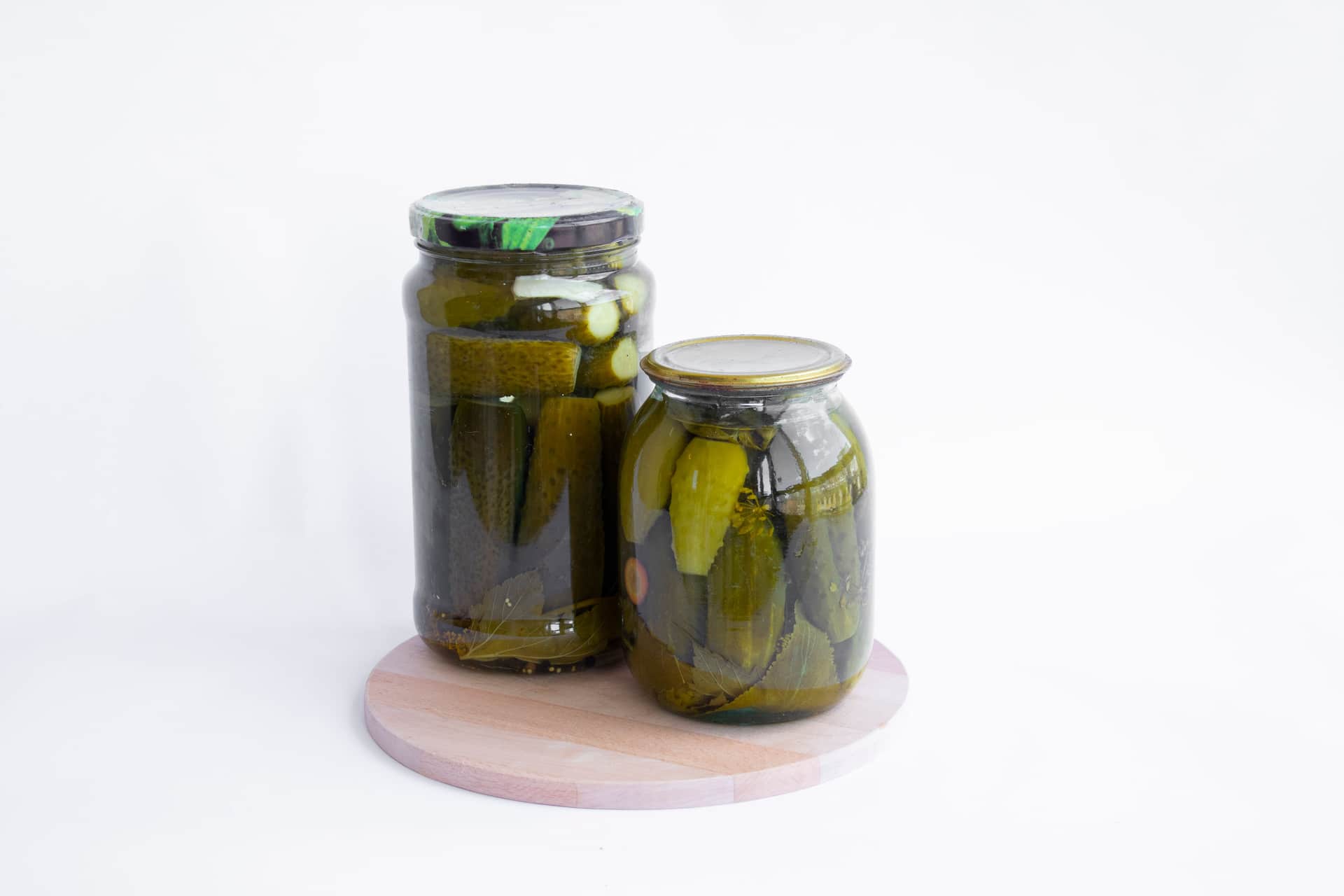
A cabbage leaf folded over the top, with a small jar or a shot glass resting on it, is the alternative that works best. It costs nothing, it is food you already bought, and it does the same thing a glass weight does: it holds everything below the surface of the brine, which is the only condition a vegetable ferment really has.
What the weight is for
Fermentation happens in the brine, without air. Anything sitting above the liquid is in air, and air is where mold and kahm yeast grow. A weight does not make the ferment work faster or taste better. It keeps the top layer of shredded cabbage from floating up and spoiling, and that is all.
This is why nearly any dense, food-safe, non-reactive object of about the right size can stand in. It is also why the improvised versions genuinely work rather than being a compromise.
What works
- A folded outer cabbage leaf. Reserve one whole leaf before you shred, fold it, and press it over the packed vegetables. It forms a barrier across the whole surface, which a small round weight does not, and you can eat it afterwards.
- A smaller jar that fits inside the mouth. A four-ounce jelly jar sits neatly inside a wide-mouth quart. Fill it with water for extra downward force. This is the closest free substitute for a purpose-made weight.
- A shot glass or a small ramekin. Same principle, provided it fits through the jar mouth and is glass or glazed ceramic.
- A zip-seal bag filled with brine. Lay it on the surface and it conforms to the whole area, sealing it far better than a rigid disc. Fill it with brine at the same salt concentration, not plain water, so a leak does not dilute the ferment.
- A cabbage-leaf plug plus the jar itself. Pack the jar high enough that the shoulder of the glass holds the leaf down. This works in straight-sided jars only if the shoulder is pronounced.
What does not work, and what is unsafe
- A rock from the garden. Porous, impossible to sanitize properly, and of unknown mineral composition. This suggestion circulates widely. Do not follow it.
- Anything metal. A brine is salty and acidic and will corrode most metals, including many stainless items over a long ferment. Metal objects are the one category to rule out entirely.
- Untreated wood. Porous, holds residue between batches, and impossible to clean reliably.
- A plastic bag without brine in it. A bag of plain water works right up until it leaks, at which point it dilutes the brine and drops the salt concentration below where you want it.
- Pressing it down twice a day and hoping. This does work, if you never forget. Most people forget.
When to just buy the weight
Glass weights are among the cheapest items in this hobby, and the purpose-made ones do two things the improvised versions do not: they sit flat against the shoulder of a wide-mouth jar, and they have a knob or a grip so you can get them out of a full jar without tipping brine down your arm. If you are fermenting more than occasionally, that second point is worth the money on its own.
If you do buy, buy in the same jar-mouth size as your lids — our weights roundup covers the sizing, and mismatched mouth sizes are the commonest return in the whole category.
Sizing an improvised weight
Size it to the jar mouth rather than to the jar. A weight or a substitute has to pass through the opening and then sit as flat as possible across the vegetables — a tall narrow object that fits through the mouth but only touches the middle of the surface leaves the edges exposed, and the edges are where floating pieces collect.
The other measurement that matters is headspace. Leave an inch or two between the brine and the lid, because a ferment rises as it produces gas. An improvised weight that fills the jar to the rim pushes brine out past the lid, and the level it leaves behind can be below the top of your vegetables.
Cleaning what you improvise
Anything going into a ferment gets washed in hot soapy water and rinsed well first. There is no need to sterilize — a vegetable ferment is not canning, and the salt and the resident bacteria do the work — but a jar that held something oily last week is a poor choice.
This is the real argument against improvising with porous materials. Glass and glazed ceramic clean completely and visibly. Wood, stone and scratched plastic do not, and you cannot tell by looking.
What about crocks?
A stoneware crock is usually sold with a pair of heavy stoneware half-moon weights, so the question does not arise. If yours came without them, the cabbage-leaf method scales up fine, but a large crock full of kraut needs real mass on top rather than a jelly jar — crock sizing is here.
Frequently asked
Questions
+What can I use instead of a fermentation weight?
A folded outer cabbage leaf with a small jar or shot glass resting on it. A zip-seal bag filled with brine at the same salt concentration also works and seals the whole surface. Both keep the vegetables under the liquid, which is all a weight does.
+Can I use a rock as a fermentation weight?
No. Rocks are porous, cannot be reliably sanitized, and their mineral composition is unknown. Use glass or glazed ceramic instead.
+Do I really need a weight to ferment vegetables?
You need the vegetables to stay under the brine. A weight is the easiest way to guarantee that, but a cabbage leaf and a small jar achieve the same result. What you cannot do is leave the top layer sitting in air.
+Can I use a plastic bag of water as a weight?
Yes, but fill it with brine at the same salt concentration rather than plain water. A bag of plain water that splits will dilute the ferment at the worst possible moment.
Read next