Hub 04 · Fermenting Vegetables
Best salt for fermenting vegetables
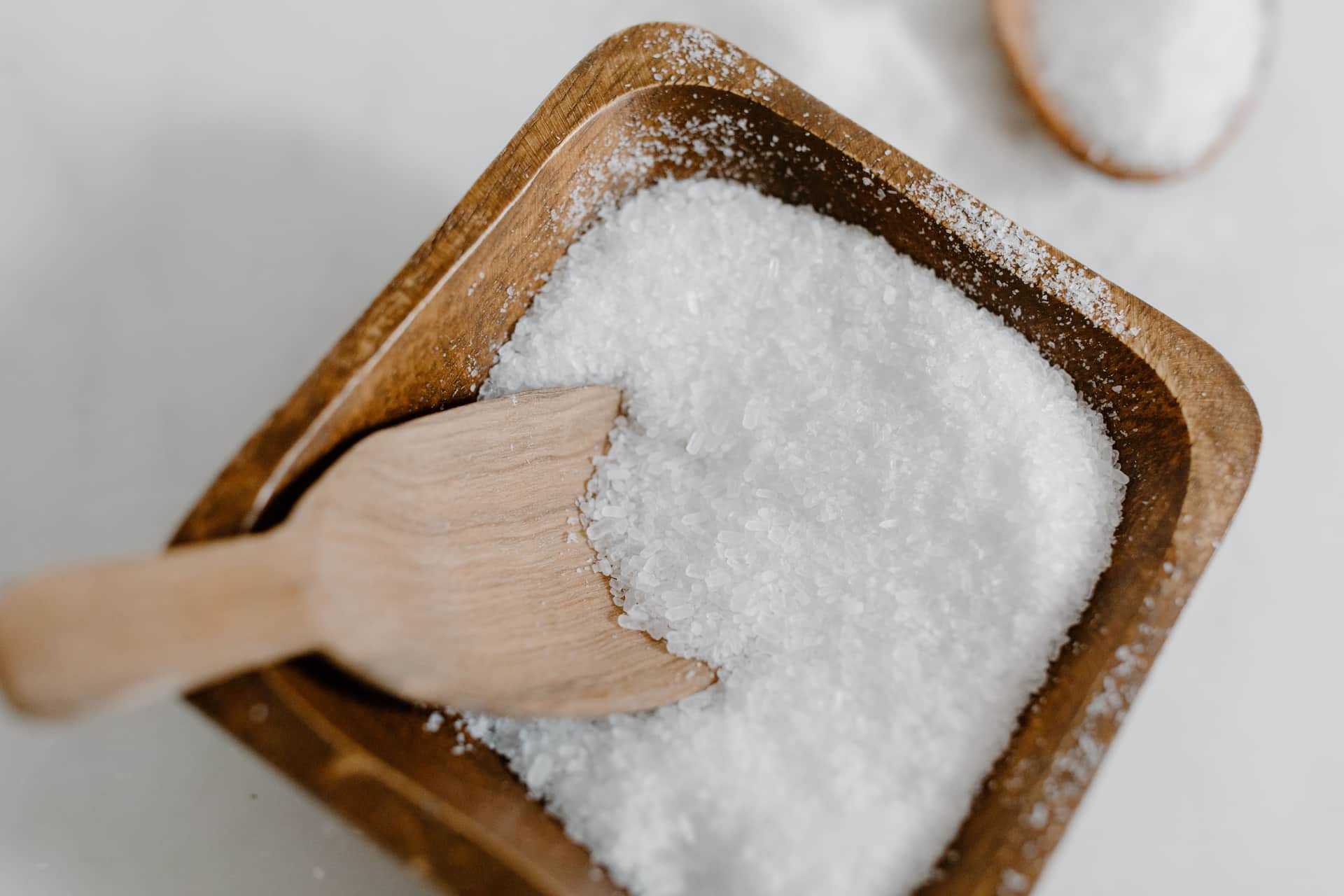
Salt is the control in a vegetable ferment, not a seasoning. Only three properties matter: no iodine, no anti-caking agents, and a grain size you can weigh accurately.
We earn a commission if you buy through our links, at no extra cost to you. We have not tested this equipment. Here is what we did instead.
Quick picks
Tap a row for the full write-up · Prices open on Amazon
| # | Product | Best for | Price |
|---|---|---|---|
| 01 | 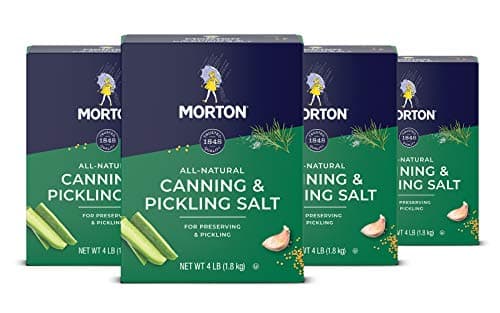 Morton Canning & Pickling Salt, 4 lb Salt sold for exactly this job: fine, pure granulated salt with no iodine and nothing added to keep it free-flowing. | A first ferment, no thinking | |
| 02 | 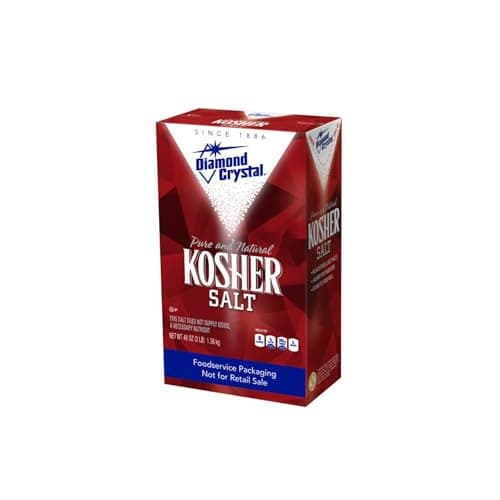 Diamond Crystal Kosher Salt, 3 lb The kosher salt most cooks already own, and it ferments vegetables perfectly well. | The box already in your kitchen | $10.49 · View on Amazon
|
| 03 | 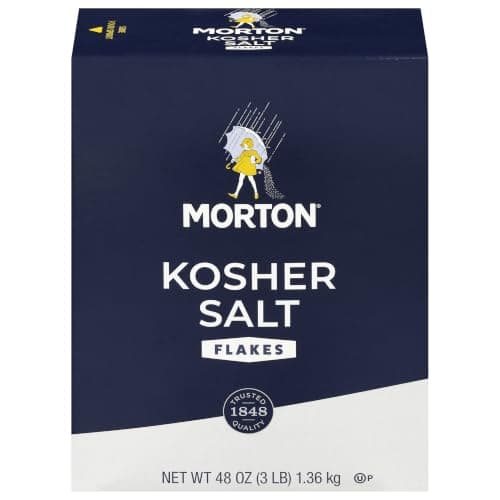 Morton Coarse Kosher Salt, 3 lb The cheapest salt here by a wide margin, and a perfectly serviceable fermenting salt. | The lowest price per pound | $3.62 · View on Amazon
|
| 04 | 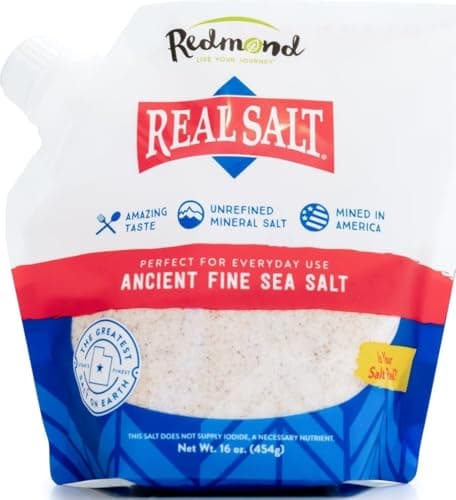 Redmond Real Salt, Fine, 16 oz An unrefined mineral salt milled fine enough to dissolve like table salt. | Unrefined, still fine-grained | |
| 05 | 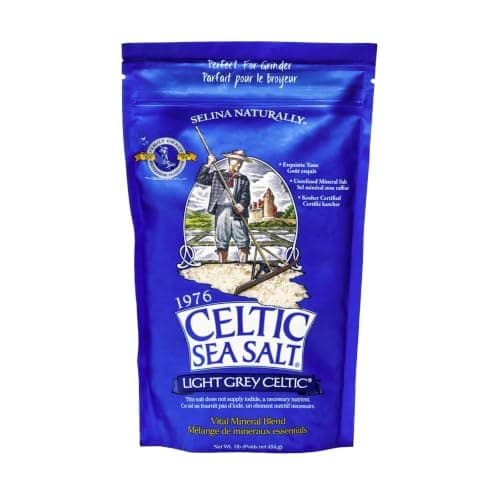 Celtic Sea Salt, Coarse Light Gray, 16 oz Coarse, damp, gray and unrefined. | If you already cook with it |
#ad · We earn a commission on Amazon purchases. Prices come from Amazon and change.
In a vegetable ferment the salt is doing a job, not adding a flavor. It draws water out of the vegetables to make the brine, and it holds the environment in a range where the bacteria you want outcompete the ones you do not. That is why the ratio matters and why the type of salt gets asked about constantly.
The good news is that the decision is much smaller than the internet makes it look. Almost any salt that is pure salt will ferment cabbage. The picks above are ordered by how little thinking each one requires.
The three properties that actually matter
- No iodine. Iodized salt is the one type consistently advised against for fermenting and pickling, and it is the reason this question exists at all. Buy something that does not say iodized on the box.
- No anti-caking agents, if you can avoid them. These are added to keep salt free-flowing, and some of them cloud a brine. They are present in trace amounts and are not a safety question; they are a clarity and purity preference. Published claims about which brands contain what contradict each other, so read the ingredient panel on the box in front of you rather than trusting any list online, this one included.
- A grain size you can weigh. This is the property people ignore and then get wrong. Salts differ enormously in density — a cup of flake kosher salt weighs far less than a cup of fine pickling salt. If a recipe gives you a volume, and you use a different salt from the one it was written for, your ferment is under- or over-salted before you start.
That is the whole specification. Color, provenance, trace minerals and price have no bearing on whether a jar of sauerkraut works.
Weigh it, never scoop it
The single most useful habit on this page. Because salts vary so much in density, the only way to hit a ratio reliably is to weigh both the vegetables and the salt on a scale that reads in grams.
This is also why swapping salts mid-routine changes your results even when you think you changed nothing. Weigh, and the brand becomes genuinely irrelevant. The scale we would buy is the same cheap one the rest of the site keeps recommending — best kitchen scales.
Pickling salt, kosher salt, sea salt: the actual differences
| Salt | Grain and density | For fermenting |
|---|---|---|
| Canning / pickling salt | Fine, dense, free-flowing | Purpose-made. Dissolves fast, clear brine |
| Flake kosher salt | Coarse hollow flakes, low density | Works well. Weigh it - a cup is far lighter |
| Coarse granulated kosher | Coarse, fairly dense | Works well. Check the panel for additives |
| Fine unrefined sea salt | Fine, dense | Works well. Slight mineral cloudiness |
| Coarse gray sea salt | Coarse, damp, clumping | Works, but hardest to weigh accurately |
| Iodized table salt | Fine, dense | Avoid - iodine is the one thing to rule out |
Note what the right-hand column does not say: none of these produces a better ferment than the others. The differences are in handling and in how the brine looks, not in the result.
Does a cloudy brine mean something is wrong?
Usually not. Brine goes cloudy as a ferment gets going — that is the bacteria doing their work, and it is the normal appearance of an active jar. Anti-caking agents and the mineral content of unrefined salts can also add a faint haze from day one.
What matters is what is growing on the surface and what it smells like, not how clear the liquid is. The list of what is normal and what is not is in is fermenting vegetables safe, and the symptom-by-symptom version for a first jar is in how to make sauerkraut in a mason jar.
How much salt one batch actually uses
Less than the boxes on this page suggest. A quart jar of sauerkraut uses a quantity of salt measured in grams, not handfuls, which is why a 3 lb box is many, many batches and why cost per pound is close to irrelevant here.
That changes the calculation. The cheapest option saves you a few dollars across a year of fermenting, so buy whichever of these you will actually keep to hand and weigh properly. Buying the expensive one is not a mistake; buying the iodized one is.
What about salt for sourdough?
Different job, much looser rules. Salt in bread controls fermentation speed and strengthens gluten, and iodized salt is not the problem there that it is in a brine. Any fine salt you can weigh will do, and most bakers simply use whatever is already open.
The flour decisions are where sourdough actually gets particular — best flour for sourdough bread covers that side.
Every pick, in order
The full write-ups
Pick 01 · A first ferment, no thinking
Morton Canning & Pickling Salt, 4 lb
Morton
Salt sold for exactly this job: fine, pure granulated salt with no iodine and nothing added to keep it free-flowing. It dissolves fast in a brine and leaves it clear, which removes the two things people worry about on a first batch.
Grain
Fine granulated
Iodine
None -- sold as canning and pickling salt
Size
4 lb boxes, sold here as a 4-pack
Dissolving
Fast, and leaves a clear brine
Specs compiled from: Manufacturer product listing and product name
What is good
- Purpose-made for preserving, so you are not reading an ingredient panel hoping
- Fine grain dissolves quickly and completely, which matters when you are mixing a brine by weight
- Cheapest per pound of anything on this page
What is not
- Sold in multipacks, which is far more salt than a few jars of kraut will ever use
- Fine grains cake in a humid kitchen once the box is open
- Single-purpose in most people's minds, so it sits at the back of the cupboard between batches
#ad Disclosure · Price as of September 14, 2026
Pick 02 · The box already in your kitchen
Diamond Crystal Kosher Salt, 3 lb
Diamond Crystal
The kosher salt most cooks already own, and it ferments vegetables perfectly well. The listing describes it as having no additives, which is the property you care about; the hollow flakes also dissolve readily despite the coarse look.
Grain
Coarse hollow flakes
Additives
Listed by the seller as no additives -- confirm on the box you buy
Size
3 lb box
Note
Much less dense than granulated salt: weigh it, never measure by volume
Specs compiled from: Manufacturer product listing and product name
What is good
- Very likely already in your kitchen, which makes a first batch free
- Flake structure dissolves faster than its coarse appearance suggests
- Doubles as a general cooking salt, so the box never goes stale
What is not
- Far less dense than pickling salt -- a cup weighs dramatically less, so a volume-based recipe will under-salt your ferment
- Costs several times more per pound than plain pickling salt
- Flakes are awkward to sprinkle evenly through shredded cabbage
Pick 03 · The lowest price per pound
Morton Coarse Kosher Salt, 3 lb
Morton
The cheapest salt here by a wide margin, and a perfectly serviceable fermenting salt. Denser and harder-grained than flake kosher salt, so it behaves more like table salt on the scale, which is convenient once you are weighing everything anyway.
Grain
Coarse granulated
Size
48 oz / 3 lb box
Density
Denser than flake kosher salt; weigh, do not scoop
Check
Read the ingredient panel for anti-caking agents before buying
Specs compiled from: Manufacturer product listing and product name
What is good
- By far the lowest cost per pound on this page
- Sold in every supermarket, so replacing it is never a special order
- Coarse grains are easy to pinch and distribute by hand through cabbage
What is not
- Kosher salts differ in what they contain, and the published claims disagree -- the box is the authority, so read it
- Denser than flake kosher salt, so the two are not interchangeable by volume
- Takes slightly longer to dissolve than fine pickling salt
Pick 04 · Unrefined, still fine-grained
Redmond Real Salt, Fine, 16 oz
Redmond
An unrefined mineral salt milled fine enough to dissolve like table salt. It is the practical choice if you want a salt that has not been stripped and re-flowed, without taking on the damp, clumpy handling of coarse gray sea salt.
Grain
Fine
Type
Unrefined mineral salt, per the manufacturer
Size
16 oz pouch
Color
Flecked rather than pure white -- normal for an unrefined salt
Specs compiled from: Manufacturer product listing and product name
What is good
- Fine grain, so it dissolves and distributes as easily as pickling salt
- Unrefined without the handling problems of coarse gray salt
- A pouch this size is a realistic amount for a household that ferments occasionally
What is not
- Several times the price per pound of plain pickling salt, for a difference you cannot taste in a finished kraut
- The mineral flecks make a brine look faintly cloudy, which reads as a problem to a nervous first-timer
- Small pouch, so a big crock batch will run through it fast
#ad Disclosure · Price as of September 14, 2026
Pick 05 · If you already cook with it
Celtic Sea Salt, Coarse Light Gray, 16 oz
Celtic Sea Salt
Coarse, damp, gray and unrefined. It ferments vegetables perfectly well and it is the most awkward salt here to actually use: it clumps on a scale, it dissolves slowly, and the moisture it carries means its weight is not all salt.
Grain
Coarse, moist crystals
Type
Unrefined, light gray
Size
16 oz
Handling
Damp -- dissolve it in the water before adding, rather than mixing it dry
Specs compiled from: Manufacturer product listing and product name
What is good
- Genuinely unrefined, if that is the property you are buying
- Coarse crystals are pleasant to work with by hand once dissolved into a brine
- A cook who already keeps it has no reason to buy a second salt
What is not
- Retains moisture, so a gram on the scale is not a gram of salt -- the least precise option here for a ratio that matters
- Slow to dissolve; dry-salting cabbage with it leaves gritty pockets
- Most expensive per pound on this page, for no fermentation advantage
#ad Disclosure · Price as of September 14, 2026
How we picked
We have not tested any of this equipment. What we did instead: compiled the published specifications from each manufacturer’s own listing, checked them against the task a beginner is actually trying to do, read the care instructions, and named the thing we would skip. Where a pick is a product type rather than a brand, it is because the category is sold mostly unbranded and the type is the real decision.
Frequently asked
Questions
+What is the best salt for fermenting vegetables?
Canning and pickling salt is the simplest answer: fine, pure, no iodine and nothing added. Kosher salt and unrefined sea salt also work well. The only salt to rule out is iodized table salt.
+Can I use table salt for sauerkraut?
Use plain, non-iodized table salt if that is what you have — it is fine. Iodized table salt is the version to avoid, and the two sit next to each other on the shelf in near-identical packaging, so check the box.
+Is pickling salt the same as kosher salt?
No. Pickling salt is fine and dense; kosher salt is coarser and, in flake form, far less dense. Both ferment vegetables well, but they are not interchangeable by volume — a cup of each weighs a very different amount, which is why you weigh salt rather than scooping it.
+Does anti-caking agent in salt ruin a ferment?
It is a clarity and purity preference rather than a safety issue; trace anti-caking agents can make a brine look slightly hazy. Published claims about which brands contain which agents disagree with each other, so read the ingredient panel on the box you are actually buying.
+Why is my fermenting brine cloudy?
Cloudiness is normal in an active ferment — it is the bacteria working, and unrefined salts and anti-caking agents can add a haze too. Judge a jar by what is growing on the surface and how it smells, not by how clear the liquid is.
+How much salt do I need for a jar of sauerkraut?
A few grams rather than a handful, taken as a percentage of the weight of the vegetables. Get the exact ratio from a tested recipe published by a food-safety authority, and weigh both the vegetables and the salt.
Sources
Where the facts on this page came from
Read next