Hub 03 · Sourdough Baking Gear
Best wheat berries for sourdough
Protein is the specification that decides whether a berry makes bread or makes cake. It is also the one almost no seller prints on the bag, which changes how you have to shop.
We earn a commission if you buy through our links, at no extra cost to you. We have not tested this equipment. Here is what we did instead.
Quick picks
Tap a row for the full write-up · Prices open on Amazon
| # | Product | Best for | Price |
|---|---|---|---|
| 01 | 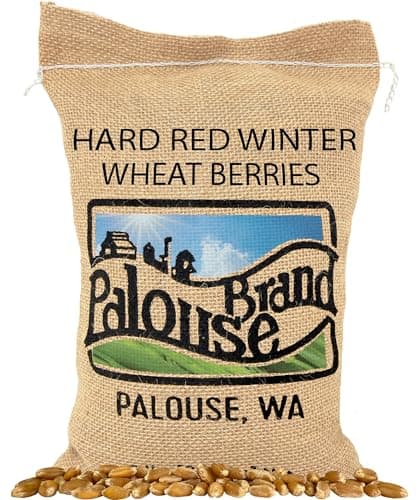 Palouse Brand Hard Red Winter Wheat Berries, 5 lb Hard red winter is the class most American bread flour comes from, and five pounds is the right first bag: roughly five loaves worth, enough to learn what fresh-milled flour does to your dough without committing to a sack. | The default bread berry | |
| 02 | 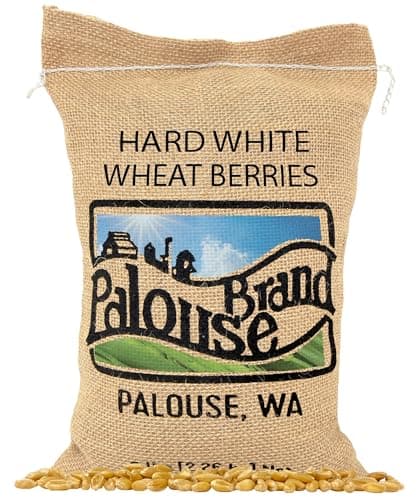 Palouse Brand Hard White Wheat Berries, 5 lb The same farm, the same certifications and the same trial size as the hard red above, deliberately, so the only variable is the wheat. | Milder, whiter loaf | |
| 03 | 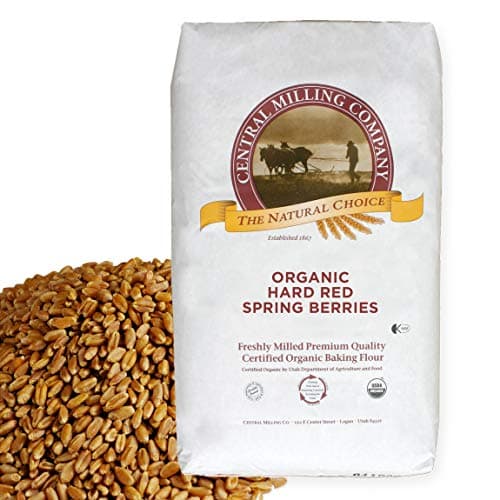 Central Milling Organic Hard Red Spring Wheat Berries, 25 lb Hard red spring is the strongest common bread class -- US Wheat call it the aristocrat of wheat and list it for bagels, artisan hearth breads and pizza crust -- and this is twenty-five pounds of it, organic, from a miller whose flours a lot of sourdough bakers already buy. | Bulk, strongest class | |
| 04 | 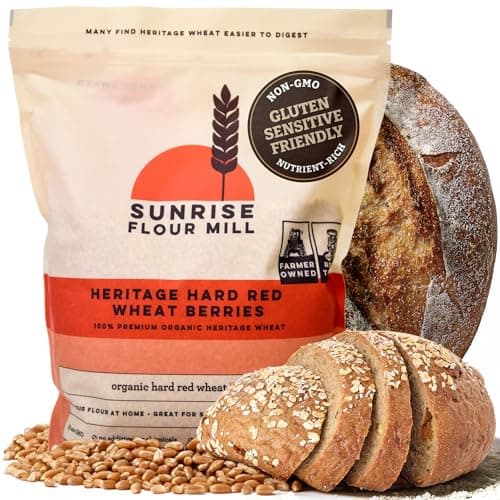 Sunrise Flour Mill Heritage Hard Red Wheat Berries, Turkey Red, 80 oz Turkey Red is a named heritage hard red variety rather than an anonymous commodity class, and that is the reason to buy it: provenance and flavor. | A heritage variety | |
| 05 | 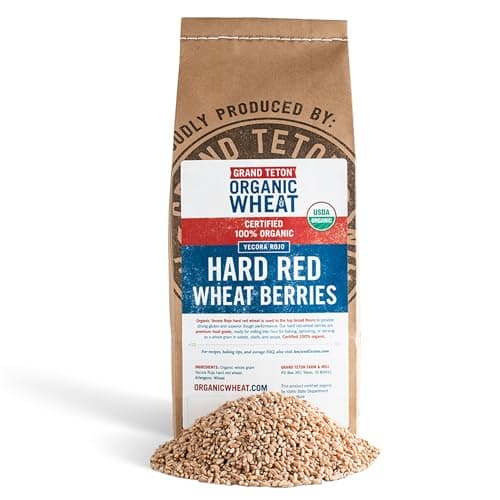 Grand Teton Yecora Rojo Hard Red Wheat Berries Yecora Rojo is a specific hard red spring cultivar that specialty mills and keen home bakers ask for by name, grown here by an Idaho organic farm. | A named cultivar |
#ad · We earn a commission on Amazon purchases. Prices come from Amazon and change.
If you have bought a mill, this is the next purchase, and it is the one where the useful information runs out. Buying flour is easy: good millers print the protein percentage on the bag, and protein is what builds the gluten network that holds a sourdough loaf up. King Arthur put their bread flour at 12.7 percent and their pastry flour, from soft wheat, at 8 percent, and that single number tells you most of what the flour will do.
Wheat berries are sold differently. We checked the sellers on this page and almost none of them publishes a protein figure at all. Palouse lists none. Sunrise Flour Mill describes its wheat as rich in protein without giving a number. The 13.5 percent you will see quoted for Yecora Rojo comes from third-party resellers rather than the grower, and one of those resellers is selling a different farm’s version of the same cultivar. So you cannot shop berries the way you shop flour, and this page is about what to do instead.
Shop the class, because the class is the part that is documented
US wheat is sorted into official classes, and US Wheat Associates publishes a protein range for each one. That range is the honest number to plan with. For bread the three that matter are:
- Hard red winter — 10.0 to 13.0 percent (at 12 percent moisture). The workhorse. US Wheat list it for pan breads, hard rolls, croissants and flat breads, and as general-purpose flour. This is the class most American bread flour is built from, so it behaves the way recipes expect.
- Hard red spring — 12.0 to 15.0 percent. The strong one. US Wheat call it the aristocrat of wheat and list it for bagels, artisan hearth breads and pizza crust. If you want the highest protein ceiling available in a common class, this is it.
- Hard white — 10.0 to 14.0 percent. Also a bread class, with a slightly higher ceiling than hard red winter. Its documented difference is bran color: lighter bran, whiter flour, paler crumb.
And the one to avoid for bread: soft white, which US Wheat list for cakes, pastries and confectionery. Soft wheat has the carbohydrate and not the protein. It will make a slack dough and a sad loaf, and it is sold in bags that look exactly like the others.
The flavor claim about white wheat is not in the specification
You will read everywhere — including, in passing, on our own grain mill page — that hard white wheat tastes milder than hard red. It is widely repeated and it may well be true. What we can tell you is what the class data actually documents, which is lighter bran color producing whiter flour and whiter end products. US Wheat’s hard white page says nothing about flavor, tannins or bitterness.
So treat the taste difference as a reasonable expectation rather than a specification, and treat the color difference as a fact. In practice the color is the thing that changes whether a household eats your whole grain loaves, which may matter more anyway.
Heritage and named cultivars: what you are actually buying
Beyond the commodity classes there are named varieties and ancient grains — Turkey Red, Yecora Rojo, einkorn, emmer — and they are sold on provenance and flavor rather than on numbers. That is a legitimate thing to want. A named variety from a farm that mills its own grain is a different proposition from an anonymous class sack, and the difference shows up in the loaf.
Two cautions. First, the claims that cluster around heritage grain — higher protein, easier to digest, better for you — are seller claims. We looked for published figures or studies behind them for the products here and found neither. Second, a single named variety varies more between harvests than a commodity class does, because a class sack is blended to hit a range and a single-variety bag is whatever that field gave that year. That variability is part of the appeal and part of the risk.
The other two classes, and the one that surprises people
Six classes of US wheat exist and three of them are not bread wheats, which is worth knowing because you will meet them in the same aisle. Durum is the hardest wheat grown and US Wheat list it for premium pasta and couscous — and, interestingly, for some Mediterranean breads. It is not a substitute for bread wheat in a sourdough, but a small proportion is a real technique rather than a mistake.
Soft red winter is the one that surprises people. US Wheat list it for cookies, crackers and cakes, which is what you would expect — but also for blending into baguettes and other breads. That is the nuance behind the blunt rule above: soft wheat on its own will not hold a loaf up, and soft wheat as part of a blend is a legitimate professional tool for softening a very strong flour. If you are buying one bag, buy hard. If you end up with three buckets and a scale, a little soft wheat in a stiff dough is not heresy.
The practical upshot is the same either way: read the class, and know which job the bag in front of you was grown for.
How much to buy, and the arithmetic that decides it
A standard loaf uses roughly 500 g of flour, and milling is close to one-for-one by weight: a pound of berries gives you about a pound of flour, since nothing is removed unless you sift. So five pounds is about four or five loaves, and a 25 lb sack is about twenty-two to twenty-five.
That makes the first decision easy. Buy five pounds to find out whether you actually enjoy milling and whether your household likes whole grain bread. Buy twenty-five once you know, because the price per pound drops substantially and because berries are the one form of wheat that genuinely keeps. What you should not do is buy a sack first: a 25 lb bag of the wrong class, or of a wheat your family does not like, is a long and reproachful relationship.
Storage is the whole reason to buy grain instead of flour
This is the argument that makes the mill and the sack worth it. Whole grain flour goes rancid because the germ contains oil and the milling has exposed it, which is why we tell you to keep whole grain flour in the freezer. A wheat berry has not been opened. The oil is still sealed inside an intact kernel, which is why berries keep for years in conditions that would ruin flour in months.
Practically: airtight, cool, dark, and off the floor. The enemies are moisture, warmth and pantry pests, in that order. A 25 lb paper sack is shipping packaging, not storage — decant it into sealed containers or buckets. The same containers we recommend for flour work for berries, and you need fewer of them because nothing has to go in the freezer.
What changes in your dough when you switch
Freshly milled whole grain is not a drop-in replacement for the white flour you know, and the first few bakes will tell you so. Fresh-milled flour absorbs more water than aged flour — King Arthur advise withholding some and adding it during the mix rather than committing it all at the start — and fermentation runs faster, which is why their fresh-milled formula uses a smaller levain.
Bran is the other half of it. Bran fragments cut developing gluten strands and absorb water the gluten would otherwise get, so a fully whole-grain loaf rises less and eats denser than the same formula in white. That is not a fault in the grain. The standard way in is to replace a quarter to a third of your white flour with fresh-milled whole grain, learn what it does, and move up from there if you want to. The bought bread flour you already use is doing real structural work and there is no prize for abandoning it.
How to choose
- Pick the class first. Hard red winter if you want the workhorse; hard red spring if you want the strongest; hard white if you want paler loaves. Everything else is a refinement of that choice.
- Buy five pounds before you buy twenty-five. One bag tells you whether this is a hobby you are keeping.
- Ignore protein claims on the bag, because there are none. Plan with the class range and judge the actual bag by how the dough behaves.
- Check the certifications that are audited. Organic, Non-GMO Project Verified and glyphosate-residue-free are real third-party claims. Higher in protein and easier to digest are not.
- Sort out storage before the sack arrives. Airtight and cool, decanted out of the paper bag.
What wheat berries will not do
They will not make a better loaf than good bought flour on their own; the freshness and the whole grain are the point, and both cut against lightness. They will not keep forever regardless of conditions — warm and damp beats an intact kernel eventually, and pantry moths do not care that your grain is organic. They will not substitute for a mill, and a sack bought in anticipation of one is a sack of future intentions. And a named heritage variety will not rescue a dough that is underproofed, because nothing in the grain fixes timing.
Buying advice, short version
Buy five pounds of hard red winter. It is the class American bread flour is made from, it behaves the way your recipes assume, and five pounds is four or five loaves — enough to learn on and cheap enough to be wrong about. Buy the hard white alongside it if you want to run the comparison properly, since it is the same farm and size and the only variable is the wheat. Move to the 25 lb hard red spring once you know you are staying, and want the strongest class at a sensible price per pound. Buy a heritage variety or a named cultivar when you want flavor and provenance and are content that the numbers behind the claims are not published. And read the class on every bag, because soft wheat in a bread dough is the one mistake here that cannot be worked around.
Every pick, in order
The full write-ups
Pick 01 · The default bread berry
Palouse Brand Hard Red Winter Wheat Berries, 5 lb
Palouse Brand
Hard red winter is the class most American bread flour comes from, and five pounds is the right first bag: roughly five loaves worth, enough to learn what fresh-milled flour does to your dough without committing to a sack. Certified glyphosate residue free and Non-GMO Project Verified, family farmed in Washington. Palouse publishes no protein figure, so the honest number is the class range.
Class
Hard red winter
Protein
Class range 10.0-13.0% (12% mb), per US Wheat Associates
Size
5 lb; also sold in 1, 3, 18, 25 and 36 lb
Growing
Certified Glyphosate Residue Free; Non-GMO Project Verified; Kosher
Origin
Family farmed, Washington State, per the listing
Specs compiled from: US Wheat Associates published class range; sellers publish no per-lot figure
What is good
- The class US bread flour is built on, so your results will resemble what recipes assume
- Five pounds is a genuine trial quantity rather than a commitment to a sack
- Glyphosate-residue-free certification is a real audited claim, not a marketing word
What is not
- Palouse publishes no protein figure for it, so you cannot shop this on protein
- Lower protein ceiling than spring wheat, which matters for very open or very tall loaves
- Red bran makes a darker, more assertively wheaty loaf than white wheat does
- Costs more per pound than buying a 25 lb bag, which is the usual penalty for a trial size
#ad Disclosure · Price as of October 17, 2026
Pick 02 · Milder, whiter loaf
Palouse Brand Hard White Wheat Berries, 5 lb
Palouse Brand
The same farm, the same certifications and the same trial size as the hard red above, deliberately, so the only variable is the wheat. Hard white is a bread class too, with a slightly higher protein ceiling than hard red winter, and its documented difference is bran color rather than flavor: lighter bran makes a whiter flour and a paler crumb, which is why it is the easier sell to a household that finds whole wheat heavy going.
Class
Hard white
Protein
Class range 10.0-14.0% (12% mb), per US Wheat Associates
Bran
Lighter bran color; whiter flour and whiter end products
Size
5 lb
Growing
Certified Glyphosate Residue Free; Non-GMO Project Verified; Kosher
Specs compiled from: US Wheat Associates published class range; sellers publish no per-lot figure
What is good
- Whole grain loaves that look and eat lighter, which is the difference that gets them eaten
- Slightly higher protein ceiling than hard red winter, per the class data
- Matched to the hard red above on brand, farm and size, so the comparison is clean
What is not
- No published protein figure here either -- the range is the class, not this bag
- US Wheat documents the lighter BRAN COLOR, not a milder flavor; the taste claim is widely repeated but is not in the class specification
- Less of the strong wheat flavor some people buy whole grain for in the first place
- Harder to find in bulk than hard red, so restocking takes more looking
#ad Disclosure · Price as of October 17, 2026
Pick 03 · Bulk, strongest class
Central Milling Organic Hard Red Spring Wheat Berries, 25 lb
Central Milling
Hard red spring is the strongest common bread class -- US Wheat call it the aristocrat of wheat and list it for bagels, artisan hearth breads and pizza crust -- and this is twenty-five pounds of it, organic, from a miller whose flours a lot of sourdough bakers already buy. If you have decided you are milling and you want the highest protein ceiling, this is the bag.
Class
Hard red spring
Protein
Class range 12.0-15.0% (12% mb), per US Wheat Associates
Certification
100% organic, per the listing
Size
25 lb
Class uses
Bagels, artisan hearth breads, pizza crust, strong doughs
Specs compiled from: US Wheat Associates published class range; sellers publish no per-lot figure
What is good
- Highest protein ceiling of the common bread classes, which is what strong open crumb wants
- Twenty-five pounds brings the cost per loaf down to its sensible level
- A miller sourdough bakers already know, rather than an anonymous repacker
What is not
- No per-lot protein figure on the listing, so the 12-15% is the class and not a measurement of this sack
- Twenty-five pounds is a storage problem before it is a baking one -- you need an airtight container and somewhere cool
- Strong wheat is not automatically better; a very high protein flour can fight you on a slack, high-hydration dough
- The least flexible purchase here if you turn out not to enjoy milling
#ad Disclosure · Price as of October 17, 2026
Pick 04 · A heritage variety
Sunrise Flour Mill Heritage Hard Red Wheat Berries, Turkey Red, 80 oz
Sunrise Flour Mill
Turkey Red is a named heritage hard red variety rather than an anonymous commodity class, and that is the reason to buy it: provenance and flavor. Be clear-eyed about what is and is not established, though. The organic and non-GMO certifications are real. The frequently-repeated claims that heritage wheat is higher in protein or easier to digest are the seller's, with no published figure or study behind them that we could find.
Variety
Turkey Red, a heritage hard red
Protein
Not published; described qualitatively by the mill
Certification
Certified Organic; Non-GMO; Kosher; unprocessed, per the listing
Size
80 oz (5 lb)
Specs compiled from: Manufacturer product listing and product name
What is good
- A named variety with a traceable history, not a generic class blend
- Organic and non-GMO certification, and the mill states it is grown without glyphosate
- Five pounds, so trying a heritage grain costs about what a bag of good flour does
What is not
- No protein figure published at all, which makes it the least shoppable bag here on specification
- The higher-protein and easier-to-digest claims around heritage wheat are seller claims, not measured specs -- we found no data supporting either
- Heritage varieties vary more between harvests than commodity classes do, so results move year to year
- Costs about the same per pound as commodity wheat while giving you less information about it
#ad Disclosure · Price as of October 17, 2026
Pick 05 · A named cultivar
Grand Teton Yecora Rojo Hard Red Wheat Berries
Grand Teton
Yecora Rojo is a specific hard red spring cultivar that specialty mills and keen home bakers ask for by name, grown here by an Idaho organic farm. It sits between the commodity sack and the heritage landrace: a known variety with a known character, still in the strong spring class. The 13.5 percent protein you will see quoted for it is a reseller number, not the producer's.
Variety
Yecora Rojo, a hard red spring cultivar
Protein
Class range 12.0-15.0% (12% mb) per US Wheat Associates; producer publishes none
Certification
Organic; Non-GMO; Idaho grown, per the listing
Class uses
Whole grain breads and milling into flour
Specs compiled from: US Wheat Associates published class range; sellers publish no per-lot figure
What is good
- A named cultivar in the strongest bread class, which is more information than a commodity bag gives you
- Organic and Idaho-grown from a farm that mills its own grain
- Well enough regarded that specialty mills stock it, so it is not an obscure gamble
What is not
- The 13.5% protein figure circulating for Yecora Rojo comes from third-party resellers, and one of them sells a different producer's version entirely
- Grand Teton publishes no protein specification, so verifying a lot means asking them for a certificate of analysis
- Costs more per pound than commodity hard red spring in bulk
- A single cultivar gives you less blending latitude than a class sack if a harvest comes in weak
#ad Disclosure · Price as of October 17, 2026
How we picked
We have not tested any of this equipment. What we did instead: compiled the published specifications from each manufacturer’s own listing, checked them against the task a beginner is actually trying to do, read the care instructions, and named the thing we would skip. Where a pick is a product type rather than a brand, it is because the category is sold mostly unbranded and the type is the real decision.
Frequently asked
Questions
+Which wheat berries are best for sourdough?
Hard wheat, in one of three classes. Hard red winter (10.0 to 13.0 percent protein per US Wheat Associates) is the workhorse most American bread flour comes from. Hard red spring (12.0 to 15.0 percent) is the strongest common class. Hard white (10.0 to 14.0 percent) is also a bread class and gives a paler crumb. Avoid soft wheat entirely for bread.
+What protein content do I need in wheat berries?
Enough to build a gluten network, which in practice means a hard class rather than a soft one. The complication is that berry sellers rarely publish a protein figure, so you plan with the published class range and then judge the particular bag by how the dough feels. If you need a measured number for a specific lot, you have to ask the producer for a certificate of analysis.
+Hard red winter or hard red spring for bread?
Winter for everyday loaves, spring when you want maximum strength. US Wheat put hard red winter at 10.0 to 13.0 percent protein and list it for pan breads and hard rolls; hard red spring is 12.0 to 15.0 percent and is listed for bagels, artisan hearth breads and pizza crust. Higher is not automatically better: a very strong flour can fight you on a slack, high-hydration dough.
+Is hard white wheat milder than hard red?
It is widely said, and it is not in the class specification. What US Wheat document for hard white is lighter bran color, which produces whiter flour and whiter end products. Treat the paler crumb as a fact and the milder flavor as a reasonable expectation rather than a published figure.
+How many loaves does a pound of wheat berries make?
Milling is roughly one-for-one by weight, since nothing is removed unless you sift, and a standard loaf takes about 500 g of flour. So a pound of berries is close to a loaf, five pounds is four or five, and a 25 lb sack is somewhere around twenty-two to twenty-five.
+How long do wheat berries last?
Far longer than flour, which is the main reason to buy grain instead. The germ oil that makes whole grain flour go rancid is still sealed inside an intact kernel, so berries keep for years in airtight, cool, dark storage where flour would spoil in months. Moisture, warmth and pantry pests are what actually ends them.
+Is heritage wheat higher in protein or easier to digest?
Those are seller claims and we found no published figures or studies behind them for the products on this page. What is verifiable is the organic and non-GMO certification and the provenance of a named variety. Buy heritage grain for flavor and traceability, which are real, rather than for nutrition claims that are not documented.
+Can I use wheat berries without a grain mill?
Not for flour. You can cook them whole as a grain, sprout them, or add cooked berries to a dough as an inclusion, and all of those are worth doing. But turning them into bread flour needs a mill, and a sack bought before the mill is a sack of intentions.
+Does organic or glyphosate-residue-free actually mean anything?
Those two do. USDA Organic, Non-GMO Project Verified and Certified Glyphosate Residue Free are third-party audited programs with published standards, so they are claims someone else has checked. That is a different category from a marketing sentence on a listing, which is the useful line to draw when you are comparing bags.
Sources
Where the facts on this page came from
- US Wheat Associates — hard red winter class (10.0-13.0% protein at 12% mb; pan breads, hard rolls, croissants)
- US Wheat Associates — hard red spring class (12.0-15.0% protein at 12% mb; bagels, artisan hearth breads, pizza crust)
- US Wheat Associates — hard white class (10.0-14.0% protein at 12% mb; lighter bran color, whiter flour)
- US Wheat Associates — wheat classes overview (soft white is for cakes, pastries and confectionery)
- King Arthur Baking — hard vs soft wheat (bread flour 12.7%, pastry flour 8%; the hard wheat classes)
- King Arthur Baking — a fresh-milled whole grain sourdough (fresh-milled flour absorbs more water; fermentation runs faster)
- Palouse Brand — hard red winter wheat berries (certifications and sizes; no protein figure published)
Read next