Hub 03 · Sourdough Baking Gear
Best grain mill for sourdough
The most expensive thing on this site and the one we are least likely to tell you to buy. A mill does not make better bread. It makes different flour, and it makes it fresh.
We earn a commission if you buy through our links, at no extra cost to you. We have not tested this equipment. Here is what we did instead.
Quick picks
Tap a row for the full write-up · Prices open on Amazon
| # | Product | Best for | Price |
|---|---|---|---|
| 01 | 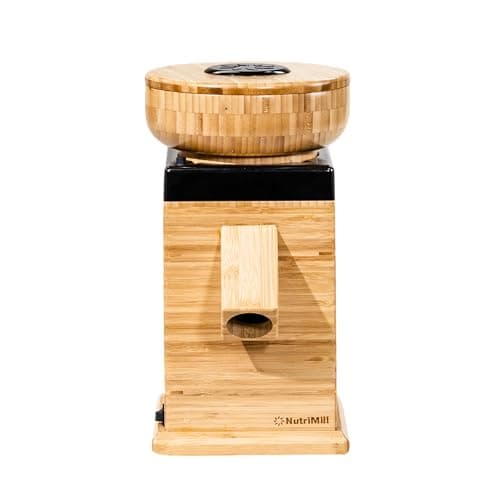 NutriMill Harvest Electric Stone Grain Mill, 450 Watt Stone burrs, a 450-watt motor and a texture knob that runs from cracked grain to fine flour, which is the specification that matters for bread: you want one mill that can give you a fine flour for a loaf and a coarse meal for a porridge. | The one to buy for bread | |
| 02 | 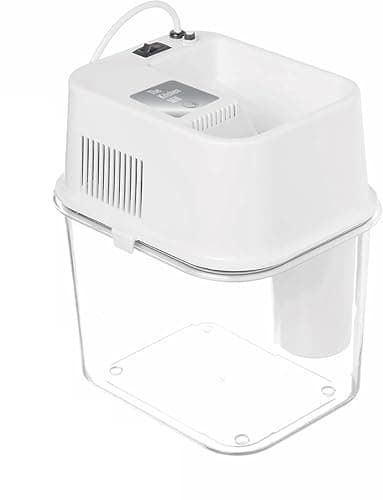 The Kitchen Mill Upgraded Electric Grain Mill An impact mill rather than a burr mill: grain is thrown against a stainless chamber at speed instead of being crushed between stones. | Best value electric | |
| 03 | 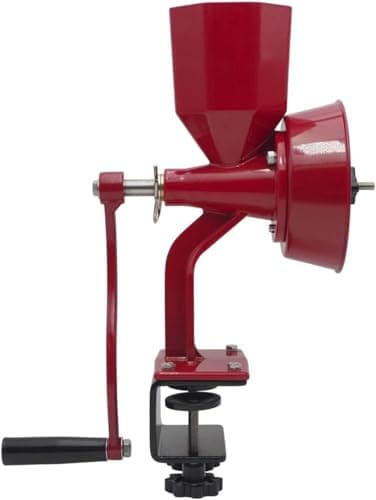 WonderMill Junior Deluxe Hand Grain Mill The hand mill worth owning, because it ships with two sets of burrs. | Best hand mill | |
| 04 | 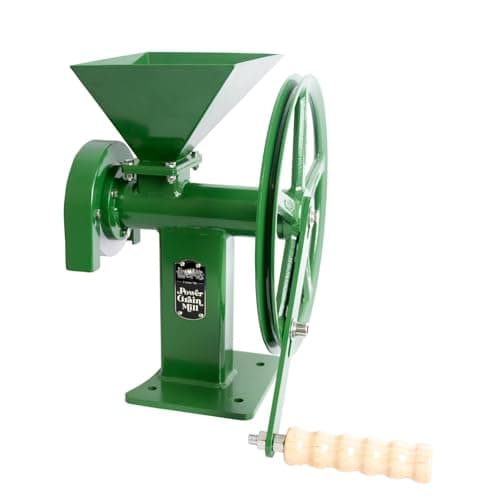 Lehman's Manual Power Grain Mill A 26-pound lump of a mill with a 12-inch cast flywheel, and the flywheel is the whole argument: momentum does the work your shoulder otherwise does, which is how a hand mill gets to pastry-fine flour in one pass. | Manual that reaches fine | |
| 05 | 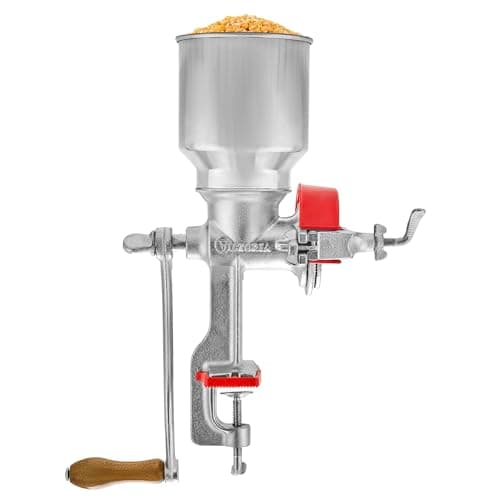 Victoria Manual Cast Iron Grain Mill, High Hopper Included because it is the mill most people find first and the one most likely to disappoint them. | Corn, not bread flour |
#ad · We earn a commission on Amazon purchases. Prices come from Amazon and change.
A grain mill is the most expensive object on this site and the one we are least likely to tell you to buy. It will not make better bread. The loaf you are already making with a good bag of flour is not being held back by the flour, and anyone who tells you a mill is the missing piece is selling you a mill.
What it does is make different flour, and make it fresh. Whole grain flour contains the germ, the germ contains oil, and that oil begins to oxidize from the moment the grain is broken open. That is the entire reason this site tells you to keep whole grain flour in the freezer rather than the cupboard. A mill removes the storage problem by removing the storage: you break the grain open an hour before you mix. Whether that is worth several hundred dollars to you is a taste question, not a technical one, and this page is ordered to help you answer it honestly.
Stone, impact or steel is the one specification that decides everything
Almost every argument about mills collapses into this. There are three mechanisms and they are not interchangeable.
Stone burrs crush grain between two hard stones, which is the mechanism that has always made bread flour. You get whole flour with the germ in it, and a usable range from cracked grain through to fine. The hard limit is oily material: oil glazes and clogs a stone, so a stone mill must never see sunflower seeds, flax or nuts. NutriMill also warns off whole buckwheat with the hull on.
Impact mills, sometimes called micronizers, throw the grain against a chamber at very high speed and shatter it. They are fast and they produce an extremely fine flour, which is why they are popular. The trade is that there is no coarse setting worth the name, they are louder, and shattering grain at speed puts more heat into the flour.
Steel burrs work like stone but in metal. They are more tolerant — oily and high-moisture foods are fine — and typically slightly coarser for the same setting. Most hand mills use steel, and the hand mill here that includes both stone and steel heads is the one that covers every case.
For sourdough specifically: if you want one mill that makes bread flour and can also crack grain for a porridge, buy stone. If you only ever want fine flour and you want it in two minutes, impact is the cheaper and faster answer and you will not miss the coarse setting.
Heat is the specification nobody lists, and for sourdough it matters
Milling turns electricity and friction into flour and warmth. That warm flour then goes straight into a dough whose temperature decides how long bulk fermentation takes — King Arthur puts the target for wheat doughs at 75 to 78F — so the mill has quietly become one of the variables in your timings. Mix with flour that is 100F and you are not mixing the dough you think you are.
Almost nobody publishes a figure. The Kitchen Mill states around 100F output on its upgraded model, which is the only number any of these makers put in writing, and the fact it is a selling point tells you impact mills ran hotter than that before. Stone burr mills at lower speeds put in less heat, but none of them quantify it. The practical answer is dull: mill ahead and let the flour come back to room temperature, or measure the dough after mixing and adjust your water temperature next time rather than guessing.
Electric or hand crank, honestly
Hand milling sounds romantic until you do the arithmetic. A single loaf wants around 500 g of flour, which is roughly four cups. WonderMill puts the Junior Deluxe at about 1.25 cups a minute, so that is three or four minutes of steady cranking against resistance, every bake, before you have mixed anything. It is genuinely hard work, not a gentle ritual.
A flywheel changes the equation, which is why the Lehman’s mill has a 12-inch one: momentum carries the burrs through the grain instead of your shoulder doing every rotation. It is still work. Electric mills do the same job in a couple of minutes and the cost is noise — all of these are loud, and the quietest claim on this page is a relative one.
Two mills you will read about everywhere and cannot buy here
If you research this category for ten minutes you will meet Mockmill and KoMo, the two Austrian and German stone mills that enthusiast bakers rate above everything else. Neither is sold on Amazon — we searched the catalog for both and there is no listing for either, because they sell direct and through specialty grain retailers.
We are not going to put a buy button on a product we cannot actually send you to, and we are not going to quietly leave them out so the page looks complete. If a premium stone mill is what you want, go to those brands directly. Everything ranked below is a mill with a real, current listing that we checked before writing about it.
Fresh-milled flour does not behave like the flour you know
This is the part that catches people out, and it is worth knowing before you spend the money rather than after. Fresh-milled flour absorbs more water than aged flour of the same type — King Arthur, writing about a fresh-milled whole grain loaf, advises withholding some water and adding it over the course of mixing rather than committing it all at the start. Your established hydration number is no longer your number.
Fermentation also moves faster, because you have just put the whole living chemistry of the grain into the bowl. King Arthur’s fresh-milled formula uses a smaller levain for exactly that reason. So a mill does not slot into your existing routine; it resets your hydration and your timings, and the first few loaves are a re-learning exercise. Some bakers age fresh flour for a day or more to settle it down; others mill the morning they bake, on the grounds that the oils start oxidizing as soon as the grain opens. Both are defensible.
Why your first fresh-milled loaf may be dense
Whole flour is all of the grain, which means bran. Bran fragments are sharp on the scale that matters to a gluten network, they cut strands as the dough develops, and they absorb water that is then not available to the gluten. The result is a loaf that rises less and eats denser than the same formula in white flour. That is physics, not a milling fault, and it is why bakers who mill often sift some of the coarse bran back out.
The sensible way in is not to replace all your flour at once. Swap a quarter or a third of the white flour in a formula you already know for fresh-milled whole grain, see what it does to the rise and the timing, and move up from there. If you want the loaf to stay open and light, the bought bread flour you already use is doing real work and there is no prize for abandoning it.
Then you have to buy grain, and not all of it makes bread
A mill is only half the purchase. The other half is wheat berries, and the decision there is the same one that governs bought flour: hard wheat or soft. King Arthur puts hard wheats at roughly 10 to 14 percent protein and soft wheats lower, with their own bread flour at 12.7 percent and their pastry flour, milled from soft wheat, at 8 percent. Protein is what builds a gluten network, so a sourdough loaf wants hard wheat berries and nothing else.
The hard wheats King Arthur names are hard red winter, hard red spring, hard white and durum. Hard red and hard white are both bread wheats and differ mainly in the seed coat and in how strong the wheat flavor reads; hard white is usually the milder of the two, which makes it an easier first bag if you are not sure you want a loaf that tastes emphatically of wheat. Soft wheat berries are for pastry and cake, and milling them for bread will produce exactly the slack, weak dough the protein figure predicts.
The upside of buying grain rather than flour is that whole berries keep far longer than flour does, because the oil is still sealed inside an intact kernel. That is the same mechanism that makes bought whole grain flour a storage problem read in reverse, and it is the strongest practical argument for owning a mill at all: you are storing your whole grain in the form that lasts.
How to choose
- Pick the mechanism first. Stone for bread flour with a range; impact for fine flour, fast and cheaper. This is the decision; everything else is detail.
- Then electric or hand. Be honest about whether you will crank for four minutes before every bake. If there is any doubt, buy electric.
- Check what the mill must never see. Stone burrs and oily seeds are incompatible. If you want to mill flax or nuts too, you need steel burrs, which means the hand mill with both head sets.
- Buy grain in a quantity you will actually use. Whole berries keep far longer than flour does, which is the other half of the freshness argument, but a sack is still a sack.
- Expect to re-learn your hydration. Hold back some water on the first few bakes and add it during the mix.
What a mill will not do
It will not improve a loaf you are already making well with good bought flour. It will not produce white flour — you can sift bran out, but a home mill does not separate germ and endosperm the way a commercial roller mill does, so sifted home flour is not the same product as a bag of white. It will not mill oily seeds if its burrs are stone, whatever you read in a forum. And it will not fix a fermentation problem; if your loaves are dense now, fresh flour will make them denser before it makes them better, and the cause is far more likely to be timing or temperature.
Buying advice, short version
Most people reading this should not buy a mill, and should spend the money on better flour and more practice. If you are going to buy one, buy the stone burr electric: it makes bread flour, it has a coarse setting for everything else, and stone is the mechanism the whole tradition is built on. Buy the impact mill instead if speed and a very fine flour are what you actually want and you will never crack a grain. Buy the hand mill with two head sets if you want one tool for grain and oily seeds, or the flywheel mill if you want a hand mill that genuinely reaches fine. And do not buy the fifty-dollar cast-iron mill expecting bread flour — Victoria themselves say it will not do that, and they are right.
Every pick, in order
The full write-ups
Pick 01 · The one to buy for bread
NutriMill Harvest Electric Stone Grain Mill, 450 Watt
NutriMill
Stone burrs, a 450-watt motor and a texture knob that runs from cracked grain to fine flour, which is the specification that matters for bread: you want one mill that can give you a fine flour for a loaf and a coarse meal for a porridge. With Mockmill and KoMo absent from Amazon, this is the stone mill you can actually buy here, and the 5-year warranty is the longest of the electrics.
Type
Electric, natural corundum milling stones
Motor
450 W
Texture
Coarse, medium or fine; cracked grain through fine flour
Size
7 x 7 x 13 in, 16 lb; bamboo housing
Warranty
5 years
Specs compiled from: Manufacturer published specification sheet
What is good
- Stone burrs and a fine setting, so it will actually make bread flour rather than meal
- One knob covers cracked grain to fine flour, which no single-setting mill does
- Five-year warranty, and a bamboo body that does not look like a workshop tool on a counter
What is not
- The most expensive mill here, and roughly what a good Dutch oven plus a scale plus a banneton costs together
- Stone burrs cannot mill oily seeds, and NutriMill also warns off whole buckwheat with the hull on
- NutriMill publishes no throughput or hopper figure, so how long a loaf's worth takes is not something you can look up
- Owners consistently describe it as loud; there is no published decibel figure either way
#ad Disclosure · Price as of October 17, 2026
Pick 02 · Best value electric
The Kitchen Mill Upgraded Electric Grain Mill
The Kitchen Mill
An impact mill rather than a burr mill: grain is thrown against a stainless chamber at speed instead of being crushed between stones. That makes it fast and very fine, and the 2026 revision is aimed squarely at the two things people disliked about impact mills -- the manufacturer claims up to three times less noise and roughly 100F output flour, which matters because hot flour is a real problem in a dough you are trying to hold at 78F.
Type
Electric impact mill, stainless Micronetic chamber
Speed
1 cup of flour in 20-30 seconds, per the manufacturer
Flour temperature
Around 100F output, per the manufacturer
Noise
Up to 3x quieter than the previous model, per the manufacturer
Warranty
Lifetime grinding mechanism; assembled in the USA
Specs compiled from: Manufacturer published specification sheet
What is good
- Fast enough that a loaf's worth of flour is a two-minute job, not a ten-minute one
- Impact milling gives a very fine flour without a fineness setting to get wrong
- The two stated upgrades -- quieter, cooler -- are the exact complaints people had about impact mills
What is not
- Impact mills cannot be set coarse, so cracked grain and coarse meal are off the menu entirely
- No published wattage, hopper capacity or throughput in pounds, and the noise and temperature figures are the maker's own with no test behind them we can see
- Still an impact mill: louder than a stone burr mill even after a 3x improvement
- The older model is 50 dollars cheaper and shares the chamber, so the upgrade is the thing you are paying for
#ad Disclosure · Price as of October 17, 2026
Pick 03 · Best hand mill
WonderMill Junior Deluxe Hand Grain Mill
WonderMill
The hand mill worth owning, because it ships with two sets of burrs. The stone set does dry grain, corn and beans; the stainless set does what stone cannot touch -- oily and high-moisture foods, cocoa, nuts. That makes it the only mill here that will grind both your bread flour and a seed paste, and swapping the heads is a couple of minutes of work rather than a project.
Type
Hand crank; stone burr set AND stainless burr set included
Stone burrs
Wheat, corn and dry beans, per the manufacturer
Stainless burrs
Adds oily and high-moisture foods, chocolate and cocoa beans
Speed
About 1.25 cups of flour a minute, per the manufacturer listing
Warranty
Limited lifetime
Specs compiled from: Manufacturer published specification sheet
What is good
- Two burr sets in one box covers both non-oily grain and the oily foods a stone mill must never see
- Needs no power, so it mills in a blackout and makes no motor noise at all
- Limited lifetime warranty, which no electric here matches
What is not
- You are the motor: at about 1.25 cups a minute, a 500 g loaf is real physical work every single bake
- Costs more than the cheapest electric, so you are paying a premium for the hand-crank, not saving money
- Needs clamping or bolting to something solid, and a thin overhanging counter is not solid
- The separate Deluxe PLUS package adds a nut-butter auger; this listing does not include it
Pick 04 · Manual that reaches fine
Lehman's Manual Power Grain Mill
Lehman's
A 26-pound lump of a mill with a 12-inch cast flywheel, and the flywheel is the whole argument: momentum does the work your shoulder otherwise does, which is how a hand mill gets to pastry-fine flour in one pass. Electrolytic-polished stainless burrs, sealed ball bearings and four bolt holes in the base, because this is designed to be mounted and kept rather than stowed in a cupboard.
Type
Hand crank with 12 in iron V-belt flywheel
Burrs
Electrolytic-polished stainless steel
Hopper
6 cups
Fineness
Pastry flour in one pass, per the manufacturer
Size
14 in high, 26 lb; sealed ball bearings; can be motorized
Specs compiled from: Manufacturer published specification sheet
What is good
- The flywheel genuinely changes how hard hand-milling is, and it reaches pastry-fine in one pass
- A 6-cup hopper means you load once for a batch instead of feeding it by the handful
- Pre-drilled for bolting and able to take a motor later, so it is not a dead end
What is not
- Twenty-six pounds and 14 inches tall -- this lives bolted to a bench, not in a cupboard
- Steel burrs, not stone, so it is a different flour character from the stone mills above
- No published burr diameter, and nothing published about oily seeds either way
- Costs about as much as the hand mill with two burr sets, and does the one job
#ad Disclosure · Price as of October 17, 2026
Pick 05 · Corn, not bread flour
Victoria Manual Cast Iron Grain Mill, High Hopper
Victoria
Included because it is the mill most people find first and the one most likely to disappoint them. Victoria is a genuinely good tinned cast-iron corn mill for fifty-odd dollars, and Victoria themselves state it is NOT suitable for superfine flour or fine whole wheat grinding. For masa, cracked grain, coffee or grits it is excellent value. For sourdough bread flour it is the wrong tool, whatever the listing photographs suggest.
Type
Hand crank; white iron grinding discs
Fineness
Coarse to moderately fine only
Manufacturer states
Not suitable for superfine flour or fine whole wheat grinding
Body
Cast iron with double tin plating; clamps to 0.5-2 in surfaces
Size
5.2 x 6.1 x 12.5 in, 10 lb; made in Colombia
Specs compiled from: Manufacturer published specification sheet
What is good
- Excellent value for what it IS -- corn, masa, grits, cracked grain, coffee and spices
- Double-tinned cast iron and white iron discs, so it will outlast most kitchen gadgets
- The cheapest honest way to find out whether you enjoy hand-milling before spending real money
What is not
- Victoria state plainly it will not produce superfine flour or fine whole wheat -- so it will not make bread flour
- Repeated passes will not fix that; the disc geometry is the limit, not your patience
- Clamps to a counter between half an inch and two inches thick, which rules out thick stone tops
- Hand crank with no flywheel, so there is no momentum helping you
#ad Disclosure · Price as of October 17, 2026
How we picked
We have not tested any of this equipment. What we did instead: compiled the published specifications from each manufacturer’s own listing, checked them against the task a beginner is actually trying to do, read the care instructions, and named the thing we would skip. Where a pick is a product type rather than a brand, it is because the category is sold mostly unbranded and the type is the real decision.
Frequently asked
Questions
+Do I need a grain mill for sourdough?
No. The overwhelming majority of excellent sourdough is made with bought flour, and a mill will not improve a loaf that is already working. It changes what the flour is — whole, with the germ, used within hours of milling — which is a flavor and freshness decision rather than a technical upgrade.
+Stone or impact mill for bread flour?
Stone, if you want one mill to cover everything. Stone burrs give you whole flour and a real range from cracked grain to fine, which is what bread baking asks for. Impact mills are faster and produce a very fine flour but have no usable coarse setting, run louder, and put more heat into the flour.
+Can you make white flour with a home grain mill?
Not really. You can sift coarse bran out of fresh-milled flour and get something lighter, but a home mill does not separate the germ and endosperm the way a commercial roller mill does. Sifted home-milled flour is a different product from a bag of white bread flour, not a substitute for it.
+Does fresh-milled flour need more water?
Generally yes. King Arthur, writing about a fresh-milled whole grain loaf, notes it absorbs more water than aged flour and advises withholding some water and adding it during mixing rather than committing it all up front. Treat your usual hydration figure as a starting guess for the first few bakes.
+Why is my fresh-milled sourdough dense?
Because whole flour contains bran, and bran both cuts developing gluten strands and soaks up water the gluten would otherwise get. A fully whole-grain loaf is denser than the same formula in white flour. Sift some coarse bran out, or start by replacing only a quarter to a third of your white flour.
+Can I mill flax or sunflower seeds in a stone mill?
No. Oil glazes and clogs stone burrs, and every stone mill maker says so. Oily and high-moisture foods need steel burrs — which is the reason the hand mill on this page ships with a stainless set alongside its stone set.
+Does milling heat the flour, and does it matter for sourdough?
It does both. Friction warms the flour, and flour temperature feeds straight into dough temperature, which sets how fast bulk fermentation runs. The Kitchen Mill states around 100F output on its upgraded model and is the only maker here publishing a figure. Mill ahead and let the flour cool, or measure the dough after mixing and correct your water temperature next time.
+Why are Mockmill and KoMo not in this roundup?
Because neither is sold on Amazon. We searched the catalog for both and found no listing, since they sell direct and through specialty grain retailers. We would rather say that plainly than attach a buy link that resolves to a search for a product that is not there. If you want one, buy from the brand.
+Will a fifty-dollar cast-iron mill make bread flour?
No, and the manufacturer agrees. Victoria state their cast-iron mill is not suitable for superfine flour or fine whole wheat grinding; it runs from coarse to moderately fine. It is a genuinely good corn and masa mill at the price, and the wrong tool for a loaf of bread. Extra passes will not change it, because the limit is the disc geometry.
Sources
Where the facts on this page came from
- NutriMill — Harvest grain mill specifications (450 W, corundum stones, texture control, 5-year warranty, no oily seeds)
- The Kitchen Mill — upgraded model claims (1 cup in 20-30 seconds, up to 3x quieter, around 100F output, lifetime grinding mechanism warranty)
- Wonder Junior Deluxe — stone burrs for dry grain, stainless burrs for oily and high-moisture foods, about 1.25 cups a minute
- Lehman's Manual Power Grain Mill — published specifications (stainless burrs, 12 in flywheel, 6-cup hopper, 26 lb, pastry flour in one pass)
- Victoria Cookware — cast iron grain grinder, high hopper: coarse to moderately fine, NOT suitable for superfine flour or fine whole wheat
- King Arthur Baking — hard vs soft wheat (hard wheats 10-14% protein; bread flour 12.7%, pastry flour 8%; the hard wheat types)
- King Arthur Baking — a fresh-milled whole grain sourdough (fresh-milled flour absorbs more water; fermentation activity increases; milling the morning of the bake)
- King Arthur Baking — desired dough temperature (the 75-78F target that mill heat interferes with)
Read next