Hub 02 · Sourdough Starter
What to do with sourdough discard
Discard is half flour and half water, and it is the part of sourdough nobody warns you about. Here is what it is good for, how long it lasts, and how to stop producing so much.
We earn a commission if you buy through our links, at no extra cost to you. We have not tested this equipment. Here is what we did instead.
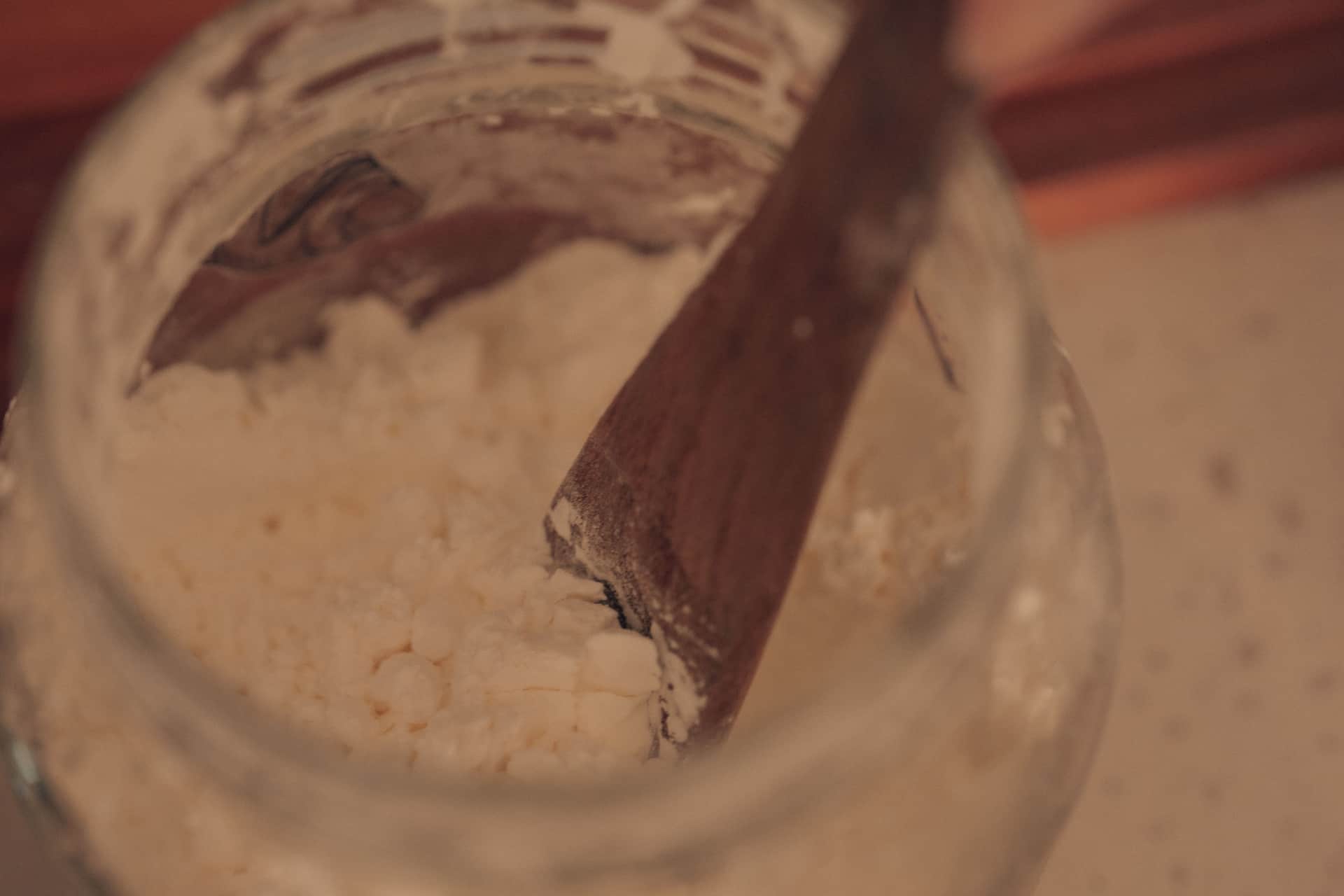
Collect it in a lidded jar in the refrigerator, where King Arthur Baking says it keeps for several weeks, and use it in pancakes, waffles, crackers, flatbreads or pizza dough. Or throw it away. Both are correct answers, and the second one costs you a spoonful of flour.
What follows is the part that actually reduces the problem: what discard is, when it is not usable, and why you are producing so much of it in the first place.
What discard actually is
Discard is the portion of starter removed during routine maintenance to make room for fresh flour and water. It is not spoiled, it is not a by-product, and it is not different in kind from the starter you keep — it is the same culture, minus the fresh feed.
If you feed with equal weights of flour and water, as this site recommends throughout, the arithmetic is simple: discard is roughly half flour and half water by weight. A hundred grams of discard is about fifty grams of flour and fifty grams of water. That single fact is what makes it usable in a recipe — you are adding flour and water that happen to be sour, and you subtract them from what the recipe asks for.
King Arthur’s guidance is to substitute discard for up to a third of a recipe’s flour content. Beyond that you are changing the recipe rather than using up a leftover.
When discard is not usable
- While the starter is still establishing. King Arthur is explicit: do not start using discard until the starter is genuinely up and running. In the first week you are throwing away a mixture that has not yet become a stable culture, and it should go in the bin rather than into breakfast.
- If there are pink or orange streaks. Black or dark liquid on top is hooch and is fine. Pink or orange streaking means likely contamination, and that jar is thrown out — the same rule that applies to the starter itself in our troubleshooting chart.
- If there is fuzzy growth. Raised, textured growth of any color is mold. Discard the jar and its contents; do not scrape and continue.
Everything short of those three is a question of flavor rather than safety. Discard gets more sour the longer it sits, which is a reason to use it sooner and not a reason to be worried.
How to store it
Keep a second jar. Add each day’s discard to it, stir it in, and keep it in the refrigerator with a lid that rests on rather than seals — the culture is slow in the cold but it is not dead, and a sealed jar in a fridge will eventually push its lid.
Three habits make the second jar work:
- Write the date on it. Discard accumulated over three weeks is a different ingredient from yesterday’s, mostly in sourness.
- Stir before you pour. It separates. The dark liquid stirs back in and makes it sharper, or you pour it off for something milder.
- Use a jar you can see through and get a spatula into. Cold discard is stiff, and a narrow-necked jar makes emptying it a genuine annoyance.
A wide-mouth quart jar is the obvious vessel, for the same reasons it is the right jar for the starter itself — the sizing argument is in what size jar you need for a starter.
What it is genuinely good for
King Arthur groups the uses into four, and the grouping is more useful than any individual recipe:
- Quick breads and batters. Pancakes, waffles, banana bread, biscuits, cookies, crackers, granola. This is where most discard goes, because these recipes are leavened chemically and do not need the starter to do any lifting.
- Yeast breads and pizza crusts. Here the discard contributes flavor and a little acidity, while the actual rise comes from your active starter or from packet yeast.
- Giving it away. A jar of established discard is how most people get their first starter, and it saves someone else a fortnight — compared against buying a culture in buy a starter, or grow your own.
- Substituting into recipes you already make. Up to about a third of the flour, adjusting the liquid to match, since half the weight of discard is water.
One expectation to correct: discard does not make things rise. Unfed discard has spent its gas. Any recipe relying on it for lift will disappoint; recipes that call for baking powder or soda, or for a separate active leaven, will not.
The real fix: make less of it
Most people producing uncomfortable quantities of discard are keeping a large starter and feeding it daily out of habit. Three changes, in order of effect:
- Keep a smaller starter. If you carry 25 to 50 grams between feeds rather than several hundred, the discard shrinks proportionally. A small starter builds into a large levain the night before you bake; there is no reason to store what you can build on demand.
- Put it in the refrigerator. A cold starter is fed once a week rather than once or twice a day, which removes roughly six feeds and six discards from the week. King Arthur’s weekly routine keeps 113g of starter and feeds it 113g each of flour and water, letting it bubble on the counter for an hour or two before it goes back in the cold.
- Feed at a higher ratio when you do feed. Feeding a small amount of starter a proportionally larger amount of flour and water buys more time between feeds, which is the same lever pulled from the other end.
The full counter-versus-fridge routine, including which one suits how often you actually bake, is in feeding and storing a sourdough starter.
The equipment this actually needs
Very little, and you probably own most of it. A second wide-mouth jar for the discard, a solid storage lid rather than a sealed metal band, and a scale.
The scale is the one that matters, because every decision on this page is a weight: how much you carry between feeds, how much flour and water you add, and how much discard you can substitute into a recipe. Volume measures of a sticky paste are guesswork — the scales we would buy are here, and the jars are in best sourdough starter jars.
Frequently asked
Questions
+Is sourdough discard safe to eat?
Discard from an established, healthy starter is safe to bake with. King Arthur advises against using discard until the starter is genuinely up and running, so discard from the first week goes in the bin. Pink or orange streaks or fuzzy growth mean throw the jar out.
+How long does sourdough discard last in the fridge?
Several weeks, according to King Arthur Baking, getting steadily more sour as it sits. Dark liquid on top is normal; pink or orange streaks are not, and mean it should be thrown out.
+Does sourdough discard make things rise?
No. Unfed discard has already used up its gas, so it contributes flavor and acidity rather than lift. Use it in recipes leavened with baking powder or soda, or alongside an active starter or packet yeast.
+How much discard can I put in a recipe?
King Arthur suggests substituting discard for up to a third of a recipe’s flour. Because discard fed at equal weights is about half water, reduce the recipe’s liquid by roughly half the weight of discard you added.
+How do I stop producing so much discard?
Keep a smaller starter, move it to the refrigerator so it is fed weekly rather than daily, and feed at a higher ratio when you do feed. Those three changes remove most of the discard without changing anything about your bread.
+Can I just throw sourdough discard away?
Yes. It is a spoonful of flour and water. Feeling obliged to bake something with every discard is the fastest way to resent a hobby that is supposed to be enjoyable.
Sources
Where the facts on this page came from
Read next