Hub 03 · Sourdough Baking Gear
How to score sourdough with a lame
Cold dough, a fresh blade, one confident cut at a shallow angle. Four things, and three of them are free.
We earn a commission if you buy through our links, at no extra cost to you. We have not tested this equipment. Here is what we did instead.
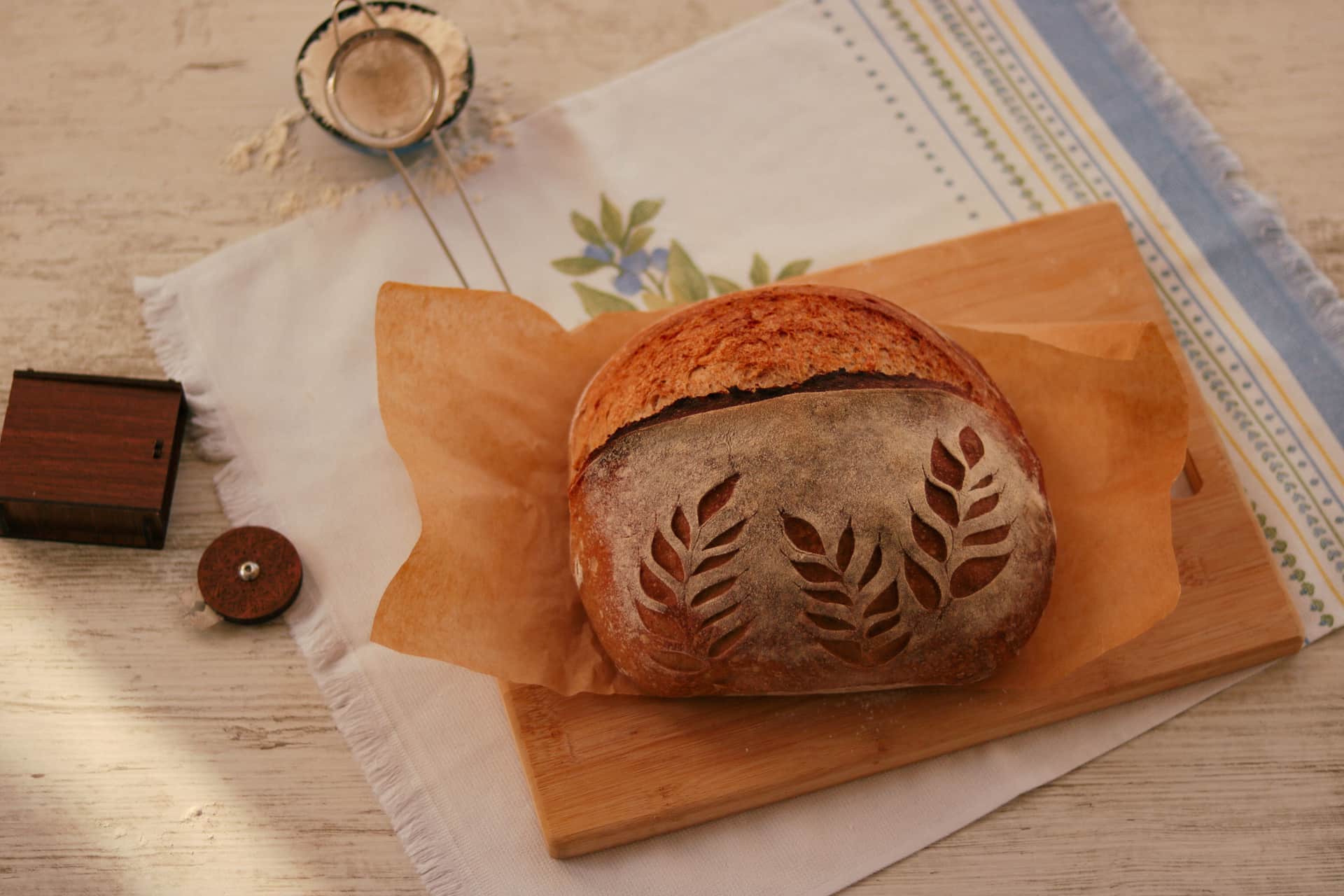
Scoring does two things. It controls where the loaf opens, so it does not burst at a random weak point, and it produces the raised ridge people call an ear. Both come down to the same variables: how cold the dough is, how sharp the blade is, and what angle you hold it at.
1. Cold dough cuts, warm dough drags
This is the single biggest factor and it costs nothing. A loaf proofed overnight in the fridge, or given half an hour in the freezer before scoring, is firm at the surface. A blade parts it. A room-temperature loaf is tacky, and the blade pulls the surface along with it.
If your scores keep tearing, chill the dough before you buy anything.
2. A fresh blade, every few bakes
Double-edge blades cost pennies. A dull one tears. Change it far more often than feels warranted — this is the practical reason we recommend a cheap lame, because people who paid for the handle are oddly reluctant to change the blade.
3. The angle is what makes an ear
Hold the blade almost flat against the loaf — roughly 20 to 30 degrees from the surface, not perpendicular. That cuts under the skin and lifts a flap of dough rather than opening a trench. In the oven, steam pushes that flap up and it sets into the ridge you were after.
A vertical cut opens a valley. Both are fine; only one gives an ear.
4. Depth and confidence
About half an inch, in one continuous movement. Hesitant repeated passes are the commonest beginner error and they produce a ragged score that closes up in the oven.
Commit to one cut. A single confident slash on a boule is a better result than an elaborate pattern executed timidly, which is why every experienced baker recommends starting with one line.
Where to cut
For a round loaf: one long slash slightly off-center, or a cross. For a batard: one long cut down the length, or several diagonal overlapping cuts. Decorative patterns are cut shallow, and they are cut in addition to a deeper structural score, not instead of one.
If it still will not work
Check the surface is dry. A tacky loaf resists a blade, and a proofing basket is what dries the surface — see banneton versus bowl. Rice flour on the loaf just before scoring also helps, because it gives the blade something dry to travel through.
And be careful. A double-edge razor blade is sharp on both sides and easy to lose on a floury worktop.
Frequently asked
Questions
+How do you use a bread lame?
Chill the shaped loaf, fit a fresh blade, turn the loaf out smooth-side up, and make one confident cut about half an inch deep with the blade held almost flat against the surface. Then load it into the hot vessel immediately.
+Why does my sourdough not get an ear?
Usually because the blade went in too vertically. An ear forms when a shallow angle — around 20 to 30 degrees — cuts under the skin and lifts a flap, which steam then pushes upward.
+How deep should you score sourdough?
About half an inch for the main structural cut, in one continuous movement. Decorative cuts are shallower and are made in addition to the deep score, not instead of it.
+Should sourdough be cold when you score it?
Yes. Cold dough is firm at the surface and parts cleanly under a blade. Room-temperature dough is tacky and drags. Chilling the loaf is the biggest single improvement to scoring and it costs nothing.
Read next