Hub 03 · Sourdough Baking Gear
What to use instead of a bread lame
The blade does the cutting. A lame is a handle that holds the blade at an angle, and there are several safe ways to hold one without buying anything.
We earn a commission if you buy through our links, at no extra cost to you. We have not tested this equipment. Here is what we did instead.
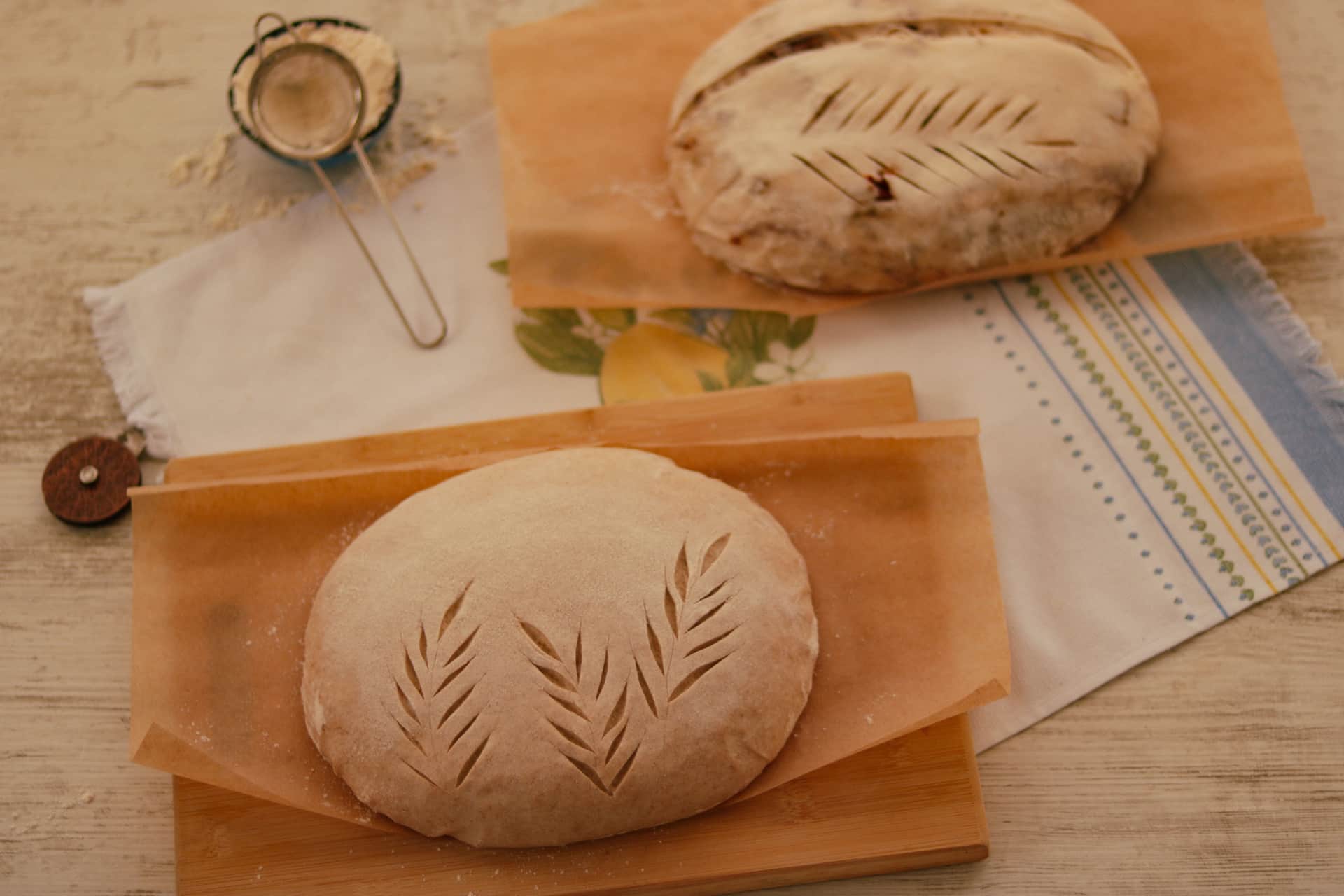
Use a fresh double-edge razor blade, or the thinnest, sharpest knife you own. Scoring is entirely about the sharpness and thinness of the edge. A lame contributes a handle and a way to hold the blade at an angle; it contributes nothing to the cut itself.
Why sharpness is the whole question
A proofed loaf is a bag of gas held in a slack gluten net. A thin, very sharp edge parts it. A thick or dull edge pushes it, drags the skin sideways, and deflates the section you were trying to open. That is why a serrated bread knife, which cuts baked bread beautifully, makes a mess of raw dough.
It is also why a blade gets used once or twice and then replaced. Razor blades are consumable, and a slightly dull one is the commonest reason a score drags.
What works
- A bare double-edge razor blade. The same blade a lame holds. Snap the paper wrapper into a fold to make a spine you can pinch, or hold it by one long edge with the short edges free. This is what most bakers who own no lame actually do.
- A blade on a stick. Thread a double-edge blade onto a wooden coffee stirrer, a chopstick or a skewer through the slots in the middle of the blade. It flexes into a curve, which is exactly what a curved lame gives you, and it costs nothing.
- A craft or utility knife with a fresh snap-off blade. Genuinely sharp, genuinely thin, and it has a handle and a retracting mechanism. Use a new segment and keep it for the kitchen.
- A very sharp thin-bladed knife. A paring knife works if it is properly sharp. Most kitchen knives are not sharp enough for this and will drag.
- Scissors, for a different look. Snipping a crown or a row of spikes with kitchen shears is a legitimate technique, not a workaround. It gives an entirely different crust pattern.
What does not work
- A serrated bread knife. The teeth tear rather than slice through a soft skin.
- A blunt chef’s knife. Thickness is the problem; the blade wedges the dough apart rather than parting it.
- A bench scraper. Blunt by design, thick, and the wrong shape entirely.
- Anything dragged slowly. Whatever you use, one confident movement cuts. Hesitation is what tears, more often than the tool is.
Which blade, if you are buying blades
- Double-edge safety razor blades. The standard choice, sold in packs of a hundred for very little. They are thin, extremely sharp, and have the two central slots that let them mount on a lame or a skewer. They are also sharp on both long edges, which is the whole safety consideration.
- Single-edge blades. One cutting edge and a reinforced spine, which makes them far easier to hold in bare fingers. Thicker than double-edge blades, so the cut is fractionally less clean, and they do not fit most lame handles.
- Snap-off utility blades. Already in a handle, already retractable, and a fresh segment is genuinely sharp. The compromise is thickness and a blunter grind than a razor.
Whichever you buy, buy more than you think you need. Blades are cheap, and a dull one is the commonest reason a score drags — which makes changing the blade the first thing to try rather than the last.
What a lame actually buys you
Three things, all real and none of them sharpness:
- A safe grip, which is the main one. You are moving a blade quickly across a soft surface close to your other hand.
- A held angle. The shallow angle that produces an ear — the raised lip along a score — is easier to hold consistently with a handle than with fingers.
- A curved blade. Curving the blade is how the classic angled cut is made, and a curved lame holds that shape for you.
If you want a handle, the useful ones are cheap; we compare them in best bread lames, and the technique itself is in how to score sourdough with a lame.
Do you have to score at all?
Yes, if you want to control where the loaf opens. An unscored loaf still bakes; it simply bursts wherever the crust is weakest, often at the side or the base, and often unattractively. A single decisive cut across the top is enough — the patterns are decoration on top of a functional job.
A dough baked in a tin or a very wet dough that spreads rather than rises needs scoring less, because there is less spring to direct.
Frequently asked
Questions
+What can I use instead of a bread lame?
A fresh double-edge razor blade, a craft knife with a new blade, or a very sharp thin-bladed knife. Threading a razor blade onto a wooden skewer gives you a curved cutting edge and a handle for nothing.
+Can I score sourdough with a normal kitchen knife?
Only if it is genuinely sharp and thin. Most kitchen knives drag the dough rather than cutting it, and a serrated bread knife tears it. Sharpness and thinness matter more than the type of tool.
+How often should I change the blade?
Razor blades are consumables. If a score drags rather than parting cleanly, change the blade before you change anything about your technique.
+Is a lame worth buying?
For safety, yes — a handle keeps your fingers off a double-edged blade, and the cheap ones cost very little. For cut quality, no: the blade does that work, and the same blade fits a handle or your fingers.
Sources
Where the facts on this page came from
Read next