Hub 03 · Sourdough Baking Gear
Dutch oven vs French oven
They are the same pot. French oven is the name the enameled ones wear. The real decision is bare cast iron versus enamel, and that one does matter.
We earn a commission if you buy through our links, at no extra cost to you. We have not tested this equipment. Here is what we did instead.
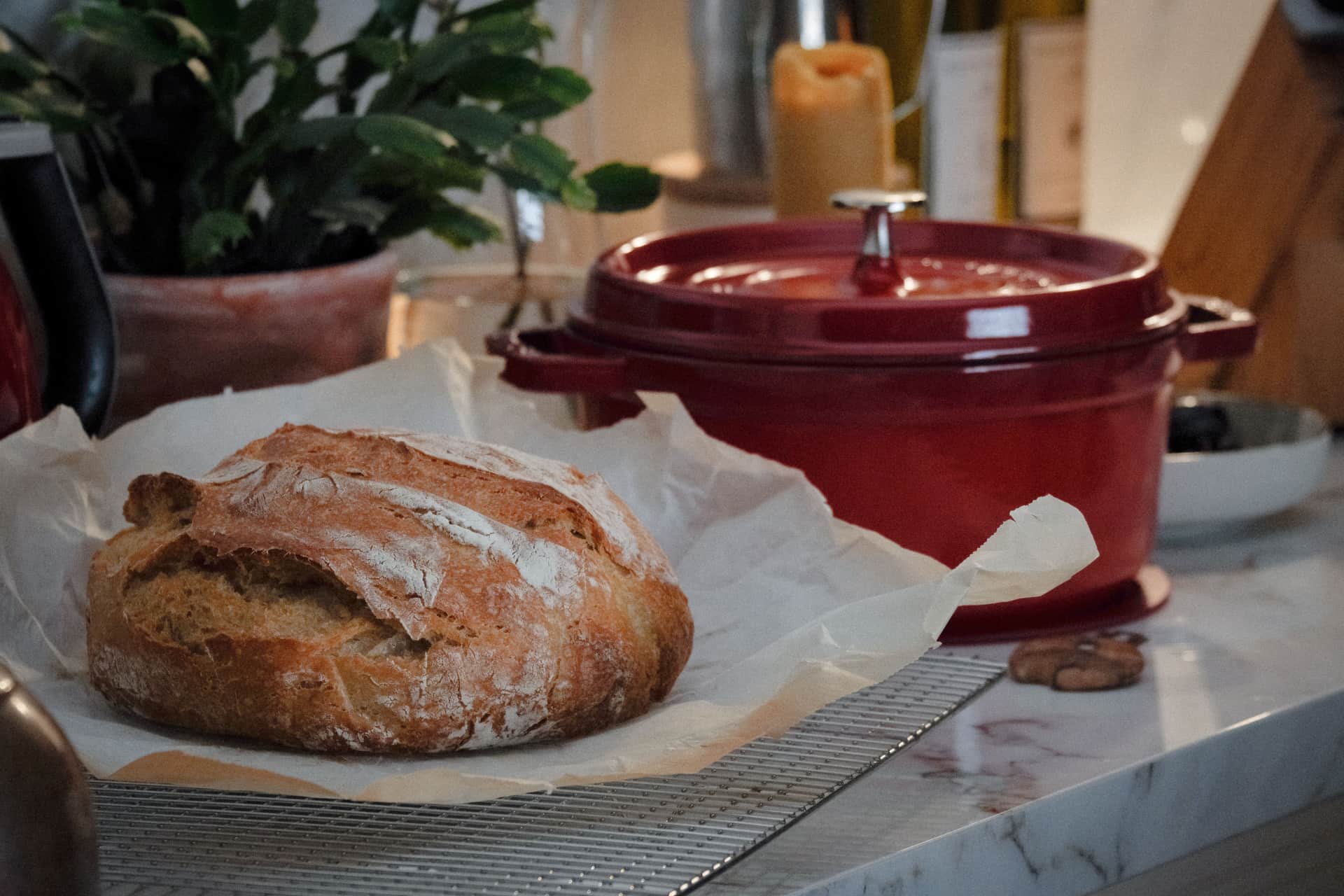
There is no functional difference between a Dutch oven and a French oven. Both are heavy lidded cast-iron pots. “French oven” is the term brands use for the enameled ones, and it carries a suggestion of pedigree rather than a specification. If a shop offers you both, they are describing the same object twice.
The decision worth making is the one underneath the naming: bare seasoned cast iron, or enameled cast iron. That difference is real, and for bread it cuts in a specific direction.
Buy bare cast iron if
You bake hot and want no ceiling
Bare iron has no enamel to chip and no manufacturer temperature limit to respect. It wants seasoning and hand-washing in return, and it is dramatically cheaper.
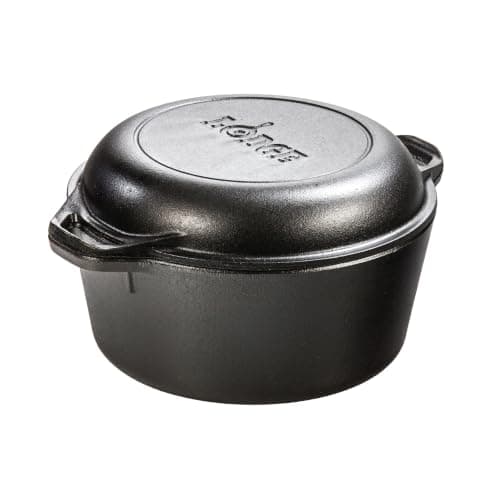
Lodge 5-Quart Double Dutch Oven
#ad Disclosure · Price as of September 14, 2026
Buy enameled if
The pot has to cook as well as bake
Enamel means no seasoning routine, no metallic reaction with tomatoes or wine, and a light interior you can judge browning against. You pay several times more and you inherit a stated temperature limit.
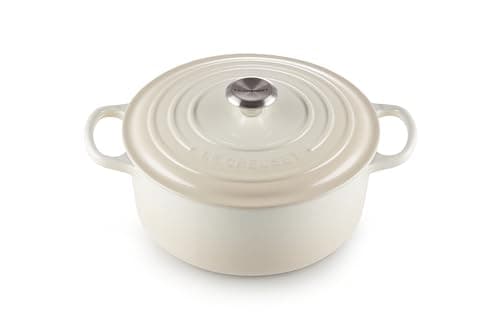
Le Creuset Signature Round Dutch Oven
Where the names come from
“Dutch oven” is the older English term for a heavy lidded cooking pot. “French oven” — sometimes cocotte — attached itself to the enameled cast-iron pots made in France, and has since been applied by marketing departments to enameled pots generally. There is no standards body policing either word.
So when a listing says French oven, read it as “enameled cast iron” and judge it on the things that matter: mass, lid fit, capacity, interior color and stated temperature limit.
What actually differs, for bread
| Consideration | Bare cast iron | Enameled (French oven) |
|---|---|---|
| Steam trapping | Identical | Identical |
| Temperature ceiling | No stated enamel limit | Manufacturer states one - read it |
| Preheating empty | Routine | Check the maker's guidance first |
| Maintenance | Season it, hand-wash it | Wash it and put it away |
| Reacting with food | Can, with acidic dishes | No |
| Judging crust color | Dark interior, harder to read | Light interior, easy to read |
| Chipping | Nothing to chip | Chips if knocked or thermal-shocked |
| Price | Low | High to very high |
The temperature limit is the one to read
Sourdough is usually baked somewhere between 450F and 500F, often with the pot preheated empty. Some enameled pots carry a stated maximum below that, and some makers advise against preheating empty at all. Bare iron has no such caveat.
This is not a reason to avoid enamel — it is a reason to read the manufacturer's own instructions for the pot you are buying, and to bake at the temperature they allow rather than the one a recipe assumes.
Secondhand is the cheapest way into cast iron
Cast iron outlives its owners, which is why the secondhand market is full of it. A bare cast-iron pot with surface rust is recoverable: scrub it, re-season it, and it bakes exactly as well as a new one. That makes a charity shop or a house clearance the cheapest route to a genuinely good bread pot.
Enameled pots are the opposite. Check the interior for chips, especially around the rim where lids knock. A chipped enamel interior exposes the iron underneath and cannot be repaired, and a cracked enamel base will spread. Rust on bare iron is a chore; a chip in enamel is the end of the pot.
Interior color changes how you bake
This is the underrated practical difference. A light enamel interior lets you see exactly how far the base and sides have browned, so you can judge the second half of the bake by looking rather than by the clock. A dark or bare iron interior hides it, and you learn the timing instead.
Some enameled pots use a matte black interior rather than a light one, which gives up that advantage while keeping the enamel's easy cleaning. If being able to read the crust matters to you, check the interior color rather than assuming enamel means light.
What the extra money actually buys
- Enamel that survives being knocked. The most real difference. Cheap enamel chips at the rim, and a chipped rim is where rust starts.
- Handles sized for oven gloves. A genuine ergonomic difference when the pot is at 475F and your mitts are thick.
- A lid that seats precisely. Better castings sit flatter, which means less steam escaping in the first ten minutes.
- A warranty and a resale value. Premium pots hold value in a way house-brand ones do not, which softens the price over a decade.
What it does not buy is a better loaf. Every pot on this page traps steam, and steam is the whole mechanism.
So which should you buy?
If the pot is for bread, buy the cheapest heavy lidded pot with a shape you can load easily, and put the saved money into flour. If the pot also has to braise, serve at a table and last thirty years, enamel earns its premium — just not on the strength of the loaf it produces.
The full ranking is in best Dutch oven for sourdough, the cheap end is in best budget Dutch oven, and the argument for buying nothing at all is in do you need a Dutch oven.
Frequently asked
Questions
+Is a French oven the same as a Dutch oven?
Functionally, yes. Both are heavy lidded cast-iron pots. French oven is the name generally attached to enameled versions; it is a marketing term rather than a specification.
+Is enameled or bare cast iron better for sourdough?
Bare iron has no enamel to chip and no stated temperature ceiling, and costs far less. Enamel is easier to live with and easier to judge crust color against. Both trap steam identically, which is the part that bakes the bread.
+Can you preheat an enameled Dutch oven empty?
Some manufacturers allow it and some advise against it. Read the instructions for your specific pot — this is the one place where the enamel genuinely constrains how you bake.
+Does a more expensive pot make better bread?
No. It makes a more pleasant object to own and often an easier one to load. The loaf is decided by your starter, your proofing and your oven.
Read next