Hub 03 · Sourdough Baking Gear
Best oven gloves for a Dutch oven
Three pages on this site tell you to get serious oven gloves before you lift a 500F pot. This is the one that says which, and why the big number on the box is the wrong thing to read.
We earn a commission if you buy through our links, at no extra cost to you. We have not tested this equipment. Here is what we did instead.
Quick picks
Tap a row for the full write-up · Prices open on Amazon
| # | Product | Best for | Price |
|---|---|---|---|
| 01 | 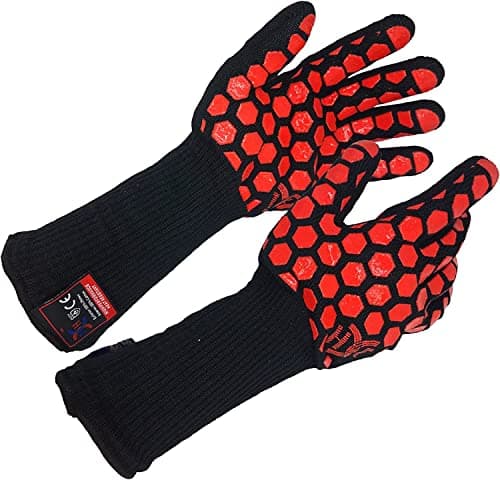 J H Heat Resistant Oven Glove, EN407 Certified Five separate fingers and a cited standard, which is the combination that matters for lifting a lidded pot out of a hot oven. | The one to buy | |
| 02 | 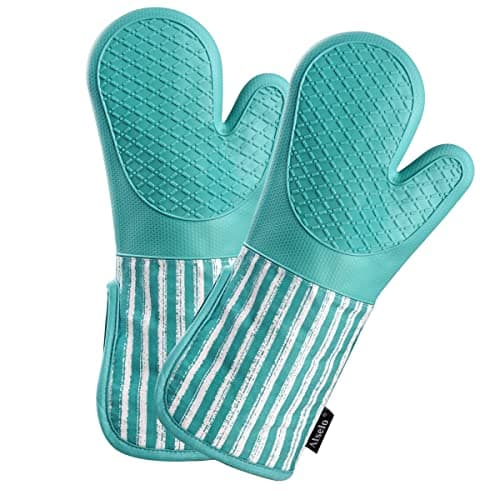 Alselo Silicone Oven Mitts, Waterproof, 7.5 x 15 in The pick that addresses what actually burns people. | The real failure mode | |
| 03 | 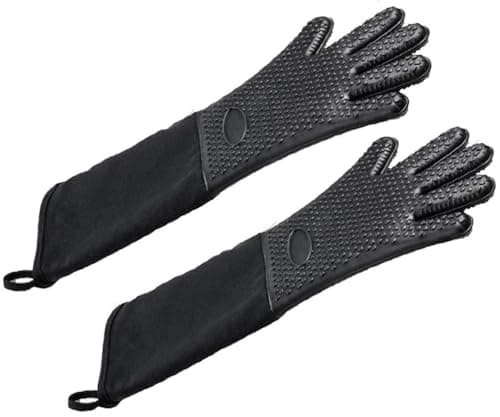 ITISMUNGO Extra Long Silicone Oven Mitts, 20 in Twenty inches, which is the longest here by a clear margin and the right answer if your burns come from reaching across a hot shelf rather than from gripping the pot. | Most forearm covered | |
| 04 | 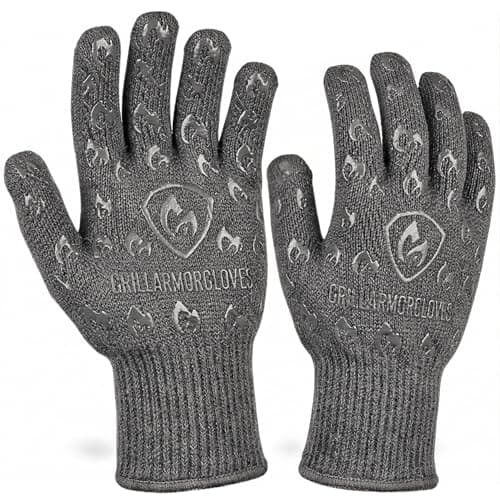 Grill Armor Oven Gloves with Fingers, EN407 Certified The other EN407-citing glove here, and the only one that also claims cut resistance. | Heat and blades | |
| 05 | 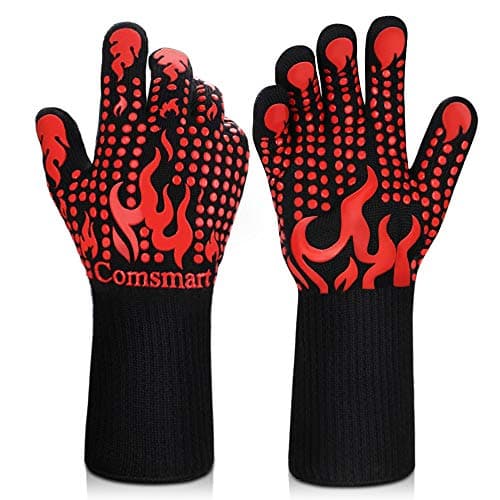 Comsmart BBQ Gloves, Long Cuff The cheapest thing here that is still a real glove rather than a pot holder, with a long cuff and a silicone non-slip surface. | Spending the least | $7.97 · View on Amazon
|
#ad · We earn a commission on Amazon purchases. Prices come from Amazon and change.
Buy the EN407-certified five-finger glove if you want one answer, and a waterproof silicone mitt if you want the one that addresses what actually burns people. Those are different picks because the thing most likely to hurt you is not the temperature of the pot. It is moisture in the glove.
This page exists because the rest of this site kept creating a problem it did not solve. Our Dutch oven roundup ranks pots on how easily you can load a proofed loaf into one at 500F. Our French oven comparison judges handles on whether they are “sized for oven gloves” when “the pot is at 475F and your mitts are thick.” The Challenger pan review says a “pair of serious oven gloves start to matter.” Three pages, one recurring instruction, and until now nothing to act on.
A glove buys you seconds, not immunity
The second thing worth internalizing before you shop. Oven gloves have “a limited period of time for handling hot items,” up to about ten seconds. They are not a shield; they are a delay.
The EN407 standard is built on exactly that idea. In its contact-heat test a sample sits on a heated plate and the lab measures how long the far side takes to rise by 10C — the threshold time. To pass a level, the glove “need[s] to withstand the increasing temperature of maximum 10°C for at least 15 seconds.” Fifteen seconds is the bar. Ten seconds is what you actually get in a kitchen.
So the useful question is not “how hot can this glove survive” but “can I get the pot out, turned, and down on the trivet inside ten seconds?” That reframes the whole purchase around grip and fit rather than around the number on the packaging, and it is why our top pick has fingers.
What EN407 actually certifies — and what these listings leave out
EN407 is the European standard for gloves against thermal risks, and its contact-heat test has four performance levels defined by plate temperature:
| EN407 contact heat level | Plate temperature | Covers a sourdough preheat? |
|---|---|---|
| Level 1 | 100C (212F) | No |
| Level 2 | 250C (482F) | Marginal — a 500F oven is 260C |
| Level 3 | 350C (662F) | Yes, with margin |
| Level 4 | 500C (932F) | Yes, comfortably |
Note the second row, because it is the one that matters to a sourdough baker. A 500F preheat is 260C, which is past level 2’s 250C plate. Level 3 is the first one with real margin for this job.
Now the gap. Two gloves on this page cite EN407. Neither publishes which performance level it achieved, and neither says which of the standard’s six tests it was assessed on — and a glove “can be tested to all of these tests or just one.” So “EN407 certified” on a listing tells you a lab was involved. It does not tell you the glove is level 3 on contact heat, which is the only axis relevant to picking up a pot.
That is not a reason to ignore the certification — a cited standard still beats no standard, which is why both EN407 gloves rank above the ones without one. It is a reason not to read “932F” as a tested guarantee.
How we picked
Criteria set before ranking, from the job of moving a 500F pot:
- Does it cite a standard? EN407 or nothing. Two of these do, and they rank first and fourth.
- Is it waterproof? Given the one-second burn finding, this is the criterion we would weight highest if we were buying for ourselves rather than ranking for a mixed audience.
- Fingers or mitt. Fingers grip a loop handle or a lid knob. A mitt is safer against incidental contact and worse at the actual lift. Our own Dutch oven pages already flag that thick mitts fight tight handles.
- Cuff length. Oven burns land on the wrist and forearm, from the shelf above, not usually on the palm.
What we refused to rank on: the headline temperature. See the note above.
The three materials, and which one the research favors
Everything in this category is built from some combination of four things, and the listings are clear enough about which, even when they are vague about performance.
Aramid fabric — the woven flame-resistant cloth used in the EN407-citing gloves here. It is the material with an actual industrial pedigree in thermal protection, and it is the reason those two gloves are the ones that can cite a standard at all. It is also fabric, which means it absorbs water.
Silicone — either as a coating over fabric or as the whole outer shell. Its decisive property for this job is not a temperature number, it is that it is waterproof. Given that a wet glove is the one-second burn case, a shell that cannot absorb steam or splash is doing more for your hands than an extra few hundred degrees on the box.
Neoprene — also waterproof, used in the barbecue-first gloves. Same argument as silicone.
Cotton terry — the liner inside most of these. It is there for comfort and it is the part that gets damp from your own hands, which is why drying your hands first is not fussiness.
We are deliberately not giving you a temperature ceiling per material, because none of these makers publishes one and we have not tested anything. The defensible ranking rule is simpler: a cited standard first, waterproofing second,and that is the order these picks are in.
Fit, which nobody lists and everybody regrets
The specification most likely to ruin a purchase here is the one no listing usefully publishes. Most of these are sold in one size, or in a vague medium/large, and a glove that does not fit is worse than a mitt that does.
Too loose is the dangerous failure. If the glove moves on your hand you cannot grip a loop handle confidently, and the ten-second window gets spent adjusting rather than lifting. A sliding glove also leaves a gap at the wrist, which is precisely where the shelf above will touch you.
Too tight is the uncomfortable failure. A tight glove compresses its own insulation, and compressed insulation is thinner insulation. It will also be the pair you leave in the drawer.
Two practical notes. The barbecue-first gloves here are cut for larger hands than many bakers have, so size down if the option exists. And if you have small hands, a mitt is the more forgiving buy than a five-finger glove, because a mitt tolerates a size mismatch that fingers do not — which can outweigh the grip argument below.
Fingers or mitts, for this specific job
A Dutch oven is an awkward load: heavy, with two small loop handles or a knob, at chest height, inside a hot box. That pushes the decision toward fingers, and it is why our top pick is a five-finger glove rather than the cheaper mitts.
With a mitt you are clamping the pot between two padded paddles. It works, and people do it every day, but the grip is a pinch rather than a hold and the pot is the heaviest thing in your kitchen. With fingers you can hook a handle properly. Against that, a mitt covers more skin and there is no seam between fingers to thin out.
The honest answer is that this is a preference, not a correct answer — with one exception. If you are lifting a loaf out of the pot rather than the pot out of the oven, neither helps much, and a bread sling is the tool for that. Gloves move the vessel; the sling moves the loaf.
Keep two pairs, and keep them dry
The practical conclusion from everything above, and it costs nothing to act on.
Keep a second pair. If the pair by the oven is damp from the last bake, the dry pair is the safe one. Waterproof silicone makes this much less pressing, which is another argument for it.
Dry your hands before you put them on. Moisture from your own hands soaks into a fabric liner and you have reproduced the wet-mitt case from the inside.
Set the landing spot first. Trivet out, counter clear, before the oven opens. You have about ten seconds, and spending four of them looking for somewhere to put a 12-pound pot is how the ten runs out.
What we would buy
The J H EN407 glove if you want the single best-documented option with fingers that grip. The waterproof Alselo mitt if the one-second burn finding landed with you the way it landed with us — it is cheaper and it addresses the real risk, at the cost of grip. The 20-inch ITISMUNGO if your scars are on your forearm, noting that its 572F claim is the lowest here and still clears any home oven.
Then stop thinking about it, and go back to the part that actually decides the loaf. Our pot sizing page is the more consequential purchase, and the cloche review covers the one vessel that removes this problem entirely by never being preheated.
Every pick, in order
The full write-ups
Pick 01 · The one to buy
J H Heat Resistant Oven Glove, EN407 Certified
J H
Five separate fingers and a cited standard, which is the combination that matters for lifting a lidded pot out of a hot oven. Fingers let you actually grip a loop handle rather than pawing at it, and EN407 is the only glove standard named by anything in this category. Read the caveat on the page before you treat the number as a guarantee: the listing cites the standard and a 932F figure but not which EN407 test it passed or at what performance level.
Standard
EN407 certified, per the listing
Rating claimed
932F (500C), per the listing
Form
Five-finger glove
Construction
Two layers of silicone coating, per the listing
Level / test axis
Not published
Specs compiled from: Manufacturer product listing and product name
What is good
- Separate fingers, so you can grip a Dutch oven loop handle properly instead of pinching at it
- Names an actual standard (EN407) rather than only a temperature number
- Two silicone layers give grip on an enameled lid, which is the surface that slips
- Priced in the middle of the category rather than at the top
What is not
- Cites EN407 but publishes neither the performance level nor which of the six EN407 tests it was assessed on -- a glove can be tested on just one
- Aramid and silicone construction is not waterproof, and a damp glove is the actual danger in this job
- Shorter cuff than the forearm-length mitts, so reaching to the back of an oven leaves skin exposed
- A fitted five-finger glove in one size fits some hands badly, and a loose glove is worse than a snug mitt
#ad Disclosure · Price as of November 2, 2026
Pick 02 · The real failure mode
Alselo Silicone Oven Mitts, Waterproof, 7.5 x 15 in
Alselo
The pick that addresses what actually burns people. A wet mitt at oven temperature can cause a third-degree burn in about a second, and fabric mitts get damp from steam, from a wiped counter, or from your own hands. These are waterproof silicone over a cotton terry liner, 15 inches long, sold as a pair. If you only take one thing from this page, take waterproofing over a bigger number on the box.
Waterproof
Yes, silicone outer, per the listing
Rating claimed
932F, per the listing
Size
7.5 x 15 in
Form
Mitt, set of 2
Standard
None cited
Specs compiled from: Manufacturer product listing and product name
What is good
- Waterproof silicone, which addresses the moisture risk that the temperature rating does not
- Fifteen inches covers the wrist and some forearm, where oven burns actually land
- Cotton terry liner, so it is not bare silicone against skin
- Cheapest of the picks here that we would actually rely on
What is not
- Cites no standard at all -- the 932F figure is a bare manufacturer claim with no test behind it
- A mitt has no fingers, so you lose the grip that makes lifting a lidded pot feel secure
- Silicone over terry is bulky, which is exactly the thickness our Dutch oven pages warn makes tight handles harder
- Set of two means two mitts, not two pairs -- check that is what you want
#ad Disclosure · Price as of November 2, 2026
Pick 03 · Most forearm covered
ITISMUNGO Extra Long Silicone Oven Mitts, 20 in
ITISMUNGO
Twenty inches, which is the longest here by a clear margin and the right answer if your burns come from reaching across a hot shelf rather than from gripping the pot. Note the honest inversion on the rating: at 572F this claims the LOWEST temperature of anything on this page, and it is still comfortably above a 500F sourdough preheat. The biggest number is not the most useful number.
Length
20 in -- longest here
Rating claimed
572F, per the listing
Material
Ceramic-filled silicone with a quilted liner
Form
Mitt, 1 pair
Standard
None cited
Specs compiled from: Manufacturer product listing and product name
What is good
- Twenty inches of cover is the most protection on this page for the part of your arm that meets the oven shelf
- A 572F claim still clears any home oven, so the lower number costs you nothing in practice
- Quilted liner rather than bare silicone against the skin
- Sold as a genuine pair
What is not
- Cites no standard, so the 572F figure has no published test behind it either
- Twenty inches is unwieldy for small jobs and will end up pushed down your forearm
- Mitt rather than fingers, so no real grip on a lid knob
- Ceramic-filled silicone is a marketing description, not a specification -- no filler proportion is published
#ad Disclosure · Price as of November 2, 2026
Pick 04 · Heat and blades
Grill Armor Oven Gloves with Fingers, EN407 Certified
Grill Armor Gloves
The other EN407-citing glove here, and the only one that also claims cut resistance. That combination earns its place in a kitchen where the same pair handles a 500F pot and a bread knife, and it is the established name in this category. It is also the most expensive pick and it shares the documentation gap with everything else: a cited standard, no published level.
Standard
EN407 certified, per the listing
Rating claimed
932F, per the listing
Form
Five-finger glove
Extra
Cut resistant, per the listing
Level / test axis
Not published
Specs compiled from: Manufacturer product listing and product name
What is good
- Fingers plus a cited standard, same as our top pick
- Adds cut resistance, which no other pick here claims
- Non-slip silicone grip pattern for enameled lids
- The most recognized brand in this category, with the longest track record
What is not
- Most expensive pick on this page
- Publishes no EN407 performance level and no cut-resistance level either, so both claims are unquantified
- Not waterproof, so it does not address the damp-glove risk
- Cut resistance is irrelevant to the Dutch oven job and you are paying for it
#ad Disclosure · Price as of November 2, 2026
Pick 05 · Spending the least
Comsmart BBQ Gloves, Long Cuff
Comsmart
The cheapest thing here that is still a real glove rather than a pot holder, with a long cuff and a silicone non-slip surface. We have ranked it last because of its headline claim rather than despite it: the listing advertises 1472F, which is nearly three times a sourdough preheat and the highest number in a category where nothing publishes a test. A number that large with nothing behind it tells you less than a smaller number would.
Rating claimed
1472F, per the listing -- highest and least substantiated here
Form
Five-finger glove, long cuff
Surface
Non-slip silicone
Standard
None cited
Specs compiled from: Manufacturer product listing and product name
What is good
- By far the cheapest pick here, and it has fingers and a long cuff
- Non-slip silicone surface for gripping a hot lid
- Perfectly serviceable for the actual temperatures a home oven reaches
- Cheap enough to keep a second pair so one is always dry
What is not
- A 1472F claim with no standard and no test cited is the weakest documentation on this page
- Not waterproof, so the moisture risk stands
- Sold for barbecue first, and the sizing reflects a larger hand than many bakers have
- At this price the stitching and the liner are where the cost came out
How we picked
We have not tested any of this equipment. What we did instead: compiled the published specifications from each manufacturer’s own listing, checked them against the task a beginner is actually trying to do, read the care instructions, and named the thing we would skip. Where a pick is a product type rather than a brand, it is because the category is sold mostly unbranded and the type is the real decision.
Frequently asked
Questions
+What temperature oven gloves do I need for sourdough?
+Why is a wet oven mitt dangerous?
+How long can you hold a hot Dutch oven with gloves on?
+Are oven gloves or oven mitts better for a Dutch oven?
+Can I just use a tea towel?
+Does EN407 certified mean the glove is safe to 932F?
+What about getting the loaf out, rather than the pot?
Sources
Where the facts on this page came from
- HexArmor — EN407 thermal protection: contact heat levels 1-4 at 100/250/350/500C, the 15-second threshold-time pass requirement, and that a glove may be tested on all six tests or just one
- Mental Floss — Oklahoma State University research on wet oven mitts: third-degree burn in as little as one second at 350F and above, water's thermal conductivity up to 25x that of air, towels not designed for heat protection, roughly ten-second handling window
Read next