Hub 03 · Sourdough Baking Gear
Bread cloche vs Dutch oven
Both trap steam, which is the only thing either has to do. They differ on how easily you load a loaf, and on whether the vessel is good for anything else.
We earn a commission if you buy through our links, at no extra cost to you. We have not tested this equipment. Here is what we did instead.
Buy a Dutch oven if
You want one pot that does everything
It bakes bread and it braises. That versatility is the honest reason most home bakers should own one rather than a single-purpose vessel.
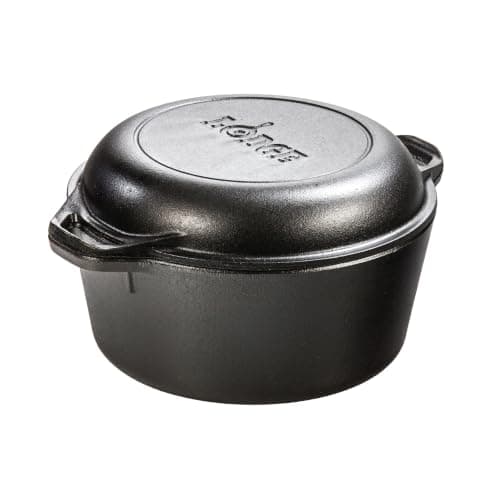
Lodge 5-Quart Double Dutch Oven
#ad Disclosure · Price as of October 17, 2026
Buy a cloche or bread pan if
Loading a hot deep pot worries you
A shallow base with a dome over it means you place the loaf rather than lowering it. That is a real ergonomic difference, and it is the main reason to spend on a single-purpose vessel.
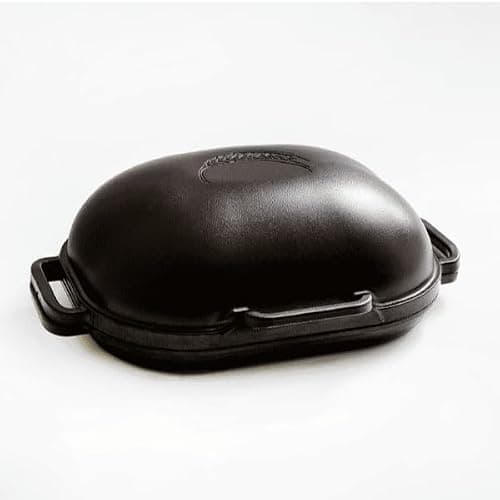
Challenger Bread Pan
#ad Disclosure · Price as of October 17, 2026
| Cloche / bread pan | Dutch oven | |
|---|---|---|
| Traps steam | Yes | Yes |
| Loading a proofed loaf | Easy — place it on a flat base | Awkward — lower it into a hot well |
| Other uses | Bread only | Braising, stews, frying |
| Material | Usually stoneware or cast iron | Cast iron, bare or enameled |
| Thermal shock | Stoneware needs care | Cast iron is forgiving |
| Weight | Split across two pieces | Concentrated in a deep pot |
| Price | Similar to a mid-range Dutch oven | Cheapest workable option in the category |
The geometry argument
A Dutch oven is a deep pot with a lid. A cloche or purpose-built bread pan inverts that: shallow base, tall dome. Since the difficult moment in a home bake is transferring a slack, fully-proofed loaf into a 500F vessel, that inversion is the entire value proposition.
You can mostly solve the same problem for free by lowering the loaf on a sling of parchment paper. It works, it costs a sheet of parchment, and it is what most people end up doing.
Stoneware and thermal shock
Ceramic cloches need more care than cast iron. Putting a cold, wet loaf into a very hot stoneware dome, or moving a hot cloche onto a cold wet surface, risks cracking it. Manufacturers publish specific heating instructions for exactly this reason, and they are worth reading before the first bake.
Cast iron does not care. That is a genuine advantage of the Dutch oven for somebody learning.
Shape flexibility
Most cloches and bread pans take a batard as readily as a boule. A round Dutch oven does not — an oval loaf touches the walls. If you already know you want long loaves rather than rounds, that is a point in the cloche’s favor, and it is worth reading alongside which basket shape to buy.
What we would tell a beginner
Start with whatever heavy lidded pot is already in your kitchen. If you buy, buy a Dutch oven, because it cooks dinner too — our picks are in best Dutch oven for sourdough. Consider a purpose-built pan only once you have baked enough loaves to know that loading is the part that bothers you.
If loading is that part, the cloche to look at is the Emile Henry, and it is the only vessel in this comparison with a published temperature ceiling and a published warranty. Both numbers matter and one of them is a problem: our review of it goes through the 500F limit, which is exactly the temperature many sourdough recipes preheat to.
Frequently asked
Questions
+Is a bread cloche better than a Dutch oven?
For loading a loaf, yes — a shallow base with a dome over it is much easier than lowering dough into a deep pot. For everything else, a Dutch oven wins because it also cooks dinner.
+Can you make sourdough without a Dutch oven or cloche?
Yes. Any heavy oven-safe vessel with a tight lid traps steam. A stainless stockpot, a covered roasting pan or an inverted oven-safe bowl over a baking sheet all work.
+Do ceramic cloches crack?
They can, from thermal shock — a sudden temperature change in either direction. Manufacturers publish heating instructions for their specific product; follow them. Cast iron is far more forgiving in this respect.
Read next