Hub 05 · Kombucha, Kefir & Yogurt
Best water kefir grains
Water kefir is sugar, water and a culture. The only real decision is what state the culture arrives in, because that decides how long you wait for a drinkable batch.
We earn a commission if you buy through our links, at no extra cost to you. We have not tested this equipment. Here is what we did instead.
Quick picks
Tap a row for the full write-up · Prices open on Amazon
| # | Product | Best for | Price |
|---|---|---|---|
| 01 | 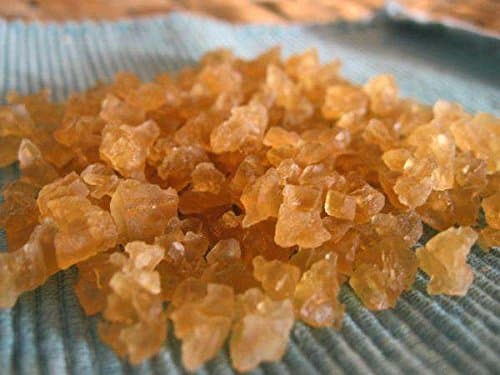 Yemoos Dried Water Kefir Grains, 1 Tablespoon A dried tablespoon of grains from a culture house that has been shipping them for years. | The cheapest honest way in | |
| 02 | 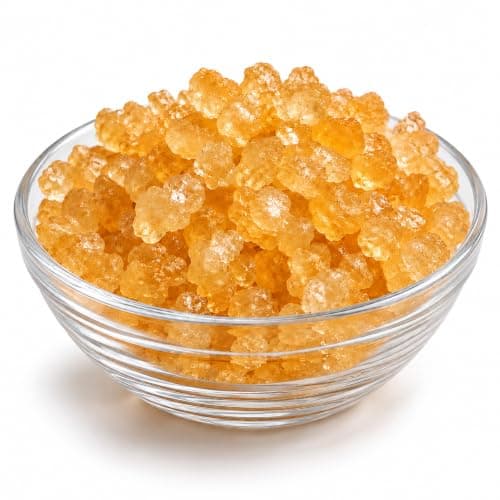 Florida Sun Kefir Live Water Kefir Grains, Large Portion Cup Live grains shipped wet in a cup, ready to brew on arrival rather than after a week of rehydration. | Skipping the rehydration wait | |
| 03 | 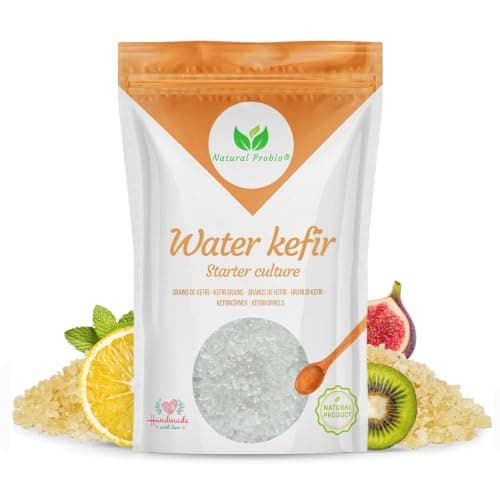 Natural Probio Water Kefir Grains Starter Kit, 0.35 oz Dehydrated Dehydrated grains sold as a kit with a printed guide, recipe booklet and access to further material. | Wanting instructions more than grains | $14.90 · View on Amazon
|
| 04 | 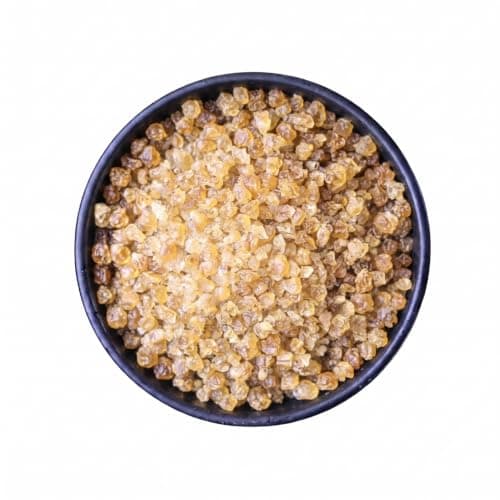 The Spirit Of The Forest Dormant Water Kefir Grains Grains shipped slightly dehydrated rather than fully dried or fully wet, which the seller frames as a compromise between transit survival and a fast start. | A middle path between live and dried | |
| 05 | 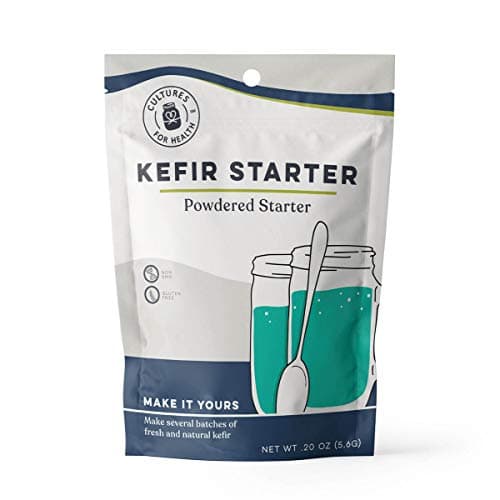 Cultures for Health Kefir Starter Culture, 4 Freeze-Dried Packets Freeze-dried powder rather than grains. | Trying it once without a commitment |
#ad · We earn a commission on Amazon purchases. Prices come from Amazon and change.
Water kefir grains are not grains. They are small, translucent, slightly rubbery clusters — sometimes called tibicos — that convert sugar water into a lightly fizzy, mildly sour drink over a day or two. Feed them, and they keep going indefinitely and multiply while they do it.
That last part is why buying them is a strange purchase. You are not buying a consumable. You are buying a starting population of something that, if you look after it, you never buy again. Which means the interesting question is not which brand is best — the organism is broadly the same wherever it comes from — but what state it arrives in, and how long that costs you.
Four forms, and what each one costs you in time
Everything on this page is one of four things. Understand the four and the decision makes itself.
| Form | Before a good batch | The trade |
|---|---|---|
| Live, shipped wet | First or second batch | Perishable in transit; costs the most |
| Dried | Several batches of rehydration | Cheapest; arrives in any weather |
| Dormant (part-dried) | A few batches | A seller's term, not a standard - hard to compare |
| Freeze-dried powder | First batch | Finite. Re-culture a few times, then rebuy |
Note the asymmetry. Live grains cost roughly twice what dried grains cost and save you maybe a week. Powder is the only one that is genuinely disposable, and the only one you buy over and over.
How we judged these
- Form first. Live, dried, dormant or powder is the decision that changes your experience. Everything else is detail.
- Whether it keeps going. Real grains multiply and are a one-time purchase. Powder is a consumable. A page that mixes them without saying so is not helping you.
- Starting quantity. A tablespoon of dried grains is a real starting population but a small one; building up to a steady gallon-a-week rhythm takes weeks either way.
- What the seller tells you. Culture houses that have been doing this a while publish care instructions and answer questions. On a living product, that is worth more than packaging.
- What we refuse to judge on. Every listing in this category makes health claims. We do not evaluate, compare or repeat them — not because they are necessarily wrong, but because we are not qualified to assess them and neither is the seller.
Live or dried, honestly
The case for live grains is simple: they work on arrival. You open the cup, put them in sugar water, and in twenty-four to forty-eight hours you have something to drink. The case against is that they are a living thing in a cardboard box, and a hot week or a delayed delivery is a real risk that dried grains do not carry at all.
The case for dried is money and robustness. They cost about half, they cannot spoil in transit, and after a handful of throwaway batches they are indistinguishable from grains that arrived live, because they are the same thing. The cost is patience, and patience is the one thing beginners tend not to have.
Our honest read: if you have brewed anything before and understand that the first few batches of anything are usually poor, buy dried and save the money. If this is your first ferment and an early failure would put you off entirely, the premium for live grains is buying motivation, and that is a legitimate thing to buy.
What else you need
Not much, and you probably own most of it. A jar of a liter or more — the same wide-mouth jars used for vegetables work fine. Plain white sugar, which is the food; the grains do not thrive on honey or most sugar substitutes. A non-metal strainer to separate grains from finished kefir. A cloth cover and band, because the first ferment needs air.
For a second ferment — the stage that makes it properly fizzy — you need pressure-rated swing-top bottles. The same bottles and the same physics as kombucha, and the same warning: a sealed bottle of actively fermenting liquid is a pressure vessel. Refrigerate it when it is fizzy and do not leave it on a warm counter for days.
Water kefir against the alternatives
If you are choosing between cultures rather than suppliers, the honest summary is short. Water kefir is the fastest of the three common home cultures — a batch in one to two days against a week or more for kombucha. It is dairy-free, which milk kefir is not. And it is the mildest in flavor, which some people read as approachable and others as bland.
It is also the least forgiving of neglect. A SCOBY will sit ignored for weeks; water kefir grains want feeding every couple of days or they weaken. If you travel often, that is a genuine argument for a different culture.
The short version
Buy dried grains from an established culture house if you can wait a week. Buy live grains if you cannot, and accept the transit risk. Buy powder only if you genuinely might not continue, because it is the one option that makes you a repeat customer — which is exactly why it is sold so hard.
Every pick, in order
The full write-ups
Pick 01 · The cheapest honest way in
Yemoos Dried Water Kefir Grains, 1 Tablespoon
Yemoos
A dried tablespoon of grains from a culture house that has been shipping them for years. Dried means a slower start -- you rehydrate over a few batches before the yield settles -- but the grains are the same organism as the live ones and they cost half as much.
Form
Dried grains, 1 tablespoon
Stated yield
4-6 cups every 24-48 hours, per the listing
Reusable
Grains multiply and keep going if they are fed
Included
Care instructions
Specs compiled from: Manufacturer product listing and product name
What is good
- Cheapest entry point to real grains rather than a single-use powder
- Dried grains travel and store better than live ones, so arrival condition is less of a lottery
- Multiply with use, so one purchase is meant to be the only purchase
What is not
- Rehydration takes several discarded batches before the yield is predictable
- A tablespoon is a small starting quantity; building up volume takes weeks
- No jar, sugar or bottles included -- this is the culture only
#ad Disclosure · Price as of October 17, 2026
Pick 02 · Skipping the rehydration wait
Florida Sun Kefir Live Water Kefir Grains, Large Portion Cup
Florida Sun Kefir
Live grains shipped wet in a cup, ready to brew on arrival rather than after a week of rehydration. That is the whole reason to pay more for live over dried, and it is a real reason if you want a drinkable batch this weekend.
Form
Live grains, shipped wet
Size
Large portion cup, 3 x 3 x 1.5 inches
Ready to use
Brewing on arrival, per the listing
Included
Step-by-step instructions and a downloadable guide
Specs compiled from: Manufacturer product listing and product name
What is good
- No rehydration period -- the first batch is a real batch
- Live grains show you what healthy grains are supposed to look like from day one
- Larger starting quantity than the dried tablespoon options
What is not
- Live cultures are perishable in transit; a hot week in a mailbox is a genuine risk
- Costs roughly twice the dried grains for the same organism
- You have to be home to unpack them and start feeding promptly
#ad Disclosure · Price as of October 17, 2026
Pick 03 · Wanting instructions more than grains
Natural Probio Water Kefir Grains Starter Kit, 0.35 oz Dehydrated
Natural Probio
Dehydrated grains sold as a kit with a printed guide, recipe booklet and access to further material. The grains are the same thing everyone else sells; what you are buying is hand-holding, which is worth something on a first ferment and nothing on a fifth.
Form
Dehydrated grains, 0.35 oz
Rehydrated weight
About 2.12 oz, per the listing
Included
Printed guide, recipe booklet, online material
Guarantee
Replacement if the culture fails to start, per the listing
Specs compiled from: Manufacturer product listing and product name
What is good
- The most documentation of any option here, which is the real beginner failure point
- Dehydrated grains are non-perishable, so delivery timing does not matter
- Stated replacement guarantee if the culture will not wake up
What is not
- You pay a premium over plain dried grains for paperwork you could find free
- Same rehydration delay as any dehydrated culture
- Marketing leans hard on health language that we do not evaluate or repeat
Pick 04 · A middle path between live and dried
The Spirit Of The Forest Dormant Water Kefir Grains
The Spirit Of The Forest
Grains shipped slightly dehydrated rather than fully dried or fully wet, which the seller frames as a compromise between transit survival and a fast start. In practice it behaves like a dried culture with a shorter wake-up.
Form
Dormant grains, shipped slightly dehydrated
Reusable
Heirloom grains that multiply per batch, per the listing
Input
Sugar and water; no dairy
Weight
About 0.64 oz
Specs compiled from: Manufacturer product listing and product name
What is good
- Less transit-fragile than fully live grains, faster to wake than bone-dry ones
- Dairy-free culture, which is the entire point of water kefir over milk kefir
- Sold as heirloom grains rather than a finite powder
What is not
- "Dormant" is the seller's term, not an industry standard -- you cannot compare it like for like
- Still needs a rehydration period before yields are consistent
- Listing copy is heavy on wellness claims that have nothing to do with how it brews
#ad Disclosure · Price as of October 17, 2026
Pick 05 · Trying it once without a commitment
Cultures for Health Kefir Starter Culture, 4 Freeze-Dried Packets
Cultures For Health
Freeze-dried powder rather than grains. Each packet makes a batch and can be carried forward a handful of times before it gives out, so this is a way to find out whether you like water kefir before you take on something that needs feeding every two days.
Form
Freeze-dried powder, 4 packets
Reuse
Each packet re-cultures 2-7 times, per the manufacturer
Works with
Water, milk, juice or coconut water, per the listing
Testing
Pathogen tested by a third-party laboratory, per the manufacturer
Specs compiled from: Manufacturer product listing and product name
What is good
- Nothing to keep alive between batches -- the packet waits in a drawer
- The only option here that is genuinely disposable if you decide kefir is not for you
- Same brand and supply chain as the grains, if you later upgrade
What is not
- Finite: when the packets are used up you buy again, unlike grains
- Per-batch cost is far higher over a year than any grain option
- Powder-cultured kefir is a different, milder drink than grain-cultured kefir
#ad Disclosure · Price as of October 17, 2026
How we picked
We have not tested any of this equipment. What we did instead: compiled the published specifications from each manufacturer’s own listing, checked them against the task a beginner is actually trying to do, read the care instructions, and named the thing we would skip. Where a pick is a product type rather than a brand, it is because the category is sold mostly unbranded and the type is the real decision.
Frequently asked
Questions
+What are the best water kefir grains to buy?
For most people, dried grains from an established culture house. They cost about half what live grains do, they survive shipping in any weather, and after a few rehydration batches they are the same organism. Buy live grains only if you want a drinkable batch immediately.
+How long do dried water kefir grains take to activate?
Usually several batches over roughly a week, though sellers vary in what they promise. The first batches will be weak or oddly flavored and are meant to be discarded. Judge the grains on batch four or five, not batch one.
+Do water kefir grains need to be replaced?
No, if they are real grains and you feed them. They multiply as they ferment, so the usual problem is having too many rather than too few. Powdered starter cultures are different — those are finite and get re-cultured only a handful of times before you buy again.
+What sugar do water kefir grains need?
Plain sugar in water is the standard feed, and most suppliers specify it. Grains do not do well on most sugar substitutes, and honey is generally avoided. Follow the care sheet your supplier ships rather than improvising on the first batch.
+Is water kefir the same as milk kefir?
No. They are different cultures that are not interchangeable: milk kefir grains ferment lactose in dairy, water kefir grains ferment sugar in water. You cannot convert one into the other by changing what you feed it.
+How often do water kefir grains need feeding?
Every day or two at room temperature, which is more attention than kombucha needs. They can be slowed down in a fridge for a break, but they are the least neglect-tolerant of the common home cultures. Factor that in if you travel.
Sources
Where the facts on this page came from
Read next