Hub 05 · Kombucha, Kefir & Yogurt
Best bottles for kombucha
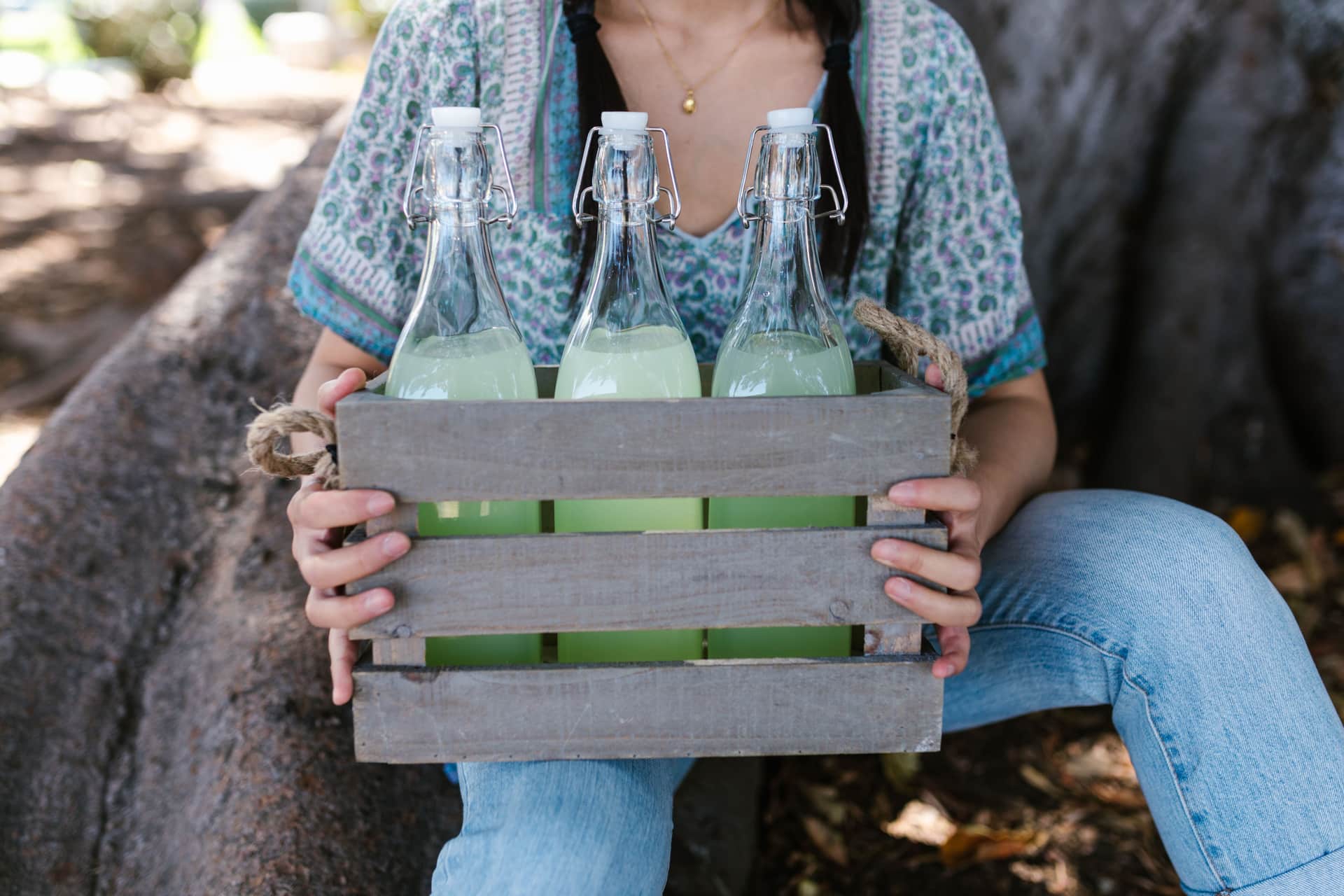
The second ferment builds real pressure in a sealed bottle. That makes this the one purchase on the site where the wrong choice is a safety question, not a preference.
We earn a commission if you buy through our links, at no extra cost to you. We have not tested this equipment. Here is what we did instead.
Quick picks
Tap a row for the full write-up · Prices open on Amazon
| # | Product | Best for | Price |
|---|---|---|---|
| 01 | 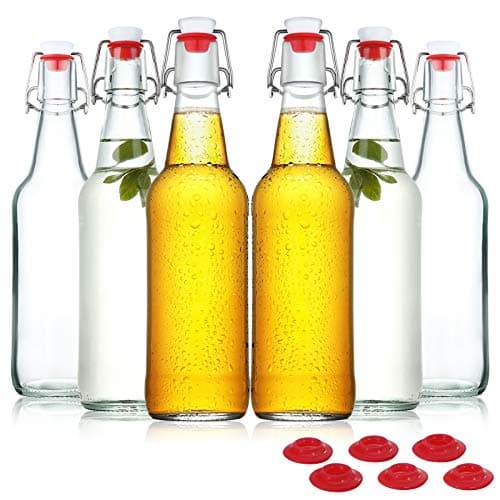 YEBODA 16 oz Swing-Top Glass Bottles, 6-pack Sixteen ounces is the serving size most people actually drink, and a swing top seals hard enough to hold the carbonation a second ferment produces. | A standard second ferment | $19.99 · View on Amazon
|
| 02 | 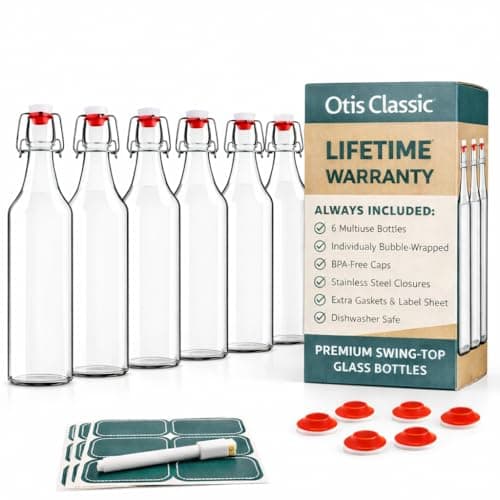 Swing-top bottles for the second ferment Kombucha only gets fizzy in a sealed bottle. | Carbonation | |
| 03 | 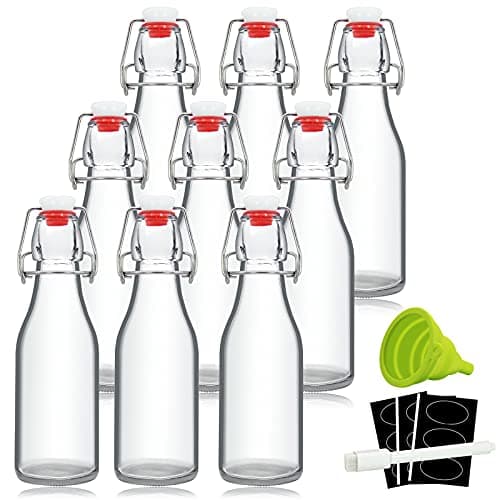 YEBODA 8 oz Swing-Top Glass Bottles, 9-pack Small bottles are the sensible way to run a second ferment you are unsure about. | Testing flavors safely |
#ad · We earn a commission on Amazon purchases. Prices come from Amazon and change.
The first ferment happens open to the air. The second happens sealed, and that is where the fizz comes from: the culture keeps eating, the carbon dioxide has nowhere to go, and it dissolves into the drink. It also pushes on the bottle, which is why the bottle matters.
Everything below is glass with a swing-top closure, because that combination is designed for pressure and reseals indefinitely.
How we judged these
- Built to hold pressure. Swing-top (flip-top) bottles use a gasket and a wire bail and are the standard home-brewing closure. Ordinary screw-cap bottles and jars are not designed for it.
- Glass, not plastic. Glass is inert against an acidic drink and you can see the carbonation building.
- A size that matches a gallon. A gallon is 128 oz. Six 16 oz bottles take most of it; nine 8 oz bottles split it into more experiments.
- A gasket you can replace. The gasket is the part that ages and quietly stops sealing.
- Enough bottles for one batch. Bottling half a batch and leaving the rest is how kombucha gets forgotten and over-ferments.
16 oz or 8 oz?
Sixteen ounces is a serving. Eight ounces is a taste, and nine of them let you flavor a single batch several different ways — genuinely useful while you are working out what you like. A smaller bottle also stores less pressure energy, which matters if you are still learning how long the second ferment should run.
Most people end up with both: small bottles for trials, larger ones for the flavors that worked.
How long the second ferment takes
Anywhere from a day to about three, and the variable is temperature rather than the recipe. A warm kitchen carbonates fast; a cold one can take most of a week. This is why every instruction ends in “taste it” rather than a number.
The practical method is to bottle the batch, leave it at room temperature, and open the smallest bottle after a day. If it is flat, give the rest another day. If it is lively, refrigerate everything immediately — cold does not stop fermentation but it slows it enough that the pressure stops climbing.
Sugar is the other lever. The culture carbonates by eating what is left in the drink, so a fruit juice or sugar addition at bottling produces noticeably more fizz than bottling plain kombucha does. Add flavoring conservatively the first time; you can always add more to the next batch.
Gaskets are the part that fails
A swing-top bottle seals because a rubber gasket is compressed between the stopper and the glass. Gaskets harden with age, heat and repeated dishwashing, and a hardened gasket stops sealing without looking any different.
Two habits worth having. Wash gaskets by hand rather than on a dishwasher's heated cycle, and replace them when a bottle that used to carbonate stops doing it. Replacement gaskets are sold in bags for very little — far cheaper than concluding your culture has weakened when the problem is a seal.
Clear glass or amber?
Light degrades a kombucha slowly, so amber glass is the technically better storage. In practice most home kombucha is drunk within a couple of weeks and lives in a fridge, so clear glass is fine and lets you watch the carbonation — which is genuinely useful when you are learning how long a second ferment takes.
If bottles will sit on a counter in daylight for weeks, buy amber. Otherwise buy clear and keep them dark.
Filling them
Leave an inch or so of headspace, seal, and leave at room temperature for a day or three depending on how warm the room is. Taste-test by opening the smallest bottle rather than the one you care about. Then refrigerate everything.
If you are drawing from a jar with a tap, this is where that tap earns its keep — the vessels are compared in best kombucha brewing jars.
Every pick, in order
The full write-ups
Pick 01 · A standard second ferment
YEBODA 16 oz Swing-Top Glass Bottles, 6-pack
YEBODA
Sixteen ounces is the serving size most people actually drink, and a swing top seals hard enough to hold the carbonation a second ferment produces. Six bottles matches a gallon batch with room to spare.
Capacity
16 oz per bottle
Count
6 bottles
Closure
Swing top with a gasket, airtight per the listing
Material
Clear glass
Specs compiled from: Manufacturer product listing and product name
What is good
- Six 16 oz bottles take most of a gallon batch, so one set covers one brew
- Swing tops reseal indefinitely, unlike caps that need a capper
- Clear glass lets you see carbonation and sediment before you open one
What is not
- Clear glass gives no light protection, so bottles want a dark cupboard
- Gaskets perish eventually and are the part that quietly stops sealing
- A sealed bottle of active kombucha is a pressure vessel -- refrigerate it once it is fizzy
Pick 02 · Carbonation
Swing-top bottles for the second ferment
Type pick -- flip-top glass bottles
Kombucha only gets fizzy in a sealed bottle. Swing-top glass bottles are what hold that pressure safely. Buy them with the kit or you will finish a first ferment with nowhere to put it.
Type
Swing-top (flip-top) glass bottles
Size
Commonly 16 oz / 500 ml
Seal
Ceramic or plastic cap with a rubber gasket
Safety
Burp regularly; pressure builds fast in a warm room
Specs compiled from: Product-type description; capacity and material as listed by sellers
What is good
- The only sensible way to carbonate a second ferment
- Reusable indefinitely with replacement gaskets
- Sold in packs, which is the quantity you need
What is not
- Pressure is a real hazard -- over-fermented bottles can fail
- Gaskets perish and must be replaced
- Bulky to store empty
#ad Disclosure · Price as of September 13, 2026
Pick 03 · Testing flavors safely
YEBODA 8 oz Swing-Top Glass Bottles, 9-pack
YEBODA
Small bottles are the sensible way to run a second ferment you are unsure about. Nine of them let you try several flavorings from one batch, and a smaller bottle is a smaller problem if one over-carbonates.
Capacity
8 oz per bottle
Count
9 bottles
Closure
Swing top with airtight lid, per the listing
Use
Flavor trials, and smaller servings
Specs compiled from: Manufacturer product listing and product name
What is good
- Nine bottles from one batch means nine experiments rather than one guess
- Less pressure energy in a small bottle if a ferment runs away from you
- Easier to fit in a fridge door than 16 oz bottles
What is not
- Nine bottles is nine things to wash and nine gaskets to check
- 8 oz is a short drink if you already know you like it
- Clear glass again, so store them dark
#ad Disclosure · Price as of September 13, 2026
How we picked
We have not tested any of this equipment. What we did instead: compiled the published specifications from each manufacturer’s own listing, checked them against the task a beginner is actually trying to do, read the care instructions, and named the thing we would skip. Where a pick is a product type rather than a brand, it is because the category is sold mostly unbranded and the type is the real decision.
Frequently asked
Questions
+What bottles are best for kombucha second fermentation?
Glass swing-top bottles. The gasket-and-bail closure is designed to hold pressure and reseals indefinitely, and glass is inert against an acidic drink.
+Can I use mason jars for kombucha second ferment?
No. A mason jar's two-piece lid is designed to seal against a vacuum as the jar cools, not to contain pressure from inside. Use bottles sold for carbonated drinks.
+How many bottles do I need for a gallon of kombucha?
A gallon is 128 oz, so six 16 oz bottles take most of a batch and nine 8 oz bottles split it further. Bottle the whole batch at once rather than leaving part of it to over-ferment.
+How do I stop kombucha bottles over-carbonating?
Keep the second ferment short, taste from the smallest bottle, and refrigerate once it is fizzy. Cold slows the culture down, which is what stops the pressure climbing.
Read next