Hub 05 · Kombucha, Kefir & Yogurt
Do you need to sanitize fermentation equipment?
Mostly no, and the honest version of this page saves you money. Cleaning is the step that matters; sanitizing is for three specific situations, and one of them is free.
We earn a commission if you buy through our links, at no extra cost to you. We have not tested this equipment. Here is what we did instead.
Quick picks
Tap a row for the full write-up · Prices open on Amazon
| # | Product | Best for | Price |
|---|---|---|---|
| 01 | 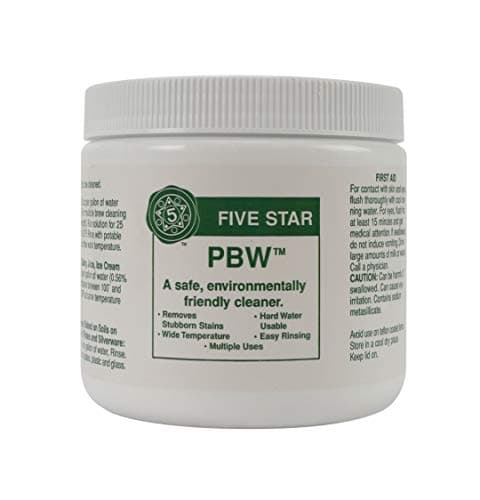 Five Star PBW Cleanser, 1 lb An alkaline, non-caustic brewery wash, and the pick we would actually spend money on. | The one worth buying | |
| 02 | 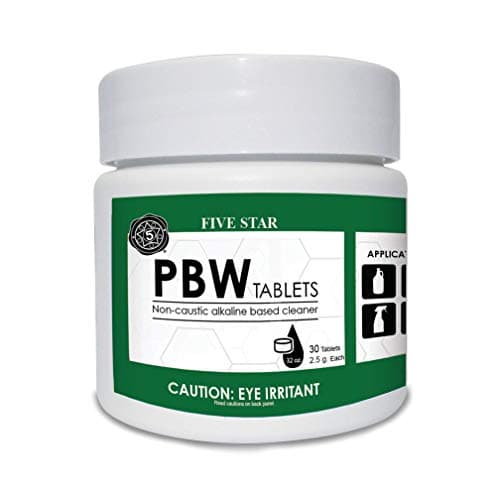 Five Star PBW Tablets, 30 Count The same cleaner pre-dosed: one 2.5 g tablet per 32 oz of water, which happens to be almost exactly the job of cleaning out a swing-top kombucha bottle. | Cleaning bottles | |
| 03 | 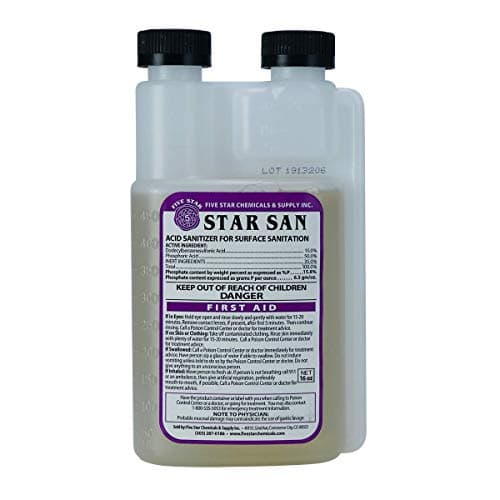 Five Star Star San, 16 oz The standard no-rinse acid sanitizer, and the right size for a kitchen rather than a brewery -- 16 ounces at the published 1 oz per 5 gallons is a very large number of batches. | If you do need a sanitizer | |
| 04 | 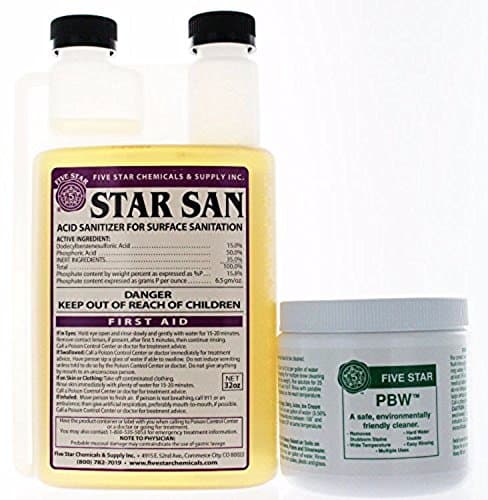 Star San 32 oz and PBW 1 lb Bundle The cleaner and the sanitizer together, in the larger Star San size. | Both, for volume | $40.79 · View on Amazon
|
#ad · We earn a commission on Amazon purchases. Prices come from Amazon and change.
For every ferment on this site, no. Wash properly with hot soapy water, rinse well, and get on with it. Cleaning is the step that is actually required. Sanitizing is optional, and if you buy one product off this page it should be the cleaner rather than the sanitizer — which is the opposite of how this shelf is usually sold.
There are three situations that genuinely change the answer, and we have put them below rather than buried them. One of them costs nothing.
Cleaning and sanitizing are different things, and the order matters
This is where the money gets wasted, because the two words get used interchangeably and the two products are not interchangeable at all.
Cleaning means removing visible soil with detergent and water. It does not reliably eliminate microorganisms. Sanitizing means killing on the order of 99.9% of the organisms on a surface, with a food-grade sanitizer.
And they are sequential, not alternative. Revolution Fermentation puts it plainly: it is “essential to go through the cleaning step before sanitizing”, because sanitizer cannot reach organisms embedded in dirt.
Which means the single commonest mistake in this category is spraying sanitizer into a bottle with dried kombucha residue in the neck and believing something has been achieved. Nothing has. The sanitizer never touched the surface.
What each ferment actually requires
Revolution Fermentation publishes a breakdown by ferment type, and it is strikingly consistent across everything this site covers:
| Ferment | Cleaning | Sanitizing |
|---|---|---|
| Fermented vegetables | Required | Optional |
| Kombucha | Required | Optional |
| Water kefir | Required | Optional |
| Milk kefir | Required | Optional |
| Yogurt | Required | Optional |
| Mature cheese | Required | NEEDED — and not a ferment we cover |
For vegetables their instruction is to “simply wash your jars and utensils with water and dish soap.” For short-fermentation beverages — kombucha and water kefir — they say these “do not require sanitizing your equipment.” Fermented milks, which covers milk kefir and yogurt, “do not require sanitation” either. The one exception they name is mature cheese, which this site does not cover at all.
Why that is not carelessness. The protection in a vegetable ferment is the process itself: salt suppresses most organisms and the lactic acid bacteria acidify the jar until it is hostile to spoilage. That is the same mechanism our fermenting safety page is built on. A kombucha gets the same head start from the acidic starter liquid you add at the beginning. The ferment defends itself; the sanitizer is insurance on a risk that is already managed.
The three cases that do justify a sanitizer
Fermenting for Foodies, who is clear that “sanitization of jars and equipment isn’t always necessary” and skips it for everyday sourdough, milk kefir, yogurt and quick vegetables, names the specific exceptions:
- Long storage. “Whenever the ferment is going to be stored for more than a few weeks.” A jar you will open next week is a different risk from one you are putting away until spring.
- After a contamination. “If a ferment was contaminated by mold or kahm yeast, then you will need to sanitize the contaminated containers.” This is the strongest case on the list and the one most readers will actually meet — our first-batch troubleshooting page covers telling the two apart.
- A mold problem in the house. “If you have issues with mold in the walls or ceiling of your home, you will need to sanitize.” If the air is carrying spores, the jar is starting from behind.
The same source is equally clear about the ceiling: sanitation is “good enough for all homemade ferments,” and sterilization “isn’t really reasonable for home or commercial kitchens.” You are not trying to achieve a laboratory.
How we picked
Criteria set before ranking, and the first one decided the order:
- Which step is actually required? Cleaning. So the cleaner is ranked first and the sanitizer third, which inverts how these products are normally presented.
- Does it beat dish soap at something real? For a wide-mouth jar, no. For dried residue inside a narrow-necked bottle, yes — and this site sells narrow-necked bottles, so that is a problem we created.
- Is the dosing practical in a kitchen? A tub of powder you must weigh gets left in a cupboard; a pre-dosed tablet does not.
- Is the published usage information complete? For Star San the dilution is unambiguous and the contact time is not. We report both.
The parts that actually hide things
If cleaning is the step that matters, it is worth being specific about where cleaning fails. It is never the inside of a wide jar, which you can reach with a cloth and see when it is clean. It is the four places you cannot do either.
The neck of a swing-top bottle. This is the one this site created: we recommend narrow-necked pressure-rated bottles for a kombucha second ferment, and a narrow neck is exactly where a dried sugar-and-tea film sits out of reach of a sponge. A bottle brush reaches the barrel and not the shoulder.
Gaskets. The rubber ring in a swing-top lid comes out, and it should. Residue sits under the lip, and a gasket left in place through twenty washes has never actually been cleaned. It is also the part boiling water handles worst, because the rubber does not love it.
Airlock and valve parts. Anything with a channel in it — a three-piece water airlock, a silicone one-way valve from our lid roundup — has an internal surface you cannot see or scrub. This is where a soak genuinely beats a scrub.
Threads. The screw threads on a jar and its ring collect brine and then dry into it. They are also where a foaming sanitizer earns its keep, because foam creeps into a thread in a way that a rinse does not.
Notice that in three of those four cases the answer is a soak rather than a stronger chemical. That is the real argument for a proper cleaner over dish soap, and it is why this page ranks the cleaner first.
What about bleach, or vinegar?
Both come up constantly and we are going to be unsatisfying about both, on purpose.
Bleach is a genuine household sanitizer and we are not going to publish a dilution for it. Fermenting for Foodies lists it among common household sanitizers but says plainly “I have not personally used bleach,” and no source we checked this run gives a tested ratio for fermentation vessels. A sanitizer ratio is not a figure to estimate — too weak does nothing, too strong leaves residue in a vessel you are about to grow a culture in. If you want to use bleach, get the ratio from a food-safety authority rather than from us.
Vinegar is the folk answer and it is a cleaner rather than a sanitizer. It will cut mineral film and it does not have a sanitizing claim behind it in anything we checked. Useful on a hard-water ring; not a substitute for the three cases above.
The free option we can point at with a source behind it is boiling water on glass, which is in the note above.
If you do buy Star San, the numbers
The dilution is settled and generous: “just 1 ounce (30 ml) of Star San in 5 gallons (19 liters) of water is enough to effectively sanitize all of your gear.” That is why a 16 oz bottle lasts a home fermenter for years.
It is a no-rinse sanitizer at that dilution, and the instruction is explicit: “DO NOT rinse Star San. Simply shake any excess off and proceed normally.” That matters more than it sounds — rinsing with tap water after sanitizing re-introduces exactly what you just removed. The foam is not a fault either; it clings into threads and gasket grooves, which is where a bottle hides things.
The contact time is genuinely unsettled, and we are not going to pretend otherwise. Beer & Brewing says “depending upon whom you ask, Star San takes anywhere from 30 seconds to 3 minutes.” Retailer guidance in circulation ranges from 30 seconds to 1–2 minutes to 60 seconds, and one report of the manufacturer’s own guidance puts it at five minutes. Given a spread that wide on a step that costs nothing but patience, we would leave surfaces visibly wet for the long end rather than the short one.
What we would buy
The PBW tablets, if you bottle kombucha. One tablet per 32 oz of water is near enough one bottle, and the pre-dosed format is the difference between a cleaner you use and a tub you own. This is the cheapest pick here and the one that solves a problem this site genuinely creates with its narrow-necked bottles.
The 1 lb tub of PBW if you would rather measure and pay less per soak, or if you are cleaning a large brewing jar rather than bottles.
Star San 16 oz only when one of the three cases above applies. At 1 oz per 5 gallons it will outlast your interest in fermenting.
And if you take one thing from this page, take the order: clean first, sanitize only if you have a reason, and never the other way round.
Every pick, in order
The full write-ups
Pick 01 · The one worth buying
Five Star PBW Cleanser, 1 lb
Five Star
An alkaline, non-caustic brewery wash, and the pick we would actually spend money on. Cleaning -- not sanitizing -- is the required step for everything this site ferments, and PBW is meaningfully better than dish soap at the specific job this site creates: dried-on residue inside a narrow-necked bottle or a crusted starter jar, where a brush cannot reach and soap just slides past. It soaks rather than scrubs. Note what it is NOT: this is a cleaner, not a sanitizer, and the two are not interchangeable.
Type
Alkaline cleaner, non-caustic
Size
1 lb
Method
Dissolve and soak
Not a sanitizer
Cleans only; does not claim to kill organisms
Specs compiled from: Manufacturer product listing and product name
What is good
- Dissolves dried-on residue in bottles and jars that a brush cannot reach and soap does not shift
- Non-caustic, so it is far kinder to hands and to glass than a lye-based cleaner
- A pound makes a great many soaks -- the cost per jar is negligible
- Leaves no scent or film to carry into a ferment, which is the recurring worry with dish soap
What is not
- It is a CLEANER and nothing more; buying it expecting sanitation is the commonest mistake here
- A powder you have to dissolve and measure, where dish soap is already by the sink
- Soaking takes time that washing up does not
- Overkill for a wide-mouth jar you can simply reach into with a cloth
#ad Disclosure · Price as of November 2, 2026
Pick 02 · Cleaning bottles
Five Star PBW Tablets, 30 Count
Five Star
The same cleaner pre-dosed: one 2.5 g tablet per 32 oz of water, which happens to be almost exactly the job of cleaning out a swing-top kombucha bottle. Drop one in, fill with warm water, leave it, rinse. No scale, no scoop, no guessing, and nothing to spill. It costs more per wash than the tub and it removes the only real friction in using PBW at all.
Dose
1 tablet per 32 oz of water, per the listing
Count
30 tablets
Type
Alkaline cleaner, non-caustic
Listed for
Bottles, growlers, kegs
Specs compiled from: Manufacturer product listing and product name
What is good
- Pre-dosed to 32 oz, which maps neatly onto a single bottle soak
- Nothing to weigh or spill, which is the reason a powder tub ends up unused
- Thirty tablets is thirty bottle soaks -- a realistic season of second ferments
- Cheapest entry point to a proper cleaner on this page
What is not
- Clearly more expensive per wash than dissolving the powder yourself
- A fixed dose is awkward for anything much larger or smaller than 32 oz
- Still only a cleaner, with the same caveat as the tub
- Thirty doses runs out, where a pound of powder effectively does not
#ad Disclosure · Price as of November 2, 2026
Pick 03 · If you do need a sanitizer
Five Star Star San, 16 oz
Five Star
The standard no-rinse acid sanitizer, and the right size for a kitchen rather than a brewery -- 16 ounces at the published 1 oz per 5 gallons is a very large number of batches. Buy it for the three situations that genuinely call for sanitizing rather than as a default: a ferment you will store for more than a few weeks, a container that has just grown mold or kahm yeast, or a home with a mold problem. For an ordinary jar of kraut it is belt and braces.
Type
Acid anionic sanitizer, high foaming
Size
16 oz
Dilution
1 oz per 5 gallons of water
Rinsing
No-rinse at that dilution
Contact time
Disputed; sources range from 30 seconds to 5 minutes
Specs compiled from: Manufacturer product listing and product name
What is good
- No-rinse at the published dilution, so there is no rinse water to re-contaminate the vessel
- The foam clings into threads and crevices, which is where a swing-top bottle hides things
- Enormously dilute in use: 16 oz is years of home-scale batches
- The default in homebrewing, so instructions and troubleshooting for it are everywhere
What is not
- Optional for every ferment on this site -- cleaning is the step that is actually required
- Useless on a dirty surface: you must clean FIRST, which means a second product
- The contact time is genuinely unsettled, with published figures from 30 seconds to 5 minutes
- An acid concentrate that needs sensible handling and storage away from children
#ad Disclosure · Price as of November 2, 2026
Pick 04 · Both, for volume
Star San 32 oz and PBW 1 lb Bundle
Home Brew Ohio
The cleaner and the sanitizer together, in the larger Star San size. This is the honest buy for someone running continuous kombucha, bottling by the case, or recovering a set of jars after a mold batch -- the two steps the process actually needs, in one order. For anyone making a jar of kraut a month it is far more chemistry than the job requires, which is why it is ranked last rather than first.
Contents
Star San 32 oz + PBW 1 lb
Covers
Both steps: clean, then sanitize
Star San dilution
1 oz per 5 gallons
Scale
Volume brewing rather than a single jar
Specs compiled from: Manufacturer product listing and product name
What is good
- Both steps in the right order, which is the thing most buyers get wrong
- The 32 oz Star San is better value per ounce than the 16 oz bottle
- Genuinely the right kit after a mold or kahm contamination, when you want to reset a whole set of vessels
- One purchase instead of working out which of the two you needed
What is not
- The most expensive option here by a distance, for a job most readers can do with dish soap
- 32 oz of Star San at 1 oz per 5 gallons is an absurd quantity for a home kitchen
- Bundled by a reseller rather than the manufacturer, so the pairing is a convenience not a system
- Encourages sanitizing as a habit when the sources say it is optional for these ferments
How we picked
We have not tested any of this equipment. What we did instead: compiled the published specifications from each manufacturer’s own listing, checked them against the task a beginner is actually trying to do, read the care instructions, and named the thing we would skip. Where a pick is a product type rather than a brand, it is because the category is sold mostly unbranded and the type is the real decision.
Frequently asked
Questions
+Do you need to sanitize jars for kombucha?
+What is the difference between cleaning and sanitizing?
+Can I use dish soap on fermentation equipment?
+When do I actually need to sanitize?
+Do I need to sterilize, not just sanitize?
+How do you use Star San?
+Can I just use boiling water?
Sources
Where the facts on this page came from
- Revolution Fermentation — cleaning vs sanitizing by ferment type (vegetables, kombucha, kefir, fermented milks: cleaning required, sanitizing optional; mature cheese needs sanitizing; cleaning must precede sanitizing)
- Fermenting for Foodies — when sanitation is necessary (long storage, after mold or kahm contamination, a mold problem in the home), sterilization unnecessary, boiling water for jars
- Craft Beer & Brewing — Star San dilution of 1 oz per 5 gallons, do not rinse, and the 30 second to 3 minute contact-time spread
Read next