Hub 05 · Kombucha, Kefir & Yogurt
Best kombucha brewing jars
Kombucha needs air, glass and a mouth wide enough to get a hand into. That rules out most of what gets sold for fermenting, including the airlock jars.
We earn a commission if you buy through our links, at no extra cost to you. We have not tested this equipment. Here is what we did instead.
Quick picks
Tap a row for the full write-up · Prices open on Amazon
| # | Product | Best for | Price |
|---|---|---|---|
| 01 | 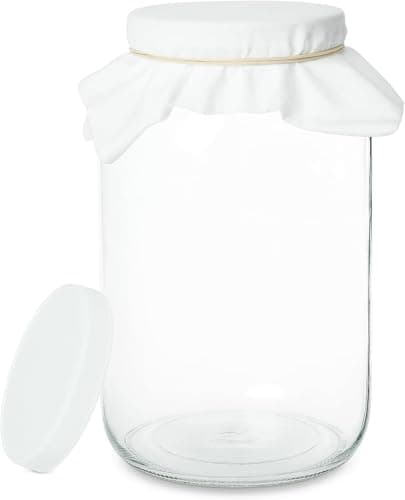 kitchentoolz 1-Gallon Wide-Mouth Glass Brewing Jar A plain wide-mouth gallon jar, which is genuinely all kombucha needs: room for the SCOBY, a mouth wide enough to get a hand in, and glass you can watch the culture through. | A first gallon batch | |
| 02 | 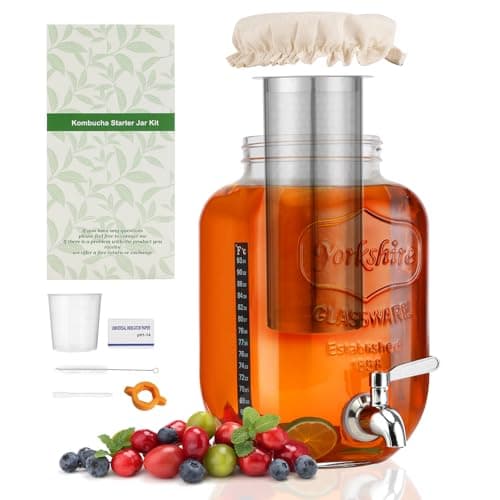 1-Gallon Kombucha Jar with Stainless Spigot The tap is the point. | Continuous brewing | $29.99 · View on Amazon
|
| 03 | 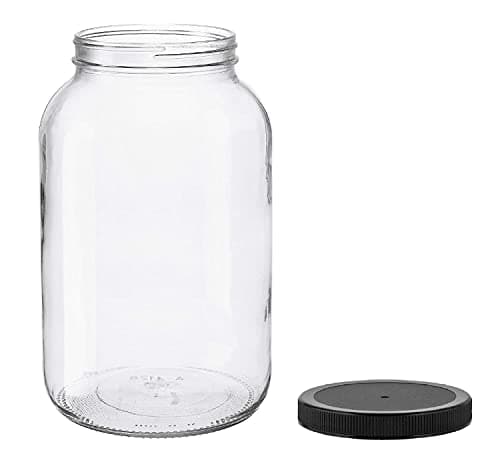 North Mountain Supply 1-Gallon Wide-Mouth Jar A gallon jar with a lid and nothing else, at the cheapest price on this page. | The lowest price that works | |
| 04 |  The Kombucha Shop brewing kit A gallon jar, a live SCOBY with starter liquid, tea, sugar, a cloth cover and a thermometer strip. | A complete first brew |
#ad · We earn a commission on Amazon purchases. Prices come from Amazon and change.
Kombucha is the one ferment on this site that wants air. The culture sits on the surface and needs oxygen, which is why a kombucha jar is covered with breathable cloth rather than sealed with an airlock. Get that one thing right and the rest of the vessel decision is straightforward.
The picks above are ordered for a first gallon batch, which is the size nearly every kombucha recipe is written around.
What a brewing vessel has to be
- Glass. Kombucha is acidic and it sits for a week or more. Glass is inert, easy to sanitize and lets you watch the culture. Avoid metal vessels and anything with a metal interior.
- Wide-mouthed. A mature SCOBY grows to the width of the vessel, and at some point you will need to lift it out with your hand. A narrow neck turns that into a wrestling match.
- Breathable at the top. Cloth and a band. Not a lid, not an airlock. This is the opposite of a vegetable ferment and it is the most common beginner mistake we see described.
- About a gallon. Big enough to be worth the week, small enough to lift and to fit in a cupboard away from direct light.
- Straight-sided, ideally. A shouldered jar traps the SCOBY below the shoulder as the batch is drawn down.
Spigot or no spigot
A tap near the base turns the jar into a continuous brewer: you draw off finished kombucha and top the jar back up with fresh sweet tea, without lifting anything or disturbing the culture. People who brew steadily tend to end up here.
The costs are real. The spigot is one more part to dismantle and clean, it is the component most likely to leak, and it sits above the sediment line — so the last inch of the jar and the yeast strands that collect there never come out of the tap. Cheap jars sometimes use plastic spigot parts, which are a known weak point; check what yours is made of before buying.
For a first batch, skip it. Find out whether you like kombucha before you buy the plumbing.
Jar, or kit?
A kit bundles the vessel with a culture, tea, sugar and a cover, which solves the real beginner problem: sourcing a live SCOBY. Buying a jar alone means sourcing the culture separately, which is entirely doable and slightly cheaper.
If you have a SCOBY coming from a friend, buy the jar. If you do not, a kit is usually the simpler first purchase — we compare them in best kombucha starter kits, and what the culture actually is, in what is a SCOBY.
Where to keep it
Out of direct sunlight, somewhere reasonably warm, and somewhere you will walk past. Kombucha does not need a cupboard so much as it needs not to be forgotten; the first ferment is judged by taste, so the jar should be somewhere you will actually taste it.
It also should not sit directly beside a vegetable ferment or a bread starter. Cross-contamination between cultures is not a certainty, but separating them costs nothing.
Every pick, in order
The full write-ups
Pick 01 · A first gallon batch
kitchentoolz 1-Gallon Wide-Mouth Glass Brewing Jar
kitchentoolz
A plain wide-mouth gallon jar, which is genuinely all kombucha needs: room for the SCOBY, a mouth wide enough to get a hand in, and glass you can watch the culture through. No spigot to clean, nothing to leak.
Capacity
1 gallon
Mouth
Wide mouth
Material
Glass
Cover
Needs a breathable cloth and band -- kombucha must not be sealed
Specs compiled from: Manufacturer product listing and product name
What is good
- The mouth is wide enough to lift a full-sized SCOBY out without folding it
- Nothing mechanical, so nothing to fail or harbor residue
- A gallon is the batch size nearly every kombucha recipe is written for
What is not
- No tap, so bottling means lifting and pouring a full gallon of liquid
- You supply the cloth cover and band yourself
- Glass at this size is heavy and genuinely breakable
#ad Disclosure · Price as of September 14, 2026
Pick 02 · Continuous brewing
1-Gallon Kombucha Jar with Stainless Spigot
Type pick -- continuous-brew vessel
The tap is the point. A spigot lets you draw off finished kombucha and top the jar back up without disturbing the SCOBY, which is what continuous brewing means. It also adds the one part of the whole rig that can leak or harbor residue.
Capacity
1 gallon
Tap
Stainless steel spigot with a mesh filter, per the listing
Material
Glass body
Use
Continuous brew; draw off and refill without lifting the jar
Specs compiled from: Product-type description; capacity and material as listed by sellers
What is good
- Bottling becomes opening a tap rather than pouring a gallon of liquid past a SCOBY
- Continuous brewing keeps the culture in a stable, acidic environment it likes
- Included filter keeps most of the yeast strands out of the glass
What is not
- The spigot is the part that fails, and it must be dismantled and cleaned properly
- Mounted low, so the last inch of liquid and the yeast sediment sit below the tap
- Plastic spigot components on cheaper jars are a known weak point -- check what yours is made of
Pick 03 · The lowest price that works
North Mountain Supply 1-Gallon Wide-Mouth Jar
North Mountain Supply
A gallon jar with a lid and nothing else, at the cheapest price on this page. For a first batch, where the real question is whether you like kombucha at all, this is the honest amount to spend.
Capacity
1 gallon
Mouth
Wide mouth
Included
Jar and lid
Note
Use a cloth cover for brewing; the lid is for storage
Specs compiled from: Manufacturer product listing and product name
What is good
- Cheapest route to a proper gallon brewing vessel
- The same wide mouth as jars costing twice as much
- Useful afterwards for storage even if kombucha does not stick
What is not
- No cloth, no band, no filter -- everything else is on you
- The supplied lid must not be used during an active brew
- Plain glass with no measurement markings
#ad Disclosure · Price as of September 14, 2026
Pick 04 · A complete first brew
The Kombucha Shop brewing kit
The Kombucha Shop
A gallon jar, a live SCOBY with starter liquid, tea, sugar, a cloth cover and a thermometer strip. The live culture is the part that matters and the part that is awkward to source separately.
Vessel
One-gallon glass brewing jar
Culture
Live SCOBY with starter liquid
Included
Tea, sugar, cloth cover, band, thermometer strip
Cycle
Typically 7-21 days for the first ferment
Specs compiled from: Manufacturer product listing and product name
What is good
- The live SCOBY and starter liquid are the hard part, and they are in the box
- The stick-on thermometer removes the main variable a beginner cannot see
- Enough tea and sugar for a first batch, so nothing else is needed
What is not
- A gallon is a lot of kombucha to commit to on batch one
- Live culture means shipping timing matters
- The jar is the least special thing in a fairly expensive box
#ad Disclosure · Price as of September 14, 2026
How we picked
We have not tested any of this equipment. What we did instead: compiled the published specifications from each manufacturer’s own listing, checked them against the task a beginner is actually trying to do, read the care instructions, and named the thing we would skip. Where a pick is a product type rather than a brand, it is because the category is sold mostly unbranded and the type is the real decision.
Frequently asked
Questions
+What size jar do I need for kombucha?
One gallon suits nearly every published recipe and is the standard home batch. Smaller works but the culture has less margin; larger gets heavy and hard to handle.
+Can I use an airlock jar for kombucha?
No. The kombucha culture needs oxygen, and an airlock exists to keep oxygen out. Cover the jar with tight-woven cloth and a band instead. Airlocks belong on vegetable ferments.
+Is a kombucha jar with a spigot worth it?
Once you brew continuously, yes — it saves lifting a full gallon past a SCOBY every time you bottle. For a first batch it is extra cost, extra cleaning and the part most likely to leak.
+Can I brew kombucha in a plastic or metal container?
Use glass. Kombucha is acidic and sits for a week or more, and glass is inert, easy to sanitize and lets you see what is happening. Avoid metal vessels entirely.
Read next