Hub 01 · Start Here
Kit, or buy the pieces separately?
A kit wins when you own none of it. It loses when half the box duplicates your kitchen — and most kitchens already contain two of the five items.
We earn a commission if you buy through our links, at no extra cost to you. We have not tested this equipment. Here is what we did instead.

Buy the kit if
You own none of it and want one order
Genuinely starting from an empty cupboard, or buying a gift where “order the missing scale yourself” is not an acceptable instruction.
Buy the pieces if
You already own jars
A cupboard with mason jars in it already contains the most-duplicated kit component. Buy the culture, the lid and the weight separately and keep the difference.
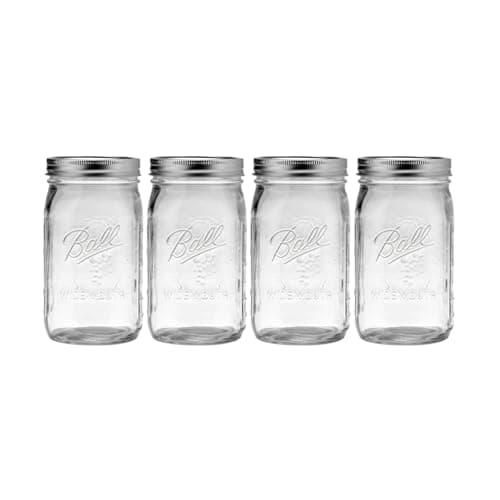
Wide-mouth quart mason jar
#ad Disclosure · Price as of October 17, 2026
Go through the box item by item
Kits are priced as a bundle, so the only way to evaluate one is to list what is in it and cross off what you own. In our experience of reading these listings, a typical sourdough kit contains five things that do something and three that do not.
- The vessel. The most commonly duplicated item. If you own a wide-mouth quart jar, you own this.
- The culture. Rarely duplicated, and the one item worth paying for if you want to skip the messy first week.
- The rise band. A rubber band does this. So does a grease-pencil mark on the glass.
- The basket. Not duplicated in most kitchens, and the item that most improves the look of a finished loaf.
- The lame. Not duplicated, cheap, and the first thing most people replace anyway.
- The cloth cover, the proofing bag, the booklet. Filler. Not bad, not used.
The rule that decides it
Count the items in the kit you do not already own. If it is three or fewer, buy those three separately. Below that threshold the bundle discount almost never beats buying the components, because you are paying for the packaging on things you are about to put in a drawer.
Above it, the kit usually wins on price and always wins on the thing kits are actually for, which is not having to make five decisions before you start.
Where kits are unambiguously the right answer
Fermentation kits for vegetables are the exception, and it is worth saying plainly. The lid and the weight have to match your jar mouth, and buying them separately is exactly how people end up with a wide-mouth weight and a regular-mouth lid. A matched set removes a mistake that costs a return. See best fermentation kits.
Gifts are the other exception. A gift has to be complete on the day it is opened. That is worth paying a bundle premium for even when the arithmetic says otherwise.
The one thing no kit includes
A scale. Whichever way you go, budget for one separately — our scale picks are here. It is the cheapest item on the whole shopping list and the one that most changes whether your results repeat.
Frequently asked
Questions
+Are fermentation kits cheaper than buying the parts?
For vegetable fermentation, usually yes, and the matched jar-mouth sizing is worth more than the price difference. For sourdough kits it depends entirely on how much of the box you already own — most kitchens already have the jar.
+What do I actually need to buy if I own mason jars?
For vegetables: an airlock lid and a weight in your jars’ mouth size. For sourdough: a 1g scale, and a dried culture if you do not want to grow your own.
+Is a kit a good gift?
Yes, provided it is complete enough to use on the day. Add a kitchen scale, which almost no kit includes and which the recipient will otherwise have to order before they can follow any recipe.
Read next