Hub 02 · Sourdough Starter
Gluten-free sourdough starter
Two separate questions get tangled together here, and the answers are opposite. One is a shopping question with a good answer. The other is a safety question with a hard no.
We earn a commission if you buy through our links, at no extra cost to you. We have not tested this equipment. Here is what we did instead.
Quick picks
Tap a row for the full write-up · Prices open on Amazon
| # | Product | Best for | Price |
|---|---|---|---|
| 01 | 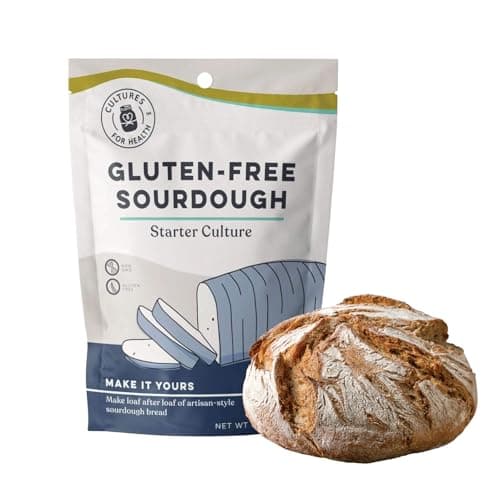 Cultures for Health Gluten Free Sourdough Starter A dehydrated heirloom culture from the established name in home culture supply, and the one we would buy first. | A first gluten-free starter | |
| 02 | 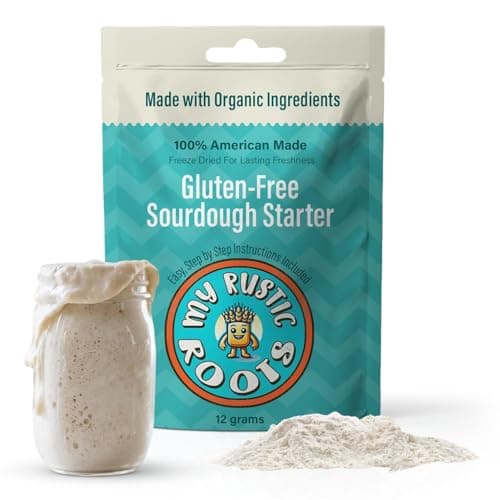 My Rustic Roots Gluten Free Sourdough Starter, 12 g Twelve grams of freeze-dried brown-rice-flour starter for under ten dollars -- the lowest-risk way to find out whether you want to keep a gluten-free starter at all. | The cheapest way to try | |
| 03 | 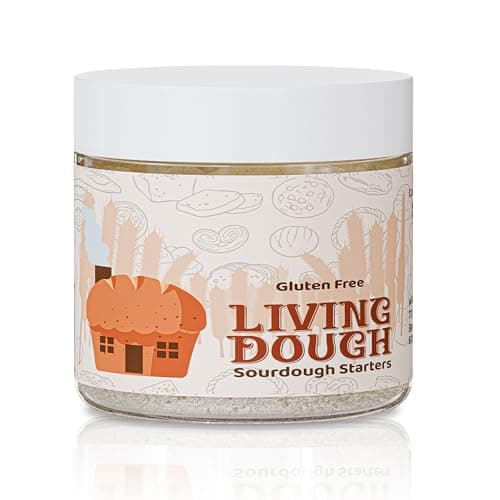 Living Dough Gluten Free Sourdough Starter, 3.5 oz Fresh An already-active wet starter rather than a dried culture, which removes the single most discouraging part of starting gluten-free: the week of feeding a jar that does nothing visible. | Skipping the revival week | |
| 04 | 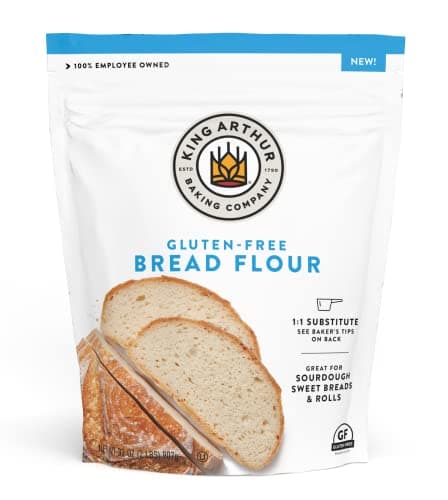 King Arthur Gluten-Free Bread Flour, 2 lb The flour that makes gluten-free sourdough behave most like bread, and the one to buy for the loaf itself rather than for feeding the starter. | The loaf flour to start with | |
| 05 | 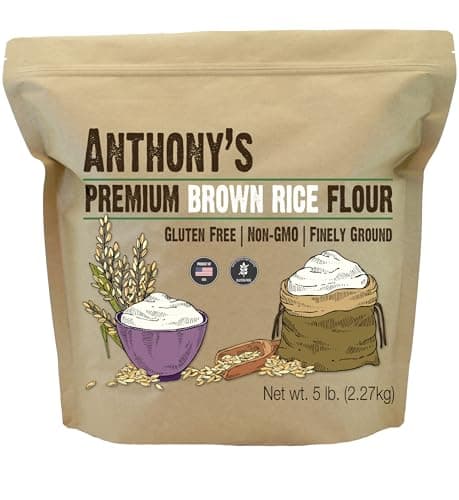 Anthony's Brown Rice Flour, 5 lb The cheap bulk single-grain flour to actually feed a gluten-free starter on. | Feeding the starter | |
| 06 | 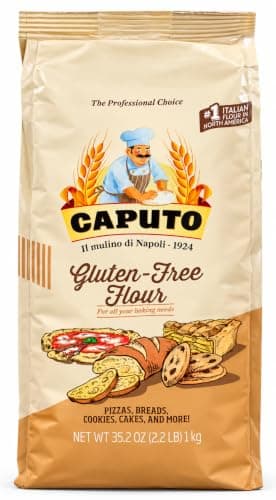 Antimo Caputo Gluten Free Flour, 2.2 lb The blend bakers reach for when they want gluten-free dough that stretches instead of crumbling, and the closest thing here to a wheat dough's handling. | Chew and an open crumb |
#ad · We earn a commission on Amazon purchases. Prices come from Amazon and change.
Yes, you can keep a real sourdough starter with no gluten in it — buy the Cultures for Health dehydrated gluten-free culture and feed it brown rice flour. That is the answer to the shopping question, and it is a good answer: the culture is cheap, it keeps in a cupboard, and it works.
No, fermenting a wheat starter for longer does not make wheat bread safe for celiac disease. The FDA’s own labeling rule is built on the fact that gluten cannot even be reliably measured after fermentation. If you need gluten-free, the flour has to be gluten-free before the starter ever touches it.
Those two sentences are the page. Everything below is why the second one is true, and then which cultures and flours to actually buy.
Why fermentation does not solve this
The appealing theory is that a long sourdough ferment breaks gluten down, so a slow enough loaf becomes safe. Lactic acid bacteria do degrade gluten proteins. The problem is everything after that sentence.
The FDA defines “gluten-free” at less than 20 parts per million, and its guidance states that a food labeled gluten-free “cannot be intentionally made with any amount of a gluten-containing grain.” Wheat flour is a gluten-containing grain, in any amount, however long you ferment it.
Then there is the measurement problem, which is the part almost nobody mentions. In 2020 the FDA issued a final rule specifically on gluten-free labeling of fermented and hydrolyzed foods, and its reasoning is the useful fact here. After fermentation, the agency says, gluten proteins “are no longer intact and, currently, cannot be adequately detected and quantified through testing.” Because of that, the FDA does not assess these foods by testing the finished product at all. It requires manufacturers to keep records “to show that their foods are gluten-free before fermentation or hydrolysis.”
Read that again, because it settles the question. The federal regulator’s position is that you cannot find out how much gluten is in a fermented food by testing it — so the only way to know a sourdough is gluten-free is to know the flour was gluten-free going in. A home baker has no laboratory, no records system and no test. There is no version of a long ferment that gets you a defensible answer.
Research has produced wheat breads under 20 ppm, and it did so with selected lactobacilli plus added fungal proteases under laboratory control — a specific industrial process, not a slow proof in a kitchen. That work is the origin of most of the hopeful claims you will read, and it does not transfer to a jar on a counter.
How we picked these
We set the criteria before ranking, and they are not the usual ones:
- Is it actually a gluten-free culture, sold and fed as one, rather than a wheat starter with a reassuring label?
- Which format survives a beginner? Dehydrated, freeze-dried and fresh fail in different ways, and the failure modes matter more here than on wheat because the revival signs are fainter.
- Does the starter flour and the loaf flour get separated? They are different jobs and buying one flour for both is the commonest and most expensive mistake in this category.
- What is published. As ever: a claim on a listing is a claim, not a specification.
Buy two different flours, not one
This is the practical heart of it. A gluten-free starter and a gluten-free loaf want different flour, and the bags do not tell you so.
The starter wants one simple whole-grain flour. Brown rice flour, fed daily. It is cheap, it is single-grain, it brings its own microbial population, and it is the base most gluten-free cultures are dried on, so the culture does not have to transition. Five pounds of Anthony’s costs less than two bags of bread blend and you are discarding half of it every day — which is the whole economic argument.
The loaf wants an engineered blend. Gluten-free dough has no gluten network, so structure has to come from starches and a binder. King Arthur’s gluten-free bread flour is sold as a 1:1 replacement in yeasted recipes specifically, which is the claim you want — most gluten-free blends are formulated for cakes and cookies and will not hold a boule’s shape. Caputo’s blend is the one to graduate to if you want dough that stretches rather than tears.
Feeding your starter on expensive bread blend is burning money on gums you then throw away. Baking your loaf with plain rice flour produces a dense, gritty slice. Both mistakes come from buying one bag.
The three formats, compared
| Dehydrated | Freeze-dried | Fresh and active | |
|---|---|---|---|
| Time to first bake | A week or more | A week or more | Days |
| Shelf life before you start | Cupboard-stable | Cupboard-stable | None; feed on arrival |
| Can a delayed delivery kill it | No | No | Yes |
| Second attempt if revival fails | Usually, from the same packet | Rarely at 12 g | No |
| Cost | Low | Lowest | Highest |
| Best for | A first gluten-free starter | Finding out cheaply | Impatience, with a free week |
Reviving a dried culture, specifically on gluten-free flour
The instructions in the packet are usually written for the general case. Two things are different here and both are places people quit:
It takes longer and shows less. A wheat culture often announces itself in three or four days. Expect a week or more on rice flour, and expect the evidence to be bubbles and smell rather than a rising line. Feed it on schedule and judge it at the end of the week, not on day three.
Hydration behaves differently. Rice flour does not absorb water the way wheat does, so the same ratio by weight gives you a looser, more batter-like starter. That is normal and not a fault. It also means a straight-sided jar earns its keep, because a thin starter smears up the sides of a curved one and you lose your only visual reference — our jar roundup covers the shape, and what size to use applies unchanged.
Everything else is the ordinary routine, and our general page on how to start a starter holds — with the warning that its readiness test is a rise test, which is the one part that will mislead you here.
Keeping the feeding chain clean
If gluten-free matters for health rather than preference, the culture is the easy part. The hard part is everything the flour touches, every day, for as long as you keep the jar:
- A dedicated scoop and a dedicated jar. The scoop that lives in the wheat flour is the commonest route for cross-contact.
- Flour dust travels and settles. Mixing wheat dough on the same counter earlier in the day is a real consideration, not a theoretical one.
- Wooden spoons, bannetons and cloths hold flour in a way that steel and glass do not. A cane banneton that has proofed wheat loaves cannot be made gluten-free by washing, and in any case is never washed.
- Shared toasters and shared baking sheets are outside the scope of this page but inside the scope of the problem.
A shared kitchen is not a gluten-free kitchen, and no product on this page changes that. We would rather say so than sell you a culture and let you find out.
What a gluten-free starter looks like when it is working
Lower your expectations about the drama, because this is where people wrongly conclude they have failed. A rye starter can double in four hours and dome visibly. A brown-rice starter is thinner, flatter and quieter. It will bubble through the body rather than rising into a dome, and the volume change may be modest even when the culture is perfectly healthy.
Judge it on smell and bubbles rather than on height: sour, yeasty and actively gassy is a working starter, whatever the jar looks like. Our troubleshooting chart covers the general symptoms, and why a starter is not rising is worth reading before you give up — with the caveat that the rise-based diagnostics on both pages were written for wheat and are less reliable here.
What the bread is actually like
Managing expectations is part of an honest recommendation. Gluten-free sourdough is good bread on its own terms and it is not a replica of a wheat loaf.
The dough is poured, not shaped. With no gluten network there is nothing to build tension in, so there is no stretch-and-fold, no shaping and no bench rest. It goes into a tin as a thick batter. Everything the rest of this site says about shaping, scoring and bannetons simply does not apply — a loaf tin is the right vessel and a banneton is not.
The crumb is tighter and the crust is thinner. The open, holey crumb of a wheat sourdough is a gluten structure holding gas. Without it you get a closer, moister, more cake-like crumb. Caputo’s blend gets closest to an open texture, which is the main reason it is on this page at all.
The sourness is still real. This is the part that works exactly as advertised: the culture is doing the same thing it does on wheat, so you get genuine sourdough flavor and the keeping quality that goes with the acidity. For a category of bread notorious for going stale by the afternoon, that is the single best argument for doing this at all.
What we would buy
The Cultures for Health dehydrated culture and a five-pound bag of brown rice flour. That is roughly thirty-five dollars, it waits in the cupboard until you are ready, and it gives you two or three attempts at revival if the first is slow. Add the King Arthur gluten-free bread flour when you are ready to bake an actual loaf, not before — a two pound bag does not keep forever and there is no reason to own it during the revival week.
If you want to spend as little as possible to find out whether you will stick with it, the My Rustic Roots packet at twelve grams is the cheapest real entry, with the honest caveat that twelve grams leaves you no second attempt.
You need very little hardware for any of this. A straight-sided jar you can see through, which our starter jar roundup covers, and a scale. Nothing on this page needs a different jar because it is gluten-free.
Every pick, in order
The full write-ups
Pick 01 · A first gluten-free starter
Cultures for Health Gluten Free Sourdough Starter
Cultures for Health
A dehydrated heirloom culture from the established name in home culture supply, and the one we would buy first. Dehydrated is the right format for a first attempt: it keeps in a cupboard until you are ready, and if the first revival fails you have usually got enough to try again. Cultures for Health also publishes real instructions rather than a card, which matters more on gluten-free flour than on wheat.
Format
Dehydrated heirloom culture
Feed
Gluten-free flour, per the listing
Shelf life
Cupboard-stable until activated
Listed uses
Bread, pasta, pizza dough, pie crust
Specs compiled from: Manufacturer product listing and product name
What is good
- The established supplier in this category, with instructions written for the gluten-free case specifically
- Dehydrated, so it waits for you instead of needing feeding from the day it arrives
- Heirloom rather than a single lab strain, which is what sourdough starter should mean
- Cheap enough that a failed first revival is not a real loss
What is not
- Reviving a dehydrated culture on gluten-free flour is slower and less obvious than on wheat -- expect a week or more
- No published activation time, and no stated strain list
- Gluten-free starters are visibly less dramatic than wheat ones; it will never double like a rye starter
- You still have to keep the whole feeding chain gluten-free, which is on you, not the culture
#ad Disclosure · Price as of October 17, 2026
Pick 02 · The cheapest way to try
My Rustic Roots Gluten Free Sourdough Starter, 12 g
My Rustic Roots
Twelve grams of freeze-dried brown-rice-flour starter for under ten dollars -- the lowest-risk way to find out whether you want to keep a gluten-free starter at all. Freeze-dried rather than air-dried is a genuine technical point in its favor for shelf life. What you are not buying is support or a documented process.
Format
Freeze-dried, 12 g
Base flour
Brown rice flour, per the listing
Listed claim
Beginner friendly, activation instructions included
Specs compiled from: Manufacturer product listing and product name
What is good
- The cheapest real entry to a gluten-free starter on this page
- Freeze-dried, which preserves viability better than simple air-drying
- Brown rice flour base, the most forgiving gluten-free flour to feed a starter on
- Small enough to be an experiment rather than a commitment
What is not
- Twelve grams leaves little margin -- one botched revival and you are buying again
- No published activation window, and no stated support if it does not wake up
- A small brand with no track record we could verify
- Nothing on the listing explains how to keep the feeding chain gluten-free, which is the part beginners get wrong
#ad Disclosure · Price as of October 17, 2026
Pick 03 · Skipping the revival week
Living Dough Gluten Free Sourdough Starter, 3.5 oz Fresh
Living Dough
An already-active wet starter rather than a dried culture, which removes the single most discouraging part of starting gluten-free: the week of feeding a jar that does nothing visible. It arrives alive and needs feeding immediately, so order it for a week when you are home. It costs more than the dried options and it has no shelf life to speak of -- that is the trade.
Format
Fresh active starter, 3.5 oz
Base flour
Organic brown rice flour, per the listing
State
Live and active on arrival, per the listing
Specs compiled from: Manufacturer product listing and product name
What is good
- Active on arrival, so the first bake is days away rather than weeks
- Removes the main failure point for beginners, which is giving up during revival
- Organic brown rice flour base, stated on the listing
- You can see it working immediately, which is the thing that keeps people going
What is not
- Perishable: it must be fed on arrival, so a holiday or a delayed delivery can kill it
- The most expensive starter here, for a culture you could have grown from the dried version
- No published shelf life, hydration or feeding ratio
- Shipping a live culture in hot weather is a risk the listing does not address
#ad Disclosure · Price as of October 17, 2026
Pick 04 · The loaf flour to start with
King Arthur Gluten-Free Bread Flour, 2 lb
King Arthur
The flour that makes gluten-free sourdough behave most like bread, and the one to buy for the loaf itself rather than for feeding the starter. King Arthur sells it as a 1:1 replacement in yeasted recipes, which is the specific claim you want -- most gluten-free blends are built for cakes and cookies and collapse in a boule. Buy a plain single-grain flour to feed the starter and keep this for the dough.
Size
2 lb
Stated use
1:1 replacement in yeasted recipes, per King Arthur
Listed applications
Artisan boules, bagels, cinnamon rolls
Type
Blended gluten-free bread flour
Specs compiled from: Manufacturer product listing and product name
What is good
- Formulated for yeasted bread specifically, not a general cake-and-cookie blend
- A 1:1 claim from a miller with a baking-support operation behind it
- The most repeatable route to a gluten-free loaf that holds a shape
- Widely stocked, so a recipe that works is a recipe you can repeat
What is not
- Expensive per pound against single-grain gluten-free flours, which is why it is loaf flour and not starter feed
- A blend, so you cannot adjust the individual components the way you can with separate flours
- A 1:1 claim is about structure, not flavor -- it will not taste like a wheat sourdough
- Two pounds does not go far once you are baking weekly
#ad Disclosure · Price as of October 17, 2026
Pick 05 · Feeding the starter
Anthony's Brown Rice Flour, 5 lb
Anthony's
The cheap bulk single-grain flour to actually feed a gluten-free starter on. A starter wants one simple whole-grain flour with its own wild yeast population, fed daily -- not an expensive engineered blend with gums in it. Five pounds of brown rice flour is weeks of feeding at a fraction of the cost per gram of a bread blend, and brown rice is the base most gluten-free cultures are sold on anyway.
Size
5 lb
Type
Single-grain brown rice flour
Stated
Gluten free, non-GMO, product of USA
Grind
Not published
Specs compiled from: Manufacturer product listing and product name
What is good
- The right economics for a flour you throw half of away every day
- Single grain, so the starter is fermenting flour rather than gums and starches
- Matches the base flour most gluten-free cultures are dried on, so no transition is needed
- Whole grain, which means it brings its own microbial population
What is not
- Anthony's publishes no particle size or grind figure, and grind changes how a starter hydrates
- Brown rice flour is gritty; it is starter feed, not the flour for a finished crumb
- Five pounds of a whole-grain flour needs cool storage or it goes rancid
- Gluten free on a listing is a claim, not a tested ppm figure
#ad Disclosure · Price as of October 17, 2026
Pick 06 · Chew and an open crumb
Antimo Caputo Gluten Free Flour, 2.2 lb
Antimo Caputo
The blend bakers reach for when they want gluten-free dough that stretches instead of crumbling, and the closest thing here to a wheat dough's handling. Caputo sells it for pizza, bread and pasta, and the starch-and-flour blend behaves far more like a developed dough than a rice-flour mix does. It is the most expensive option on this page per pound and it is not a 1:1 swap for anything.
Size
2.2 lb
Type
Multi-purpose flour and starch blend
Stated uses
Pizza, bread and pasta, per Caputo
Origin
Italy
Specs compiled from: Manufacturer product listing and product name
What is good
- Handles closer to a real dough than any rice-flour blend -- it stretches rather than tears
- The best route here to an open crumb rather than a dense slice
- From a mill whose entire reputation is dough behavior
- Works for pizza as well as loaves, which widens what the starter is for
What is not
- The most expensive flour on this page, and sold in small bags
- Not a 1:1 replacement -- hydration and handling both have to be relearned
- Contains starches and a binder, so it is further from just flour than the single-grain option
- Imported, so availability and price both move
#ad Disclosure · Price as of October 17, 2026
How we picked
We have not tested any of this equipment. What we did instead: compiled the published specifications from each manufacturer’s own listing, checked them against the task a beginner is actually trying to do, read the care instructions, and named the thing we would skip. Where a pick is a product type rather than a brand, it is because the category is sold mostly unbranded and the type is the real decision.
Frequently asked
Questions
+Is sourdough starter gluten-free?
+Does long fermentation make wheat sourdough safe for celiacs?
+What flour should I feed a gluten-free starter?
+Why is my gluten-free starter not rising?
+Can I convert my wheat starter to gluten-free?
+Is gluten-free sourdough easier or harder than wheat?
Sources
Where the facts on this page came from
Read next