Hub 02 · Sourdough Starter
Best sourdough starters you can buy
You are buying documentation and a shorter first week, not a flavor you could not eventually grow. That is still worth money to a lot of beginners.
We earn a commission if you buy through our links, at no extra cost to you. We have not tested this equipment. Here is what we did instead.
Quick picks
Tap a row for the full write-up · Prices open on Amazon
| # | Product | Best for | Price |
|---|---|---|---|
| 01 | 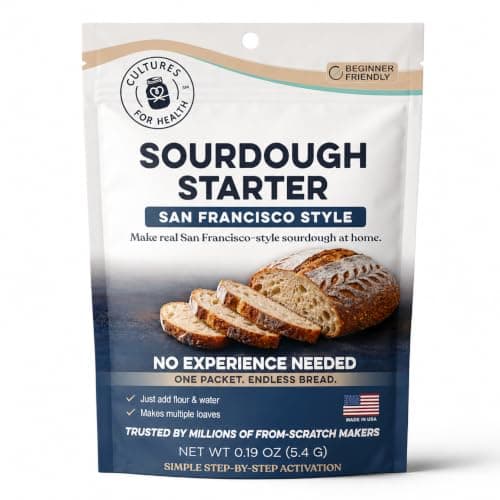 Cultures for Health sourdough starter A dried culture with written rehydration instructions, sold in several regional styles. | A first dried culture | |
| 02 | King Arthur Baking fresh sourdough starter Shipped live rather than dried, so it is closer to ready than a dried culture. | Skipping the activation week | |
| 03 | 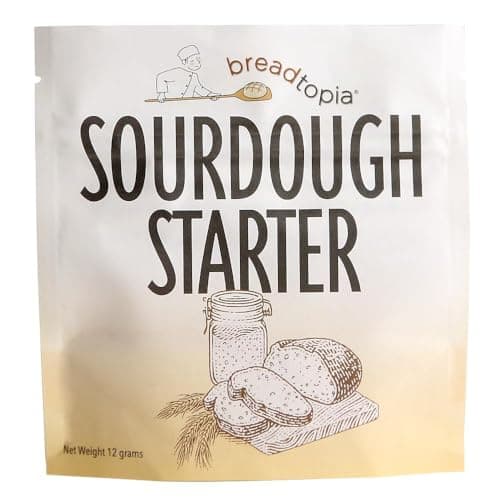 Breadtopia sourdough starter A dried starter from a bakery supplier that publishes detailed instructions and video for activation. | Whole-grain baking | |
| 04 | Starter kit with dried culture, jar and band The January bundle: a dried culture, a jar, a rise band, a spatula and a card of instructions. | One box, nothing missing |
#ad · We earn a commission on Amazon purchases. Prices come from Amazon and change.
Here is the thing every seller of sourdough cultures would rather not lead with: a starter grows from flour and water for free, in about two weeks. If you buy one, you are buying a shorter and better-documented first week.
That is a real product. The first week is where most people quit, and a culture with clear rehydration instructions removes the phase where you cannot tell normal from wrong. Just buy it knowing what it is.
Dried or live?
Dried cultures are shelf-stable, ship without urgency, and need several days of rehydration before they behave. Live starters ship refrigerated, cost more, and skip most of that.
For a gift, dried is safer — it can sit in a cupboard until the recipient is ready. For yourself, live is the shortcut you are paying for in the first place.
What actually differs between cultures
Less than the marketing suggests. A culture is a population of wild yeasts and bacteria, and once it is living in your kitchen, on your flour, at your temperature, it drifts toward what your kitchen supports. A San Francisco culture kept in a kitchen in Ohio does not stay a San Francisco culture.
What genuinely differs is the quality of the instructions and whether the supplier will answer a question. That is why our ranking follows documentation rather than provenance claims.
The one we earn nothing from
King Arthur Baking sells a live starter with a large free recipe library and a baker’s hotline behind it, and we have joined no affiliate program with them, so we earn nothing if you buy it. It is still the option we would point a serious gift-giver at, and our editorial policy commits us to saying so when the better buy is one we do not profit from.
Or grow your own
It costs nothing but flour, water and patience, and the process teaches you more about what a starter is doing than any purchase does. The honest comparison of both routes is in dried starter versus making your own, and the step-by-step is in how to start a sourdough starter.
Every culture above is fed on wheat or rye. If you need a starter with no gluten in it, that is a different shelf and a different set of suppliers — the gluten-free starter page names them, and explains why a long ferment cannot turn a wheat starter into a gluten-free one.
Every pick, in order
The full write-ups
Pick 01 · A first dried culture
Cultures for Health sourdough starter
Cultures for Health
A dried culture with written rehydration instructions, sold in several regional styles. You are paying for a documented process and a support page, not for a flavor you could not eventually grow yourself.
Form
Dried culture, shelf-stable until activated
Activation
Multi-day rehydration; follow the enclosed instructions
Styles
Several regional varieties sold
Flour
Check which flour the instructions specify
Specs compiled from: Manufacturer product listing and product name
What is good
- Written, specific rehydration instructions -- the actual value here
- Shelf-stable, so it can sit in a cupboard until you are ready
- Removes the 'is this mold or is this normal' phase of week one
What is not
- Still takes days to activate -- this is not an instant starter
- Costs real money for something flour and water produce free
- A dried culture does not stay 'the' culture; your kitchen takes it over
#ad Disclosure · Price as of October 17, 2026
Pick 02 · Skipping the activation week
King Arthur Baking fresh sourdough starter
King Arthur Baking
Shipped live rather than dried, so it is closer to ready than a dried culture. King Arthur is an employee-owned company with a large free recipe library behind the product -- and we earn nothing from them.
Form
Live starter, shipped refrigerated
Activation
Feed on arrival; shorter than rehydrating a dried culture
Support
Extensive free published recipes and a baker's hotline
Shipping
Sold direct; check current availability
Specs compiled from: Manufacturer product listing and product name
What is good
- A live culture skips the slowest part of getting started
- The free recipe library behind it is the best in the category
- Buying direct from the supplier who wrote the instructions
What is not
- Live product, so shipping timing matters more
- Usually the most expensive route
- We earn no commission here -- say so, and buy it anyway if it is right
Pick 03 · Whole-grain baking
Breadtopia sourdough starter
Breadtopia
A dried starter from a bakery supplier that publishes detailed instructions and video for activation. If you intend to bake with whole wheat or rye rather than white flour, start with a supplier who writes about that.
Form
Dried culture
Activation
Published written and video instructions
Flour
Whole-grain guidance available from the supplier
Storage
Shelf-stable before activation
Specs compiled from: Manufacturer product listing and product name
What is good
- Unusually complete published activation guidance
- Sold alongside the flours the instructions assume
- Supplier answers questions about their own culture
What is not
- Same multi-day activation as any dried culture
- You are buying documentation more than biology
- Availability varies by retailer
#ad Disclosure · Price as of October 17, 2026
Pick 04 · One box, nothing missing
Starter kit with dried culture, jar and band
Type pick -- beginner bundle
The January bundle: a dried culture, a jar, a rise band, a spatula and a card of instructions. Bought separately these items cost about the same. Bought together, nothing is missing on day one, which is worth something.
Contents
Dried culture, glass jar, rise band, spatula, instructions
Jar
Usually about 1 liter, straight-sided
Activation
Multi-day, per the enclosed card
Variation
Bundle contents differ significantly between sellers
Specs compiled from: Product-type description; capacity and material as listed by sellers
What is good
- Genuinely complete -- no second order two days in
- The commonest gift in this category, and it works as one
- Instructions are matched to the jar in the box
What is not
- You are buying a jar you may already own
- Bundle quality is the least predictable thing in this roundup
- Some kits include a cloth cover and a proofing bag you will never use
How we picked
We have not tested any of this equipment. What we did instead: compiled the published specifications from each manufacturer’s own listing, checked them against the task a beginner is actually trying to do, read the care instructions, and named the thing we would skip. Where a pick is a product type rather than a brand, it is because the category is sold mostly unbranded and the type is the real decision.
Frequently asked
Questions
+Is it worth buying a sourdough starter?
It is worth it if you want a documented, shorter first week. It is not necessary — flour and water produce a working starter in about two weeks for nothing. You are buying instructions and time, not a better loaf.
+How long does a dried sourdough starter take to activate?
Several days, following the supplier’s rehydration schedule, and longer in a cold kitchen. A live refrigerated starter is quicker because it never dried out.
+Does a San Francisco starter stay a San Francisco starter?
No. Once it is living on your flour at your kitchen temperature, the population shifts toward what your conditions support. Buy on the quality of the instructions, not on the origin story.
Sources
Where the facts on this page came from
Read next