Hub 04 · Fermenting Vegetables
Best Japanese pickle press
The fastest piece of equipment on this site: vegetables in, screw down, edible by dinner. Just be clear about what you are making, because it is not sauerkraut.
We earn a commission if you buy through our links, at no extra cost to you. We have not tested this equipment. Here is what we did instead.
Quick picks
Tap a row for the full write-up · Prices open on Amazon
| # | Product | Best for | Price |
|---|---|---|---|
| 01 | 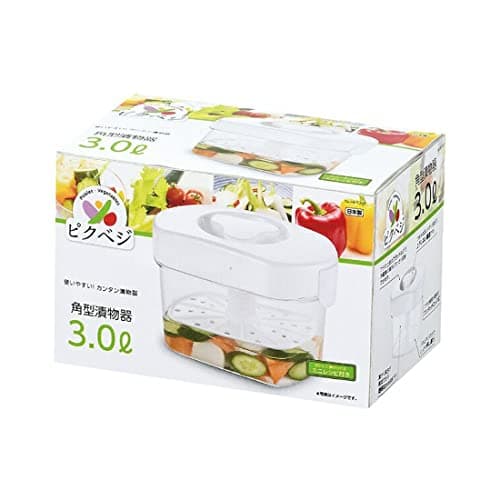 JapanBargain 3869 Japanese Pickle Press, 3 L Three liters is the size that turns a pickle press from a novelty into something you use, and this is the cheapest way to get it. | The one to buy | $24.99 · View on Amazon
|
| 02 | 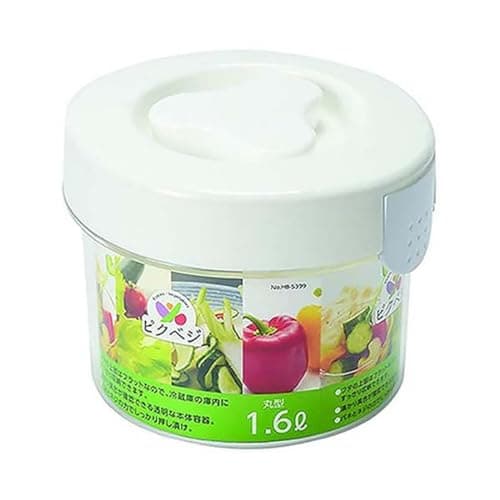 JapanBargain 3871 Japanese Pickle Press, 1.6 L The size most households will actually keep using: enough for a cucumber and a few leaves of cabbage as a side dish, small enough to live in the fridge while it presses. | The everyday size | |
| 03 | 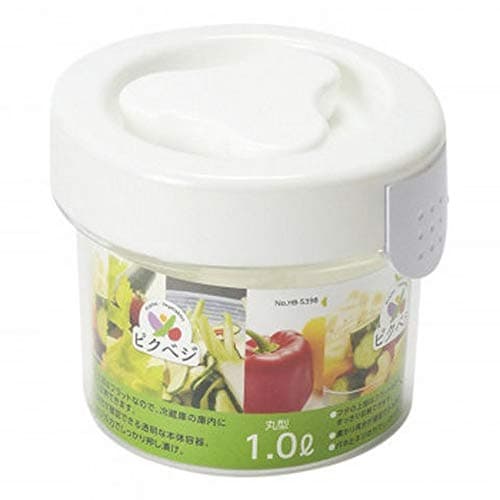 JapanBargain Japanese Pickle Press, 1.0 L A liter is one cucumber or a small bowl of pressed salad, and this is the lowest-risk way to find out whether pressed pickles are a thing you want in your life. | Cheapest way to try | |
| 04 | 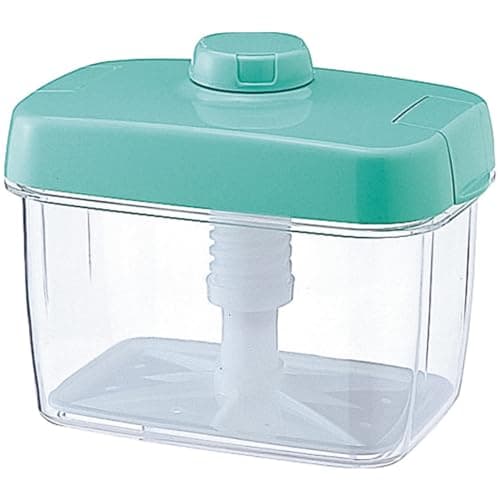 TIKUSAN Pickle Press, Rectangular, 2.2 L The shape is the reason to buy this one. | Long vegetables | |
| 05 | 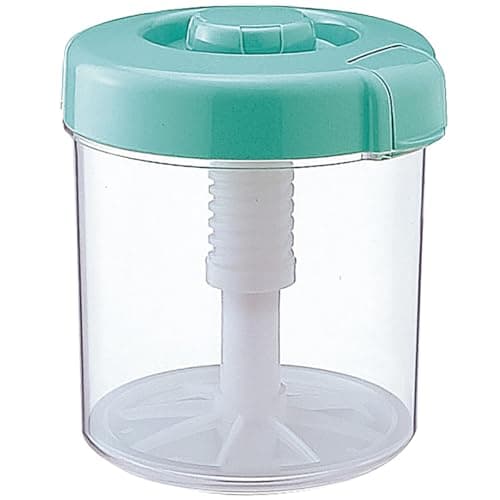 TIKUSAN Pickle Press, Round, 3 L The same three liters as our top pick, from the better-presented brand, for meaningfully more money. | If you want the nicer one |
#ad · We earn a commission on Amazon purchases. Prices come from Amazon and change.
Buy the 3-liter JapanBargain press if you want one, and understand before you do that it does not make fermented food. A Japanese pickle press — a tsukemono-ki — is a tub with a screw-down plate. You salt vegetables, clamp them, and the pressure drives out their own liquid until they are sitting in brine they made themselves. Edible in a couple of hours.
That speed is the appeal and it is also the catch. Everything else on this site asks for a week or a month; this asks for an afternoon. The reason it is fast is that it is mostly not fermenting anything.
The number that tells you whether you need one
A press is a mechanism for applying weight, so the useful question is how much weight the job needs. Just One Cookbook gives it concretely: “the ideal weight to use is between 1.5 and 2 times the weight of the pre-pickled vegetables,” and notes that traditionally “the pressure is generated by heavy stones called tsukemono-ishi with a weight of 1–2 kg.”
Work that through. Press 500 g of cabbage and you need roughly 750 g to 1 kg sitting on it — which is a dinner plate and a large jar of water. Press 2 kg of cabbage and you need 3 to 4 kg, which is where stacking things stops being reasonable and a screw starts to look like a good idea.
That is the whole buying case: a press is worth it at volume and over-engineering at a single cucumber. It replaces the stack, repeatably, in a container that fits in a fridge.
How we picked
Criteria set before ranking. This is a category where the brand tells you very little and four things tell you everything:
- Capacity. The only decision that really matters, and the one people get wrong. A liter is one cucumber. Three liters is a cabbage.
- Round or rectangular. A rectangular tub takes cucumber and daikon laid in lengthways; a round one means cutting them down to fit a circle.
- What the plastic is. The TIKUSAN presses state BPA free; the JapanBargain listings do not state anything. That is a real documented difference, and it is most of what the price gap buys.
- Whether it is made in Japan. Every press here is, which in a category full of generic tubs is the floor we set rather than a tiebreaker.
What we could not rank on, and would have liked to: not one maker publishes the clamping force the screw generates. Not a figure, not a range, not a maximum vegetable weight. So no entry on this page claims one, and anyone telling you press A is firmer than press B is guessing.
Salt, and how long to leave it
The press is the easy part; the salt is where results come from. Published figures, by style:
| Style | Salt | Time | Keeps |
|---|---|---|---|
| Asazuke (dry-salted, pressed) | 3% of vegetable weight | A few hours, or overnight in the fridge | 2 to 3 days |
| Shiozuke (brined) | 2% to 10% brine; 5% is the usual | 6 to 12 hours; 8 h at 5% | Up to 4 days at 5% brine |
| Shiozuke, strong brine | 10% brine | About 5 hours | About 5 days |
Two things to take from that table. First, these are short-life foods — three or four days, not the months a proper ferment keeps. Low salt and no culture means nothing is preserving them. Second, the doneness cue is visual rather than timed: No Recipes says it is ready “when the cabbage has released a lot of liquid and has become translucent.” Translucent is the word to watch for.
Salt choice is the same question as everywhere else on this site — no iodine, no anti-caking additives, and a grain size you can weigh. Our salt page covers it, and it applies unchanged here.
What size, honestly
The capacity ladder runs from under a liter to three, and the pricing is irrational in a way that is worth knowing: the 1.6 L press costs almost the same as the 3 L one. So the size decision is not really about money, it is about your fridge.
- 1 L — one cucumber, one side dish. Genuinely the size at which a plate and a jar of water is just as good.
- 1.6 L — a side dish for a family, and it still fits on a refrigerator shelf while it presses. The practical choice in a small kitchen.
- 2.2 to 3 L — a quartered cabbage. This is where a press earns its keep over stacked weights, and where the 3 L is the obvious buy.
Note what is not on that ladder: a crock-sized press. If you want to put up five kilos of cabbage, a press is the wrong tool and a crock is the right one.
How to use one
Six steps, and the only one people skip is the first.
- Weigh the vegetables. Everything downstream is a percentage of this number, so guessing here makes the salt meaningless.
- Cut to a thickness you want to eat. Thin slices press faster and go limp sooner; batons stay crisp. There is no fermentation timeline to respect, so cut for texture rather than for the process.
- Salt at about 3% of the vegetable weight for a dry-salted press, and toss until every surface is coated. For a brined press instead, mix a 5% brine and pour it over.
- Pack into the tub and screw the plate down firmly. Not violently — you are aiming for the equivalent of 1.5 to 2 times the vegetables’ weight, not maximum torque.
- Refrigerate, and re-tighten after about half an hour. This is the step that is genuinely easy to miss: the vegetables collapse as they give up water, the plate goes slack, and the pressure you set at the start is gone.
- Check at an hour and again at two. They are ready when they have released a lot of liquid and gone translucent. Drain, or keep them in their own brine in the fridge and eat within a few days.
If you went the brined route, the liquid is worth keeping: Just One Cookbook notes you can reuse a shiozuke brine for up to a month, which makes the second batch a five-minute job.
What to press first
Not everything suits this. The vegetables that work are the ones with water to give up and structure to keep:
- Cucumber is the standard first attempt and the most forgiving. An hour, and it is a side dish.
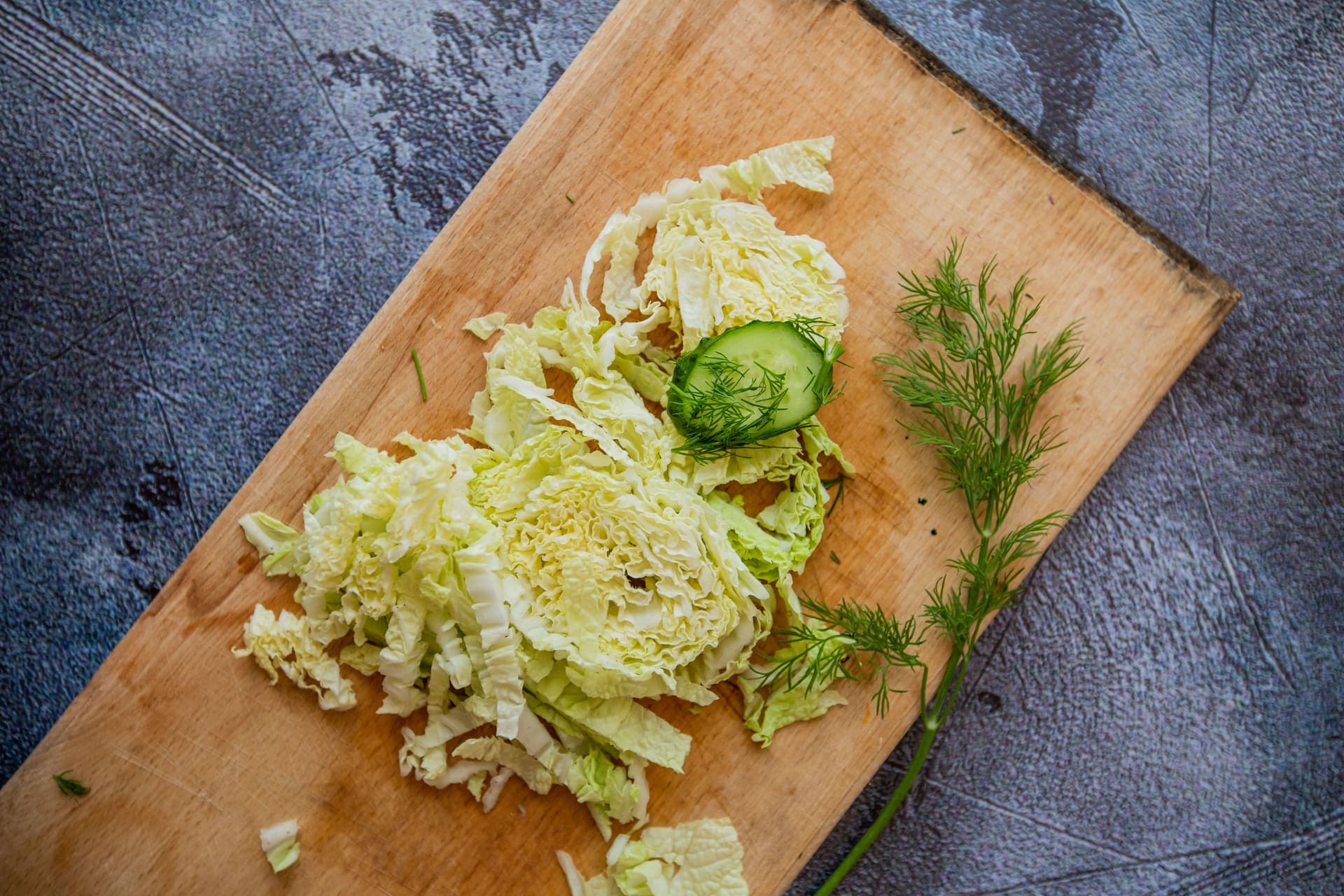
- Cabbage presses down dramatically and is the reason to own the 3 L. Quarter it, core it, and expect the volume to halve.
- Daikon and carrot are the case for a rectangular tub, because they go in as batons laid lengthways rather than chopped to fit a circle. They take longer than cucumber — closer to overnight.
- Napa cabbage, turnip and radish all work on the same logic.
What does not work: anything already soft, anything starchy, and anything you would not eat raw. A press does not cook and it does not preserve — it salts and compresses, so whatever goes in comes out as a more intense version of itself.
Cleaning, and the part that breaks
The screw thread is the failure point on every press here, and none of these makers sells a spare. Two habits extend its life: rinse and dry the thread rather than leaving brine to sit in it, and release the screw fully when the press goes into a cupboard rather than storing it under tension.
Beyond that these are plastic tubs and they wash like plastic tubs, with one caveat worth stating given the rest of this site’s advice: do not reach for a scouring pad. Scratched plastic holds residue, and in a container you are deliberately keeping salty liquid in, that is the surface you least want roughened. A rectangular press needs more attention than a round one, because brine collects in the corners.
Where this fits next to the rest of the kit
A press is not a replacement for anything on this site; it is a different speed.
Against a jar and a weight: the jar makes fermented food over weeks and keeps for months. The press makes salted food in hours and keeps for days. Different outputs, not better and worse. Our fermentation weights page covers the jar route, and the screw here is simply doing the weight’s job with more force and less fishing about.
Against a kimchi container: closer than it looks. An E-Jen-style container has an inner lid you push down by hand, which is the same idea with less mechanical advantage — see kimchi containers. The difference is that a kimchi container is built to hold a long cold ferment and a press is built to squeeze hard for an afternoon.
What we would buy
The 3 L JapanBargain. It is the cheapest route to the capacity that makes a press worth owning, it is made in Japan, and its own listing expects it to handle a cabbage. The things it gives up — a stated BPA status, a tidier finish — are worth less than the volume.
The 1.6 L if your fridge decides your purchases, which is a perfectly good reason. The rectangular TIKUSAN if you mostly press cucumber and daikon and want batons rather than offcuts, and if a stated BPA-free plastic matters to you.
And set expectations before the first batch: in two hours you will have crisp, salty, translucent vegetables that keep for three days. They are very good. They are not sauerkraut, and nothing about owning this changes that.
Every pick, in order
The full write-ups
Pick 01 · The one to buy
JapanBargain 3869 Japanese Pickle Press, 3 L
JapanBargain
Three liters is the size that turns a pickle press from a novelty into something you use, and this is the cheapest way to get it. It is also the only listing in the category whose own title names sauerkraut, which tells you the maker expects it to be used for a longer press than an overnight cucumber. Made in Japan, screw-down plate, drain-off lid. The plastic is unremarkable and the price reflects that.
Capacity
3 L
Shape
Round
Pressure
Screw-down plate; no clamping force published
Made
Japan, per the listing
Specs compiled from: Manufacturer product listing and product name
What is good
- Three liters takes a whole cabbage quartered, not just a handful of cucumber
- Cheapest 3 L press here by a clear margin
- The screw replaces the 1.5 to 2 times vegetable weight you would otherwise have to stack on a plate
- Made in Japan, which in this category is the difference between a press and a toy
What is not
- No published clamping force, so you cannot compare the screw against any other press on a number
- Plain plastic with no stated BPA status, unlike the TIKUSAN presses
- Round, so long vegetables have to be cut down rather than laid in whole
- A screw thread in a kitchen tub is the part that will eventually fail, and no spares are sold
Pick 02 · The everyday size
JapanBargain 3871 Japanese Pickle Press, 1.6 L
JapanBargain
The size most households will actually keep using: enough for a cucumber and a few leaves of cabbage as a side dish, small enough to live in the fridge while it presses. Nearly the same price as the 3 L, which is the argument against it unless fridge space is the constraint -- and in a lot of kitchens fridge space is exactly the constraint.
Capacity
1.6 L
Shape
Round
Pressure
Screw-down plate; no clamping force published
Made
Japan, per the listing
Specs compiled from: Manufacturer product listing and product name
What is good
- Fits on a refrigerator shelf while it presses, which the 3 L often does not
- Right size for a side dish rather than a batch you have to commit to eating
- Same Made-in-Japan construction as the larger press
- Small enough that the screw has less to fight against
What is not
- Costs almost as much as the 3 L press for roughly half the volume
- Too small for a cabbage, so it will not stand in for a kraut vessel
- No published BPA status
- Round again, so no help with long vegetables
#ad Disclosure · Price as of November 2, 2026
Pick 03 · Cheapest way to try
JapanBargain Japanese Pickle Press, 1.0 L
JapanBargain
A liter is one cucumber or a small bowl of pressed salad, and this is the lowest-risk way to find out whether pressed pickles are a thing you want in your life. It is genuinely cheap. It is also genuinely small, and if you decide you like asazuke you will be buying a bigger one within a month.
Capacity
1.0 L
Shape
Round
Pressure
Screw-down plate; no clamping force published
Made
Japan, per the listing
Specs compiled from: Manufacturer product listing and product name
What is good
- The cheapest press on this page, by some way
- A liter is a realistic single side dish, so nothing is wasted while you learn
- Takes up almost no fridge space
- Made in Japan at a price where that is unusual
What is not
- One liter is one vegetable; this is not a batch tool
- The most likely of these to be outgrown and replaced, which makes it the least economical per liter
- No published BPA status
- At this size a plate and a jar of water genuinely is the equal of it
#ad Disclosure · Price as of November 2, 2026
Pick 04 · Long vegetables
TIKUSAN Pickle Press, Rectangular, 2.2 L
TIKUSAN
The shape is the reason to buy this one. A rectangular tub takes cucumber, daikon and carrot laid in lengthways instead of chopped to fit a circle, which matters if you want neat batons rather than chunks. TIKUSAN also states BPA-free, which none of the JapanBargain listings do. You pay for both of those.
Capacity
2.2 L
Shape
Rectangular
Material
BPA free, per the listing
Pressure
Screw-down plate; no clamping force published
Made
Japan, per the listing
Specs compiled from: Manufacturer product listing and product name
What is good
- Rectangular, so long vegetables go in whole and come out as batons rather than offcuts
- States BPA free, which the cheaper presses here do not
- 2.2 L is a sensible middle capacity -- more than a side dish, less than a commitment
- Packs into a fridge shelf more efficiently than a round tub of the same volume
What is not
- Half again the price of the 3 L round press, for less volume
- Corners are harder to clean than a round tub, and pickling liquid sits in them
- No published clamping force, as with every press here
- The shape advantage is irrelevant if you mostly press cabbage
#ad Disclosure · Price as of November 2, 2026
Pick 05 · If you want the nicer one
TIKUSAN Pickle Press, Round, 3 L
TIKUSAN
The same three liters as our top pick, from the better-presented brand, for meaningfully more money. What the premium actually buys is a stated BPA-free plastic and a tidier finish -- not more capacity and not, as far as any listing will tell you, more pressure. We have ranked it last for that reason, not because it is a bad object.
Capacity
3 L
Shape
Round
Material
BPA free, per the listing
Pressure
Screw-down plate; no clamping force published
Made
Japan, per the listing
Specs compiled from: Manufacturer product listing and product name
What is good
- States BPA free, which the identically-sized cheaper press does not
- Full 3 L capacity, so it handles a cabbage
- Better finish and clearer instructions than the budget presses
- Round tub is the easiest shape to clean properly
What is not
- Costs substantially more than our 3 L top pick for the same volume and the same mechanism
- The only documented difference is the BPA statement -- you are paying for a sentence on a listing
- No published clamping force
- Round, so no help with long vegetables; the rectangular TIKUSAN costs less
#ad Disclosure · Price as of November 2, 2026
How we picked
We have not tested any of this equipment. What we did instead: compiled the published specifications from each manufacturer’s own listing, checked them against the task a beginner is actually trying to do, read the care instructions, and named the thing we would skip. Where a pick is a product type rather than a brand, it is because the category is sold mostly unbranded and the type is the real decision.
Frequently asked
Questions
+Is a pickle press the same as fermenting?
+How much salt do you use in a pickle press?
+How long do you leave vegetables in a pickle press?
+How long do pressed pickles keep?
+Do I need a pickle press, or will a weight do?
+What size pickle press should I buy?
+Can you make sauerkraut in a pickle press?
Sources
Where the facts on this page came from
Read next