Hub 03 · Sourdough Baking Gear
How to steam a home oven for sourdough
If the loaf fits under a lid, use a lid. This page is for the loaves that do not fit: baguettes, long batards, ciabatta, two at a time.
We earn a commission if you buy through our links, at no extra cost to you. We have not tested this equipment. Here is what we did instead.
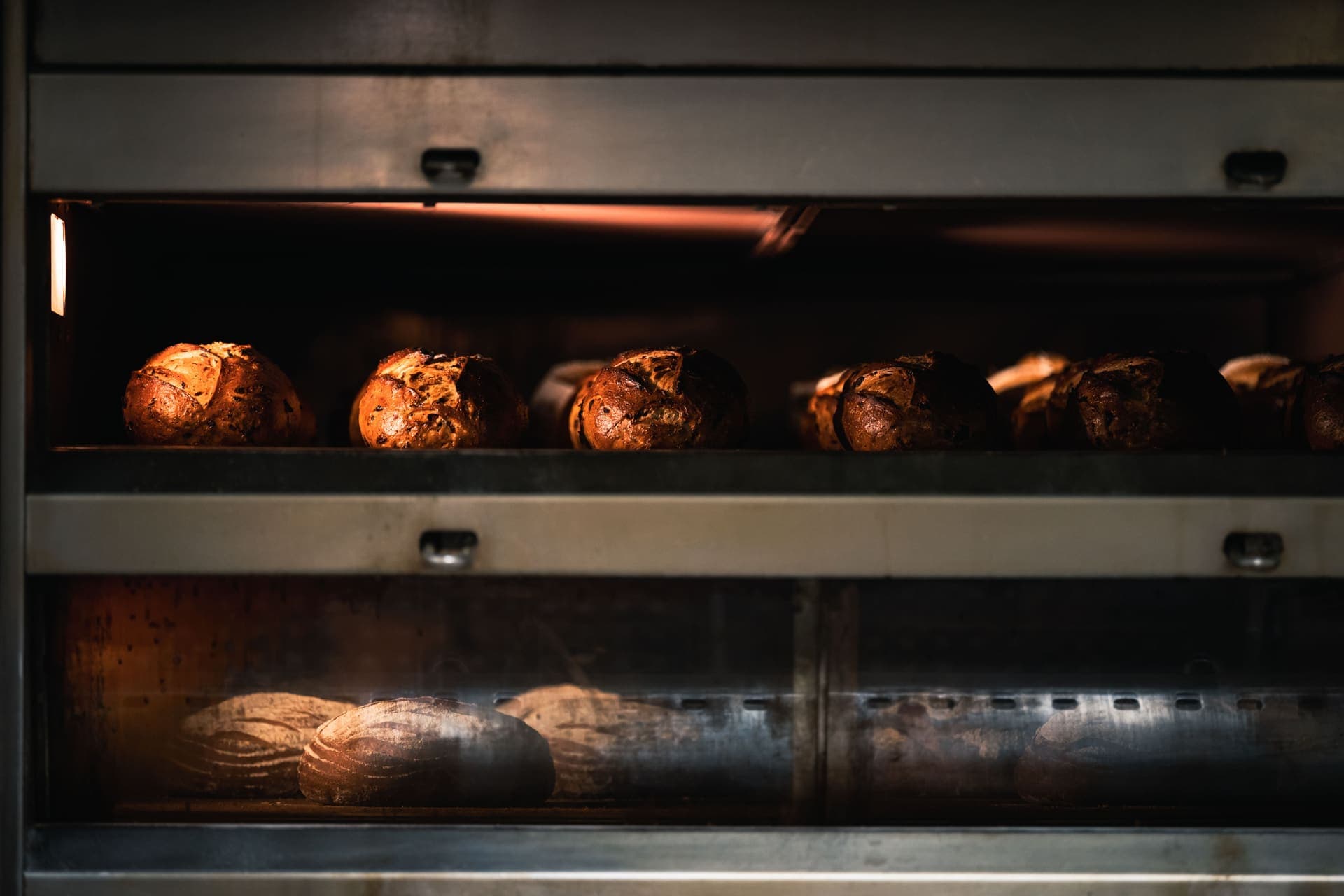
Quick picks
Tap a row for the full write-up · Prices open on Amazon
| # | Product | Best for | Price |
|---|---|---|---|
| 01 | 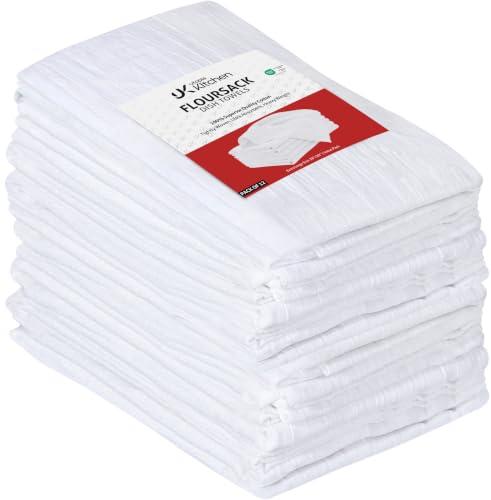 Utopia Kitchen White Flour Sack Towels, 12 pack, 28 x 28 inch The whole problem with oven steam is that it lasts two minutes. | The most steam for the least money | $17.99 · View on Amazon
|
| 02 | 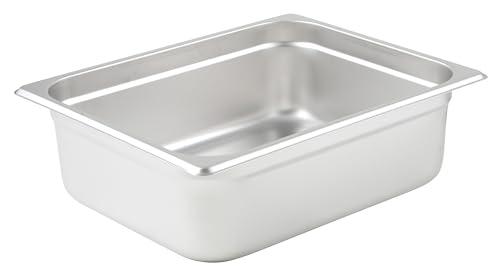 Winco Anti-Jamming Steam Pan, half-size, 4 inch deep A stainless half-size hotel pan is the unglamorous right answer for the pan that lives on the bottom rack. | Holding the water or the towels without rusting | |
| 03 | 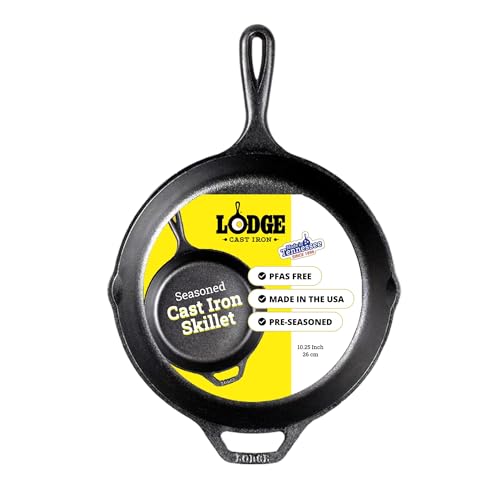 Lodge Pre-Seasoned Cast Iron Skillet, 10.25 inch The starting point almost everyone tries: preheat it on the bottom rack, pour in boiling water as the loaf goes in. | The simplest version, using a pan you will use for other things | $23.38 · View on Amazon
|
| 04 | 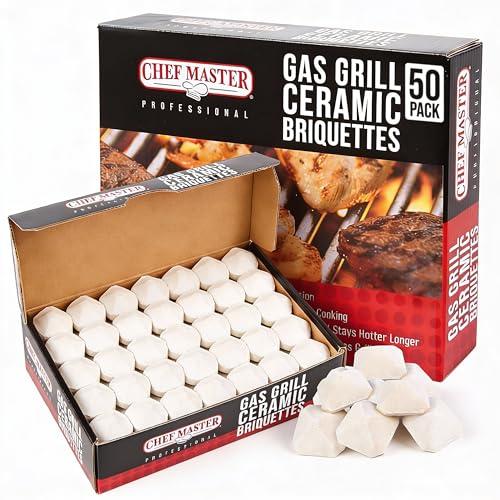 Chef Master Ceramic Briquettes for Gas Grill, 50 pack Lumps of hot ceramic in a pan give water an enormous amount of hot surface to hit, which is the whole mechanism behind the lava-rock method America's Test Kitchen tested. | Permanent thermal mass, if you bake open-oven every week |
#ad · We earn a commission on Amazon purchases. Prices come from Amazon and change.
If the loaf fits under a lid, put it under a lid. A covered loaf steams itself in its own moisture, free and reliably, and most sources end up there. Brod & Taylor call open-oven steaming “often more trouble than they’re worth” with “inconsistent results” — worth weighing against the fact that they sell a cover, so it is not a disinterested opinion. Our Dutch oven page lists the things in your kitchen that already do it.
So this page is not for boules. It is for the loaves that physically cannot be covered: baguettes, batards too long for a pot, ciabatta, focaccia, and two loaves at once. That list is the same one our baking steel page gives as the reason to own a flat surface at all — and that page then tells you that you have to make the steam yourself and leaves it there. This is the page that finishes the sentence.
What the steam is actually doing
A dough surface in a dry 475F oven sets within a couple of minutes. Once it sets, the loaf has stopped expanding, whatever the yeast and the starter are still doing inside. Steam buys time. Brod & Taylor put the mechanism plainly: steam “keeps the dough’s surface moist and flexible, delaying crust formation,” which allows more “volume expansion, or oven spring.” The Perfect Loaf describes the same thing from the dough side — it “helps keep the skin pliable and stretchy during baking.”
The second effect is the one you can see across the room. Moisture on the surface “gelatinizes the starches,” and when the steam clears and dry heat takes over, that starch layer sets into a hard, shiny shell. Brod & Taylor call it “a shiny, crisp crust that shatters when cut open.” Gloss and blistering are not decoration; they are the visible evidence that there was moisture on the surface at the right moment.
Both effects are front-loaded. Brod & Taylor put the window at roughly the first fifteen minutes, which is when the dough is expanding fastest. After that, steam is not helping and is actively working against the crust you want.
Why the tray of water fails
Almost every recipe that mentions steam says to slide a tray of water onto the bottom rack. It is the first thing everyone tries and it is the weakest method in this whole category, for a reason that is physics rather than technique.
America’s Test Kitchen tested the standard version — boiling water poured into a preheated loaf pan — and moved away from it because “the water doesn’t continue to boil for very long.” A home oven is a vented box. Within a minute or two the water has dropped below boiling, the steam has gone out of the vent, and the loaf spends the remaining eighteen minutes of its expansion phase in a dry oven exactly as if you had done nothing.
This is also why our Dutch oven page ranks it last among the pot alternatives. It is not wrong, it is just brief. Everything below is a way of making the steam last long enough to matter.
How we picked
There is no product here that produces steam. Water produces steam. Every item on this page is a way of holding water so that it keeps releasing for twenty minutes instead of two, so the criteria are short:
- Does it release over time, or all at once? This is the whole question. A reservoir that boils dry in ninety seconds is not a steam source.
- Is it documented by someone who tested it? We stuck to the two published methods with real detail behind them — King Arthur’s towel method and America’s Test Kitchen’s hot-mass method.
- Does it survive the abuse? Boiling water on hot metal, every week. The Perfect Loaf gave up on cast iron for the water pan after repeated boiling water rusted it, and switched to stainless.
- Is it food equipment? The hot-mass method is usually written as “lava rocks,” which in practice means buying a landscaping and fire-pit product. Labeling varies from bag to bag, and bakers have found warnings on some of them. Where a manufactured alternative exists that is built to sit in the path of food, we would rather point you at that.
- Does it do anything else? A skillet is a skillet forever. A bag of grill briquettes is only ever a bag of grill briquettes.
The method that actually holds steam
King Arthur published the version worth copying, and notably they built it for the same reason this page exists: to bake long batards that would not fit in a round pot. The trick is rolled cotton towels, soaked in boiling water, standing in a pan.
Their explanation of why it beats a tray: “The towels create steam slowly but continuously as they bake in the oven.” The pan of ice gives the initial burst; the towels carry it, and “this approach continually steams the oven even after the pan with ice/water uses up all its liquid.” Their reported result is “loaves with more volume and a crust that’s shiny and delightfully crispy.”
America’s Test Kitchen get at the same problem from the other end: fill a wide pan with lava rocks, which are “irregularly shaped” and so carry “a lot of surface area for absorbing and retaining heat.” Preheat the pan, pour a quarter cup of boiling water over the rocks, close the door for a minute, load the bread, then pour another quarter cup. Hot mass flashes the water instantly rather than letting it sit and cool. They also note you should dedicate a pan to this, because the rocks scratch it.
The two are not rivals. The published home-baker setups use both: a pan of hot mass for the burst at the moment the loaf goes in, and a pan of soaked towels for the twenty minutes afterward. If you only do one of them, do the towels — the burst is the part a loaf can most afford to lose.
The oven glass question, answered honestly
Every forum thread on oven steaming has someone whose door glass cracked, and someone else saying that is nonsense. Both are a bit right, and the real picture is worth having before you start throwing ice around.
Oven doors use tempered glass. Which? describe it as glass heated past 600C and then rapidly cooled, which puts the outer layer in compression. That makes it resistant, but brittle: when it fails it fails all at once. Their September 2026 report lists the causes as scratches, impact, thermal stress, and tiny manufacturing flaws inside the glass itself, and notes that failure often comes long after the damage that caused it. They also call these cases rare — an investigation collected just over seventy examples across all major brands.
Separately, oven manuals are consistent on the point: do not pour water into a hot cavity, and moisture left in the cavity over a long period can corrode it.
The sane reading is neither “this will destroy your oven” nor “ignore it.” Thermal stress on tempered glass is real, rare, and entirely avoidable: keep the water in a pan and aim away from the door. The Perfect Loaf, who has steamed this way for years, says he has splashed the door without harm and still takes the precaution. That is the right posture. Which? add one detail that applies directly here — do not hang wet towels on the door handle.
The burn risk is more immediate and less discussed. You are pouring boiling water into a 475F oven at face height and then reaching back in twenty minutes later to pull out two hot pans. The Perfect Loaf’s warning is blunt: “Steam burns hurt. Like, really hurt.” This is the one bake where gloves that resist steam rather than just heat genuinely earn their place.
If you have a gas oven, lower your expectations
Gas ovens vent continuously by design, because combustion products have to go somewhere. The practical effect is that they hold steam poorly. The Perfect Loaf is direct about it: the method “doesn’t work super well with a gas oven,” and a reader on propane reported getting essentially no steam at all without heavily oversteaming.
If that is your oven, the honest advice is the advice at the top of this page: cover the loaf. A lid does not care how much your oven vents, because the steam never has to travel through the oven in the first place.
When to stop
Both published methods pull everything at twenty minutes, give or take five. That number is not arbitrary — it is roughly when the loaf has finished expanding, and from that point the steam is only preventing the crust from forming.
The failure modes run in both directions, and they look different. Steam for too long and you get a pale, leathery, dull crust that never crisps. Vent too early and you get a thick crust and a torn ear where the loaf tried to expand through a surface that had already set. If your loaves come out dull and soft, you are steaming too long; if they come out pale-ish with ragged scoring, you stopped too soon.
Every pick, in order
The full write-ups
Pick 01 · The most steam for the least money
Utopia Kitchen White Flour Sack Towels, 12 pack, 28 x 28 inch
Utopia Kitchen
The whole problem with oven steam is that it lasts two minutes. Three of these rolled tight, soaked in boiling water and set in a pan keep releasing steam for the entire first twenty minutes of the bake -- which is the method King Arthur published and the one The Perfect Loaf builds his bake around. Plain cotton with no dye is the only specification that matters, and twelve of them for under twenty dollars means you can keep a set purely for baking.
Material
100% cotton
Size
28 x 28 inches
Count
12
Finish
White, no dye
Specs compiled from: Manufacturer product listing and product name
What is good
- Fixes the actual failure of oven steaming -- a pan of water stops boiling long before the loaf has finished expanding
- Plain undyed cotton, which matters: bakers report dyed towels bleeding into the pan and smelling of chemicals at oven temperature
- Twelve towels means a dedicated baking set, so you never have to care that they come out stained
What is not
- They have to be completely saturated or they scorch at bread temperatures -- a half-wet towel is a fire risk, not a steam source
- They discolor and hold the smell of the bake; these stop being towels you put out for guests
- The real cost is the routine, not the money: boiling a kettle and sliding a steaming pan into a 500F oven on every single bake
Pick 02 · Holding the water or the towels without rusting
Winco Anti-Jamming Steam Pan, half-size, 4 inch deep
Winco
A stainless half-size hotel pan is the unglamorous right answer for the pan that lives on the bottom rack. It is four inches deep, so three rolled towels sit in it without touching the oven floor, and it is stainless -- which matters because The Perfect Loaf gave up on cast iron for this job after repeated boiling water rusted it. Twenty-odd dollars for an NSF-listed commercial pan.
Material
Stainless steel
Size
Half-size steam table pan, 4 inches deep
Rating
NSF listed
Features
Anti-jam stacking lugs, reinforced corners
Specs compiled from: Manufacturer product listing and product name
What is good
- Stainless takes repeated boiling water indefinitely, which is the one thing cast iron is bad at here
- Four inches deep holds three rolled towels or a genuine quantity of water rather than a splash
- Cheap enough to dedicate to steaming and still useful for brining, breading and roasting vegetables
What is not
- A half-size pan is roughly 10 by 12 inches -- measure your rack and your baking surface before you assume both fit
- No lid, no handles: you are lifting a hot open pan of water out of the oven mid-bake
- It is catering equipment and looks like catering equipment, which bothers some people in a home kitchen
#ad Disclosure · Price as of November 5, 2026
Pick 03 · The simplest version, using a pan you will use for other things
Lodge Pre-Seasoned Cast Iron Skillet, 10.25 inch
Lodge
The starting point almost everyone tries: preheat it on the bottom rack, pour in boiling water as the loaf goes in. It works, briefly. America's Test Kitchen are blunt about the limit -- with a plain preheated pan "the water doesn't continue to boil for very long." What recommends this over a dedicated steam rig is that it is a skillet, so the money is not spent on a single-purpose object.
Material
Cast iron, pre-seasoned
Size
10.25 inches
Use
Oven, stovetop, grill, campfire
Coating
PFAS-free, per Lodge
Specs compiled from: Manufacturer product listing and product name
What is good
- Heavy enough to hold real heat, which is what turns poured water into steam instead of a puddle
- The only pick here that earns its place in the kitchen whether or not you ever steam an oven again
- No setup: preheat, pour, close the door
What is not
- The steam is a burst, not a supply -- ATK moved away from exactly this method because the water stops boiling quickly
- Repeated boiling water rusts bare iron; The Perfect Loaf switched to stainless for this job for that reason
- Shallow sides mean a modest volume of water and a real splash risk when you pour
Pick 04 · Permanent thermal mass, if you bake open-oven every week
Chef Master Ceramic Briquettes for Gas Grill, 50 pack
Chef Master
Lumps of hot ceramic in a pan give water an enormous amount of hot surface to hit, which is the whole mechanism behind the lava-rock method America's Test Kitchen tested. King Arthur name "lava rocks or ceramic briquettes" interchangeably, and briquettes are the easier of the two to buy without second-guessing: they are manufactured ceramic designed to sit under a grill grate in the path of food, where bagged lava rock is a landscaping and fire-pit product whose labeling varies bag to bag.
Material
Ceramic
Count
50 briquettes
Intended use
Gas grill heat diffusion, per Chef Master
Reusable
Yes, self-cleaning design
Specs compiled from: Manufacturer product listing and product name
What is good
- Huge hot surface area is genuinely the best way to flash poured water into steam, and it is the version ATK tested
- Buy once: ceramic does not wear out, rust, or need washing between bakes
- Easier sourcing than lava rock -- a product made to sit in a food cooking path rather than in a fire pit
What is not
- Around thirty dollars to buy roughly the same twenty minutes of steam that an eighteen-dollar pack of cotton towels provides
- Fifty briquettes is far more than a half pan holds, so most of the bag sits in a cupboard
- They scratch whatever pan they live in, so that pan becomes the steam pan permanently -- and you are still pouring boiling water over them, so none of the handling goes away
#ad Disclosure · Price as of November 5, 2026
How we picked
We have not tested any of this equipment. What we did instead: compiled the published specifications from each manufacturer’s own listing, checked them against the task a beginner is actually trying to do, read the care instructions, and named the thing we would skip. Where a pick is a product type rather than a brand, it is because the category is sold mostly unbranded and the type is the real decision.
Frequently asked
Questions
+How long should I steam a home oven for bread?
+Does a spray bottle work for steaming an oven?
+Will pouring water in my oven crack the door glass?
+Do I need lava rocks to steam an oven?
+Can I steam a gas oven?
+What kind of towels are safe in a hot oven?
Sources
Where the facts on this page came from
- King Arthur Baking — better steam, bake bread with towels: the rolled-cotton-towel method, the roasting pan with lava rocks or ceramic briquettes, towels create steam slowly but continuously, pans removed at 15-25 minutes, convection off, built for batards too long for a pot
- America's Test Kitchen — turn your oven into a sauna: lava rocks as irregular shapes with a lot of surface area, a quarter cup of boiling water poured twice, and why a preheated loaf pan of boiling water was abandoned
- The Perfect Loaf — baking with steam in your home oven: steam keeps the skin pliable and gelatinizes surface starches, 100% cotton undyed towels, stainless over cast iron because boiling water rusts it, gas ovens, steam burns, and keeping water off the door glass
- Brod & Taylor — the importance of steam for crust formation: steam delays crust formation and allows volume expansion, gelatinizes the exterior for a shiny crisp crust, matters most in the first 15 minutes, and open-bake steam methods are often more trouble than they are worth
- Which? (24 September 2026) — exploding ovens, why glass doors shatter: tempered glass, thermal stress and scratches among the causes, rarity of the failure, and the advice not to hang wet towels on the door handle
Read next