Hub 03 · Sourdough Baking Gear
Best bread knife for sourdough
Sourdough has a harder, thicker crust than most bread, and a short or coarse knife tears it. Length and edge pattern decide the slice; everything else is preference.
We earn a commission if you buy through our links, at no extra cost to you. We have not tested this equipment. Here is what we did instead.
Quick picks
Tap a row for the full write-up · Prices open on Amazon
| # | Product | Best for | Price |
|---|---|---|---|
| 01 | 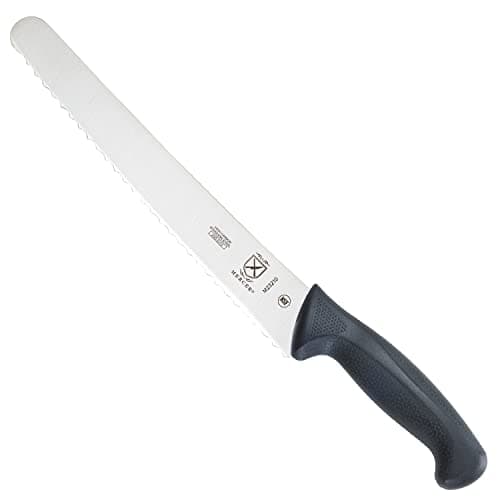 Mercer Culinary Millennia 10-Inch Wavy Edge Bread Knife The same Millennia line Mercer sells in its culinary-school student kits, at a price that makes the decision easy. | A first bread knife | |
| 02 | 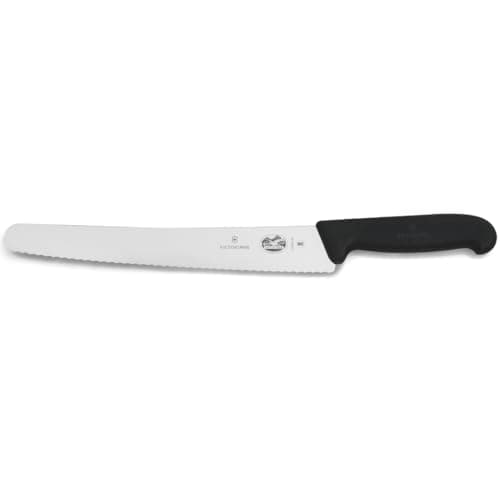 Victorinox Fibrox 10.25-Inch Bread Knife The other professional standard, a quarter-inch longer than the Mercer and made by the Swiss Army knife company. | The step up that still costs sane money | |
| 03 | 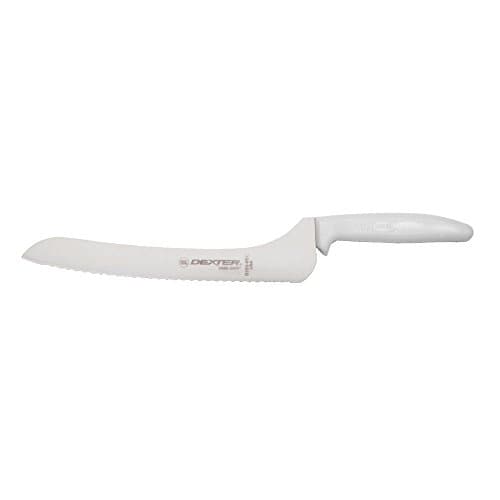 Dexter Sani-Safe 9-Inch Scalloped Offset Bread Knife The handle sits above the blade, so your knuckles clear the board when the blade reaches the bottom of a tall boule. | Knuckle clearance on a tall loaf | $29.99 · View on Amazon
|
| 04 | 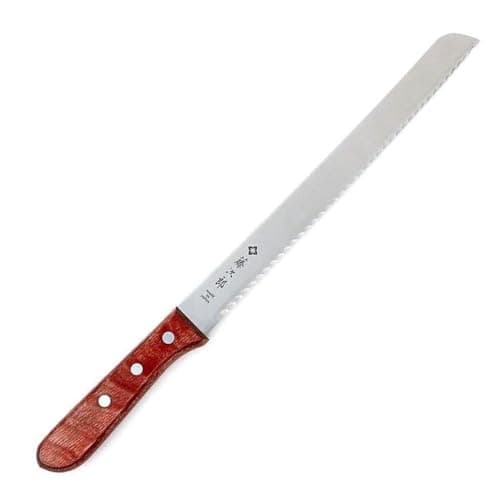 Tojiro Hand Made Bread Slicer, 14.75 inch A Japanese bread slicer with a long, thin blade on a laminated wood handle, hand made in Japan. | Clean slices through a hard crust | |
| 05 | 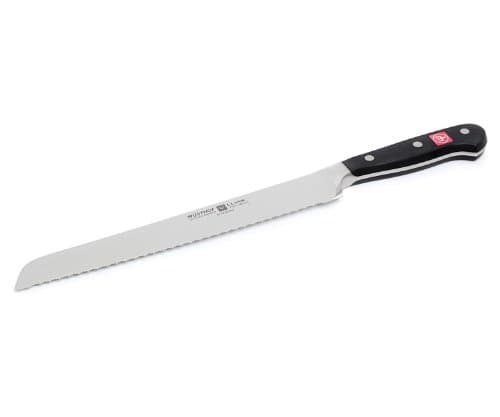 Wusthof Classic 9-Inch Double Serrated Bread Knife A forged German knife with a double-serrated edge -- small serrations cut within larger ones -- that grips a hard crust on the first pass. | If it is going to be the last one you buy | |
| 06 | 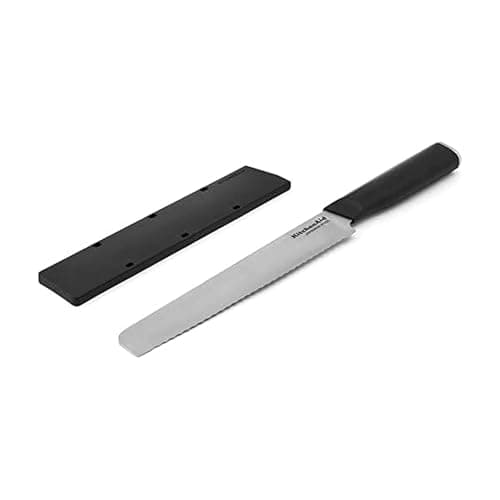 KitchenAid Classic 8-Inch Serrated Bread Knife A cheap, competent eight-inch serrated knife that ships with a blade cover. | A small kitchen, a small loaf | $16.12 · View on Amazon
|
#ad · We earn a commission on Amazon purchases. Prices come from Amazon and change.
A sourdough loaf out of a Dutch oven has a crust that a sandwich-loaf knife was not designed for: thick, blistered and hard, over a crumb that is soft and open. Cut it with a short or dull serrated knife and the crust shatters, the slice wanders, and the crumb compresses into a wedge.
That is the whole reason to think about the knife. A long, sharp, serrated blade crosses the loaf in one or two strokes and the slice comes away flat. The picks are ordered for someone buying a first proper bread knife, which is a different order from cheapest to most expensive.
First, check what you own
If there is already a serrated knife in your kitchen with a blade of nine inches or more, you probably do not need this page. We say so elsewhere: a “sourdough” bread knife is very often a normal bread knife with a loaf on the packaging, and it is on the list in what beginners waste money on.
Buy one if your knife is short, if it has gone dull and drags, or if you have been cutting sourdough with a chef’s knife and wondering why the crust explodes.
How we judged these
- Blade length, first and by a distance. A round boule is eight to nine inches across; a batard is longer. A blade that cannot cross the loaf in one stroke forces you to saw, and sawing is what tears crust and crushes crumb. Ten inches is the sensible minimum for a home sourdough baker.
- Edge pattern. Wide wavy serrations are aggressive and fast through a hard crust; fine scalloped serrations leave a cleaner face on the crumb. Both work. Coarser is more forgiving of technique, finer rewards a long stroke.
- Offset or straight. An offset handle sits above the blade so your knuckles clear the board at the bottom of the cut. On a tall loaf that is a real convenience, not a gimmick, and it is the one design choice worth deliberately deciding.
- Handle grip when floury. Bread knives get used with dusty, sometimes damp hands. Textured polymer grips; polished wood is prettier and slipperier.
- What it costs against what it does. Every knife here cuts the same loaf. The expensive ones buy longevity, finish and feel. That is fine, as long as you know that is what you are paying for.
Why length matters more than anything
The mechanism of a serrated knife is that each tooth catches the crust and the length of the stroke does the cutting. Short strokes with a short blade mean the teeth keep re-entering the crust, and every re-entry chips it. A single long stroke lets the serrations do their work once and pass through.
It is why a ten-inch knife feels dramatically better than an eight-inch one on the same loaf, out of all proportion to the two inches. If you buy one thing from this page, buy length.
Wavy, scalloped, or double serrated
| Edge | Through hard crust | On soft crumb |
|---|---|---|
| Wide wavy (Mercer, Victorinox) | Fast and aggressive - bites immediately | Slightly coarse; forgiving of a sawing motion |
| Fine scalloped (Tojiro, Dexter) | Needs a committed long stroke | Cleanest slice face; less crumb tearing |
| Double serrated (Wusthof) | Grips on the first pass without skating | Clean, with a heavier blade doing the work |
None of these is wrong for sourdough. The wide wavy edge is the most forgiving of a beginner’s technique, which is why the two cheapest knives here carry it and why they sit at the top of the list.
Offset handles: the one feature worth thinking about
Cut a tall boule on a board with a straight knife and your knuckles hit the board before the blade finishes the slice, so you tilt the knife and the bottom crust tears. An offset knife raises the handle above the blade and the problem disappears.
The trade is that offset feels strange if you are used to a straight knife, and it is less versatile for anything other than bread. If you bake tall round loaves and slice them on a board, it is worth it. If you slice on a rack or bake flatter loaves, it is not.
Let the loaf cool first
No knife slices a warm sourdough well. The crumb is still setting as the loaf cools, and cutting into it early compresses it into a gummy layer that reads as underbaked. Give a boule an hour or more before the first slice, and store what is left the way how to store sourdough bread sets out — cut from the middle, then push the halves together.
Slicing guides and bread slicers
A slicing guide is a slotted frame that holds the loaf and spaces the cuts. They produce even slices and they take up a surprising amount of cupboard, and they do nothing a steady hand and a long knife do not. Worth it if you slice a whole loaf for the freezer every week and want it uniform; otherwise a purchase to skip for now.
Hand-crank slicers exist and are the same argument at higher cost and greater bulk. Buy the knife first. If you have already decided you want one, our guide to bread slicing guides covers the part that catches sourdough bakers out: most of them are built for a rectangular tin and will not take a round loaf.
Keeping it sharp
Serrated edges cannot be maintained at home the way a straight blade can, which is worth knowing before you spend a lot. A cheap bread knife that goes dull in several years gets replaced for the price of a bag of flour; an expensive one goes to a professional sharpener who can do serrations. Hand-washing and a blade guard or a block slot are what actually extend the life of either.
The other blade in a sourdough kitchen is the one that scores the dough, and it is a completely different tool — a razor, not a serrated knife — best bread lames covers that side, and dough scraper vs bench scraper covers the third blade people confuse it with.
Every pick, in order
The full write-ups
Pick 01 · A first bread knife
Mercer Culinary Millennia 10-Inch Wavy Edge Bread Knife
Mercer Culinary
The same Millennia line Mercer sells in its culinary-school student kits, at a price that makes the decision easy. Ten inches of wide wavy edge clears a boule in one or two strokes, and the plain polymer handle is designed to be gripped wet. It is the knife to buy if you own nothing long and serrated.
Blade
10 inches, wide wavy edge, per the product name
Handle
Textured polymer
Model
M23210
Care
Hand-wash; serrated edges are not home-sharpenable
Specs compiled from: Manufacturer product listing and product name
What is good
- Long enough to cross a full boule without sawing back and forth
- The price of a bag of good flour, for a knife that does the whole job
- Wide blade keeps the slice flat instead of wandering
What is not
- Plain looks and a plastic handle -- it is a tool, not an heirloom
- Wavy edge is coarser than a fine-scalloped Japanese slicer, so soft crumb can catch
- A long knife needs a drawer or a block that can take it
#ad Disclosure · Price as of October 17, 2026
Pick 02 · The step up that still costs sane money
Victorinox Fibrox 10.25-Inch Bread Knife
Victorinox
The other professional standard, a quarter-inch longer than the Mercer and made by the Swiss Army knife company. The Fibrox handle is the grippiest thing here when your hands are floury, and the blade is the length a large oval loaf wants.
Blade
10.25 inches, serrated, per the product name
Handle
Fibrox, non-slip
Steel
Stainless
Care
Hand-wash
Specs compiled from: Manufacturer product listing and product name
What is good
- The longest blade on this page, which matters for a wide batard
- Fibrox handle is genuinely secure with wet or floured hands
- A known quantity in professional kitchens for decades
What is not
- Costs several times what the Mercer does for a very similar result
- Same plain looks; nobody buys it for the handle
- Serrations cannot be maintained at home -- when it dulls in years, it is replaced
#ad Disclosure · Price as of October 17, 2026
Pick 03 · Knuckle clearance on a tall loaf
Dexter Sani-Safe 9-Inch Scalloped Offset Bread Knife
Dexter-Russell
The handle sits above the blade, so your knuckles clear the board when the blade reaches the bottom of a tall boule. That is the only thing an offset knife does differently, and for a high-rising sourdough it is a real difference on every slice.
Blade
9 inches, scalloped, per the product name
Handle
Offset, white polypropylene
Line
Sani-Safe, a commercial kitchen line
Care
Hand-wash
Specs compiled from: Manufacturer product listing and product name
What is good
- Knuckles never hit the board, which is the complaint every tall-loaf baker has with a straight knife
- Commercial-kitchen build sold at a home-kitchen price
- Scalloped edge is gentler on soft crumb than a coarse wavy edge
What is not
- Nine inches is the minimum for a large boule; a wide batard will want longer
- The offset handle feels odd for anyone used to a straight knife, and it does not go back
- Utilitarian white handle looks like a deli counter
Pick 04 · Clean slices through a hard crust
Tojiro Hand Made Bread Slicer, 14.75 inch
Tojiro
A Japanese bread slicer with a long, thin blade on a laminated wood handle, hand made in Japan. The length is what produces a clean, flat face through a thick sourdough crust rather than a torn one. It is the knife people upgrade to once they care about how the slice looks.
Total length
14.75 inches (37.5 cm); the listing does not publish a blade length
Materials
Stainless steel blade, natural wood handle
Origin
Hand made in Japan, per the listing
Care
Hand-wash and dry immediately; the wood handle should not soak
Specs compiled from: Manufacturer product listing and product name
What is good
- Long enough to cross a wide boule in a single stroke, which is what keeps the face flat
- Laminated wood handle is a nicer object to hold than the polymer workhorses above
- Hand made in Japan, with the finish that implies
What is not
- Several times the price of the Mercer for a difference that is mostly about appearance of the slice
- Wood handle needs drying and occasional care; the polymer handles do not
- The listing publishes only a total length, so you cannot compare its blade directly against the knives above
#ad Disclosure · Price as of October 17, 2026
Pick 05 · If it is going to be the last one you buy
Wusthof Classic 9-Inch Double Serrated Bread Knife
Wusthof
A forged German knife with a double-serrated edge -- small serrations cut within larger ones -- that grips a hard crust on the first pass. It is heavy, it is expensive, and it will outlast every other knife on this page. Whether that is worth the price is a question about you, not the knife.
Blade
9 inches, double serrated, per the product name
Steel
High carbon stainless, per the listing
Construction
Forged, full tang
Care
Hand-wash
Specs compiled from: Manufacturer product listing and product name
What is good
- Double serration bites a hard crust immediately without skating
- Forged weight does some of the work on a thick loaf
- Built to be owned for decades
What is not
- Costs roughly ten times the Mercer, and slices the same loaf
- Nine inches is on the short side for a large batard
- Heavy; some people find that fatiguing on a Sunday's worth of sandwiches
#ad Disclosure · Price as of October 17, 2026
Pick 06 · A small kitchen, a small loaf
KitchenAid Classic 8-Inch Serrated Bread Knife
KitchenAid
A cheap, competent eight-inch serrated knife that ships with a blade cover. It is here for honesty: eight inches is enough for a sandwich loaf or a small boule and not enough for a wide one, where it saws instead of slicing. Know your loaf before you buy short.
Blade
8 inches, serrated, per the product name
Included
Custom-fit blade cover
Handle
Contoured, per the listing
Care
Hand-wash
Specs compiled from: Manufacturer product listing and product name
What is good
- The blade cover makes it safe in a drawer without a block
- Fits a small kitchen and a small budget
- Perfectly adequate for a tin loaf or a modest boule
What is not
- Too short for a wide boule or a batard -- you will saw, and the slice will wander
- Lighter blade flexes more than the ten-inch knives
- If you only buy one bread knife, this should not be it
How we picked
We have not tested any of this equipment. What we did instead: compiled the published specifications from each manufacturer’s own listing, checked them against the task a beginner is actually trying to do, read the care instructions, and named the thing we would skip. Where a pick is a product type rather than a brand, it is because the category is sold mostly unbranded and the type is the real decision.
Frequently asked
Questions
+What is the best bread knife for sourdough?
A serrated knife with a blade of ten inches or more. Length matters most, because a blade that crosses the loaf in one stroke slices a hard crust instead of tearing it. A wide wavy edge is the most forgiving choice for a first knife.
+How long should a bread knife be for sourdough?
Ten inches is the sensible minimum. A boule is eight to nine inches across and a batard is longer, and a knife that cannot cross the loaf in a single stroke forces you to saw, which shatters the crust and compresses the crumb.
+Is an offset bread knife worth it?
For tall round loaves sliced on a board, yes — the raised handle keeps your knuckles off the board at the bottom of the cut, which is the usual reason the bottom crust tears. For flatter loaves or slicing on a rack, a straight knife is fine.
+Can you cut sourdough with a regular knife?
A chef's knife pushes through a hard crust rather than slicing it, so the crust shatters and the crumb compresses. If you must, wait until the loaf is fully cool and cut with a long, decisive stroke — but a long serrated knife is cheap and does the job properly.
+Why does my sourdough tear when I cut it?
Usually one of three things: the loaf is still warm and the crumb has not set, the knife is too short so you are sawing, or the serrations have dulled. Cool the loaf for an hour, use a ten-inch blade, and slice in long strokes.
+Can you sharpen a serrated bread knife?
Not with an ordinary home sharpener. Serrations need a specialist or a purpose-made tapered rod, so cheap bread knives are usually replaced when they dull and expensive ones are sent out. Hand-washing and a blade guard do more for edge life than anything else.
Read next