Hub 04 · Fermenting Vegetables
Is a kimchi fridge worth it?
The appliance is real and it works. It just does not do the job most people buying one think it does, and there is a twenty-nine dollar device that does the job they actually want.
We earn a commission if you buy through our links, at no extra cost to you. We have not tested this equipment. Here is what we did instead.

Quick picks
Tap a row for the full write-up · Prices open on Amazon
| # | Product | Best for | Price |
|---|---|---|---|
| 01 | 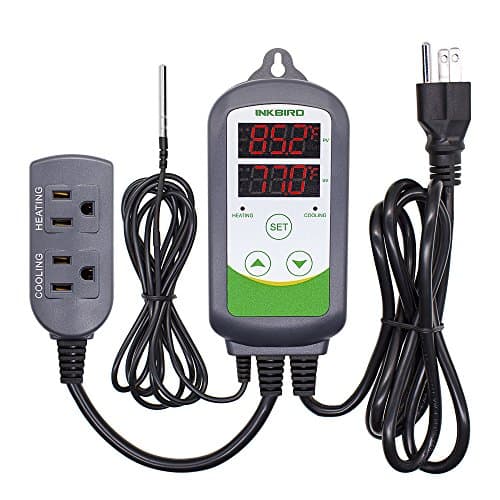 Inkbird ITC-308 Digital Temperature Controller This is the answer to the question for almost everyone. | The cheap fix for most people | $28.79 · View on Amazon
|
| 02 | 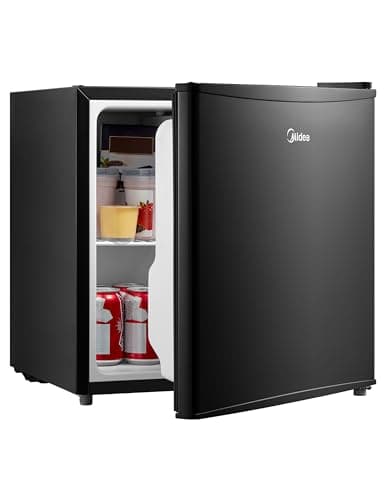 Midea 1.6 Cu. Ft. Compact Mini Fridge A small compressor fridge with an adjustable thermostat, from a brand that makes compressors rather than badges them. | The box the controller runs | |
| 03 | 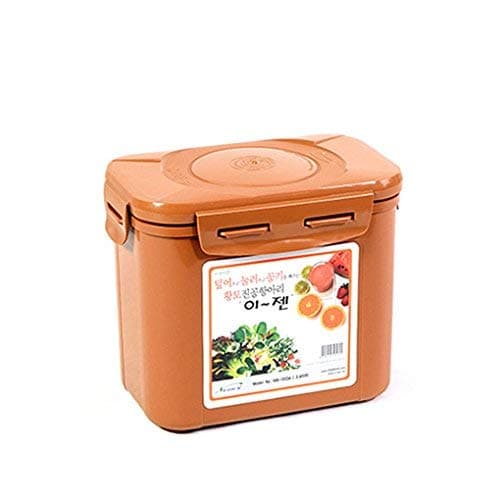 E-Jen Premium Kimchi Container with inner press lid The container that solves the actual kimchi problem: an adjustable inner lid you push down onto the surface, so the vegetables stay under their own brine as the batch shrinks. | Kimchi, done properly | |
| 04 | 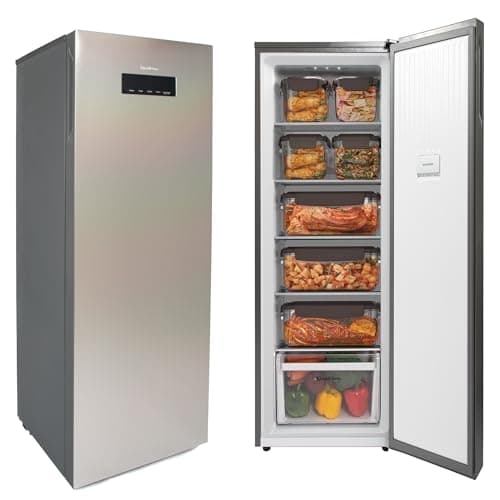 KimchiMama Slim Kimchi Refrigerator, 4.3 cu ft A purpose-built kimchi refrigerator at the small end: 4.3 cubic feet, kimchi, fermentation and freezer modes, and seven containers in the box. | A real kimchi fridge in a small kitchen | |
| 05 | 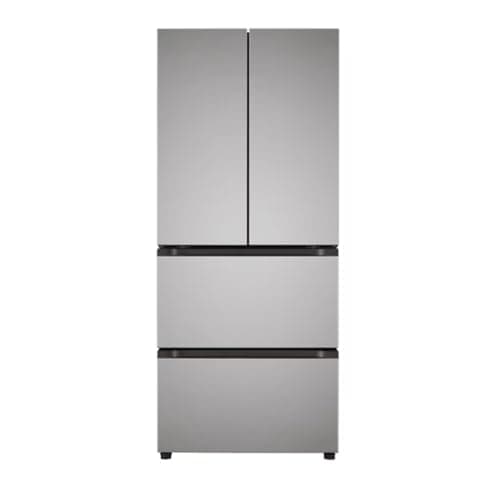 LG Kimchi/Specialty Food French Door Refrigerator, 14 cu ft The only product here whose maker publishes actual numbers. | Replacing a main fridge outright | $2,799.00 · View on Amazon
|
#ad · We earn a commission on Amazon purchases. Prices come from Amazon and change.
For a home fermenter, no. Buy an Inkbird ITC-308 temperature controller and a small mini fridge instead — together under two hundred dollars against eleven hundred for the cheapest real kimchi refrigerator, and the pair does the one thing you actually want, which the appliance does not. A dedicated kimchi fridge is worth it for one specific person: someone who eats kimchi continuously and wants a large standing stock of it held at a precise cold temperature for months.
That is the whole answer. The rest of this page is the arithmetic behind it, because the numbers are unusually clear-cut and almost nobody states them side by side.
The two numbers that decide this
Vegetables ferment warm. The National Center for Home Food Preservation puts sauerkraut at 70 to 75F, fully fermented in three to four weeks. Drop to 60 to 65F and it takes five to six weeks. Below 60F, their wording is blunt: kraut “may not ferment.” Above 75F it “may become soft.”
Kimchi refrigerators are cold. LG is the only manufacturer in this category that publishes real set points, and for its 14 cubic foot model they are 37F, 35F and 33F, with a -4F freezer.
Put those together and the conclusion is unavoidable: a kimchi fridge’s published temperature range is roughly 35 degrees colder than the temperature at which vegetables actually ferment. It is not a fermenting appliance. It is a cold-storage appliance, built to hold kimchi just above freezing so it stops changing — which is a real and useful job, and a completely different one from making the kimchi.
How we judged these
We have tested none of this equipment. What we did was decide the criteria first, from the task, and then rank against them:
- Does it hold 70 to 75F? That is the fermenting temperature. An appliance that cannot reach it cannot ferment, whatever the mode is called.
- Is an accuracy figure published? “Precise temperature control” with no tolerance printed anywhere is marketing, not a specification.
- Cost against the job it does. Specifically, cost against the cheapest other way of doing the same job.
- What it does the other fifty weeks of the year. A single-purpose appliance has to earn permanent floor space.
On the first criterion, exactly one product on this page wins, and it is the cheapest thing here by a factor of forty.
Why a controller and a cheap fridge wins
An Inkbird ITC-308 is a box with a probe and two switched outlets. You set a target temperature; it switches a cooling appliance on when the probe reads too warm, and a heating appliance on when the probe reads too cold. Inkbird publishes a -58 to 248F range and plus or minus 2F accuracy — and that accuracy figure is the only published one anywhere on this page.
Plug a mini fridge into the cooling outlet and you have a chamber that will hold 72F in an 85F summer kitchen. Plug a seedling mat into the heating outlet instead and the same controller holds 72F in a 58F winter kitchen — which, per the NCHFP numbers above, is the difference between kraut that ferments and kraut that does not. Then, when the batch is done, turn the set point down to 35F and the same mini fridge becomes the cold store a kimchi fridge is sold as.
One device, both problems, both directions, under thirty dollars. That is why it is the first pick and the eleven-hundred-dollar appliance is the fourth. The same controller logic drives the heated chambers on our bread proofing box page, for the same reason.
The four ways to control a ferment, compared
| Counter | Normal fridge | Controller + mini fridge | Kimchi fridge | |
|---|---|---|---|---|
| Can hold 70-75F to ferment | Only if the room is already there | No | Yes, both directions | Mode exists, temperature unpublished |
| Can hold 33-37F to store | No | Roughly, wherever it settles | Yes, to a set point | Yes, to published set points |
| Published accuracy figure | n/a | No | Plus or minus 2F | None found |
| Rough cost | Nothing | Nothing | Under $200 | $1,100 to $2,800 |
| Floor space | None | None | A cube | A full appliance |
| Does anything else | n/a | Yes, it is your fridge | Yes, it is a fridge again afterwards | Holds kimchi, well |
When a real kimchi fridge is the right buy
There is a genuine case for the appliance, and it is not the one the category is marketed on. It is volume and duration.
Kimchi does not stop when it is ready; it keeps souring, slowly, for as long as it is above freezing. A household that makes kimchi by the case in autumn and eats it through to spring needs a lot of cubic feet held very close to freezing without actually freezing — and needs it without surrendering the family refrigerator. That is a real appliance problem and a mini fridge does not solve it. If you recognize yourself in that paragraph, the KimchiMama slim is the compact way in and the LG is the one to buy if it is replacing your main fridge anyway and you want published numbers.
If you are making your first jar, or your fifth, you are not that household. Your actual problem is that your kitchen is 64F in February, and a twenty-nine dollar controller fixes it.
What wiring it up actually involves
Worth saying plainly, because “use a temperature controller” sounds more technical than it is. There is no wiring. The ITC-308 is a plug-through device:
- The controller plugs into a wall socket.
- The fridge plugs into the controller’s cooling outlet. A heat mat, if you are using one, plugs into the heatingoutlet.
- The probe goes inside the fridge, taped to the outside of the jar rather than dangling in the air — you want it reading the ferment, not the gap around it.
- You set a target. The controller switches the appliance on and off to hold it, and its compressor-delay feature stops the fridge short-cycling itself to death.
The fridge’s own thermostat gets turned to its coldest setting and then ignored; the controller is doing the thinking from then on. The only genuine annoyance is the probe wire running through the door seal, which does compromise the gasket slightly. Flat probe wires exist for this reason.
The running cost nobody mentions
A second appliance runs all year. LG is the only maker here that publishes a figure — 269 kWh per year for the 14 cubic foot model — and neither KimchiMama nor Midea publishes one at all, which is why we are not going to give you a dollar comparison we cannot support.
What is worth noting is the shape of the cost rather than its size: a mini fridge on a controller only runs when the probe says so, and during a ferment held at 72F in a 68F kitchen it will barely run at all. A dedicated kimchi refrigerator holding 33F runs continuously, forever, in exchange for keeping kimchi at its peak for months. That is a reasonable trade if you eat the kimchi. It is a poor one if the appliance is mostly empty.
How long kimchi actually keeps
The honest version: fermentation does not have an end point, it has a rate, and the rate follows temperature. This is the same mechanism the NCHFP figures describe from the other direction — warmer is faster, and below 60F a vegetable ferment slows to the point where it may not get going at all.
So “how long does kimchi keep” is really “how long until it is more sour than you like,” and the colder you hold it the longer that takes. That is the entire product proposition of a kimchi refrigerator, and it is a real one: the difference between a typical refrigerator around 40F and a kimchi fridge’s published 33F is the difference between weeks and months at a sourness you chose. Whether that is worth eleven hundred dollars depends entirely on how much kimchi is in your house at any given moment.
The cheaper problem most people actually have
Before any of this: a great deal of what people want a kimchi fridge for is solved by the container, not the appliance. Kimchi in a normal fridge has two failure modes — it leaks a smell into everything, and it oxidizes at the surface where the brine does not cover it. Both are container problems. An E-Jen with an inner press lid pushes the vegetables under their own brine and seals, which is the third pick here and costs less than a takeaway. Our kimchi container roundup covers that decision properly.
If you are buying the appliance anyway, check these
Having argued against it for most people, here is what we would actually check before handing over a thousand dollars, because the listings make it hard:
- A published temperature range. One manufacturer in this category publishes one. If the listing will not tell you what the machine holds, you are buying a claim.
- What the fermentation mode targets. Ask before buying. Nobody publishes it, and a salesperson who can find out has told you something the internet cannot.
- Containers in the box, and their size. Kimchi fridges are built around specific container dimensions; a unit whose shelves do not take the containers you already own is a worse buy than its capacity suggests.
- Whether it also freezes. The slim units here claim a freezer mode, which is what makes a second appliance earn its footprint in a kitchen that has no other spare cold space.
- Service and parts. This is a sealed refrigeration system. A brand with no service network means a dead unit is landfill.
What we would do
Buy the controller. You almost certainly already own something it can switch — a spare fridge in a garage, a cool box, a heat mat. If you do not, the Midea mini fridge is the cheap box to pair it with, and the two together come to roughly a seventh of the cheapest dedicated appliance while covering both the warm half of the job and the cold half.
Revisit the real appliance when you are making kimchi in volume on a schedule. That is a nice problem to have and a long way from a first batch.
Every pick, in order
The full write-ups
Pick 01 · The cheap fix for most people
Inkbird ITC-308 Digital Temperature Controller
Inkbird
This is the answer to the question for almost everyone. The controller plugs into the wall, a fridge or a heat mat plugs into it, and the probe goes in the ferment -- it then switches the appliance on and off to hold a temperature you choose. Inkbird publishes a -58 to 248F range and plus or minus 2F accuracy, which is the only published accuracy figure anywhere on this page. Paired with a mini fridge it does the one thing a kimchi refrigerator is sold for, at under thirty dollars.
Range
-58 to 248F (-50 to 120C), per Inkbird
Accuracy
Plus or minus 2F (1C), per Inkbird
Outlets
Two: heating and cooling, controlled independently
Load
10 A, 1200 W max across both outlets, per Inkbird
Warranty
1 year, per Inkbird
Specs compiled from: Manufacturer published specification sheet
What is good
- The only product on this page whose maker publishes a temperature accuracy figure
- Two outlets, so the same unit can run a cooler or a heater -- it covers a cold winter kitchen and a hot summer one
- Compressor delay protection, which is what stops short-cycling from killing a fridge
- Turns any appliance you already own into a temperature-controlled chamber
What is not
- It controls a box, it is not a box -- on its own it does nothing
- Plus or minus 2F is good but it is not laboratory control; the probe reads one spot, not the whole chamber
- A dangling probe wire through a fridge door gasket is ugly and slightly compromises the seal
- One year of warranty on a device whose failure mode is spoiling a fridge full of food
Pick 02 · The box the controller runs
Midea 1.6 Cu. Ft. Compact Mini Fridge
Midea
A small compressor fridge with an adjustable thermostat, from a brand that makes compressors rather than badges them. On its own it is a drinks fridge. Wired through a temperature controller it becomes a fermentation chamber that will hold a kimchi ferment at a chosen temperature and then drop to storage cold -- which is the entire function of a thousand-dollar kimchi refrigerator. Together they come to under two hundred dollars.
Capacity
1.6 cu ft
Thermostat
Adjustable, mechanical
Certification
Energy Star certified, per Midea
Door
Reversible
Specs compiled from: Manufacturer product listing and product name
What is good
- Holds roughly a 1 gallon crock or several quart jars -- enough for a real batch
- Reversible door, which matters in the tight corner a second fridge ends up in
- A mechanical thermostat is exactly what you want when an external controller is doing the thinking
- Energy Star certified, so running it continuously is not a hidden cost
What is not
- Midea publishes no temperature range for the thermostat, only that it adjusts
- A mini fridge cannot warm anything -- in a cold kitchen you still need a mat on the heating outlet
- Small compressor fridges are audible in a quiet room; low noise is a claim, not a decibel figure
- No freezer compartment worth the name, so it cannot do the second job a kimchi fridge does
#ad Disclosure · Price as of October 17, 2026
Pick 03 · Kimchi, done properly
E-Jen Premium Kimchi Container with inner press lid
E-Jen / Crazy Korean Cooking
The container that solves the actual kimchi problem: an adjustable inner lid you push down onto the surface, so the vegetables stay under their own brine as the batch shrinks. A valve on the inner lid lets fermentation gas out. Nothing you improvise does this as well.
Material
Polypropylene, mixed with 7-10% natural clay in the sandy brown finish
Sizes
Sold from 0.4 gal / 1.7 L up to 5.8 gal / 22 L
Inner lid
Adjustable press with a gas-release valve
Care
Dishwasher, refrigerator and freezer safe; rated -22F to 284F
Specs compiled from: Manufacturer product listing and product name
What is good
- The press lid keeps the surface submerged all the way down the batch, which is the whole job
- Rectangular, so it uses a fridge shelf far better than a round jar of the same volume
- Sized sensibly for real kimchi batches rather than for a quart of test cabbage
What is not
- Opaque -- you cannot watch the ferment through the wall the way you can in glass
- Plastic will eventually stain and hold chili aroma; that is the trade for the shape
- The smallest size is still bigger than a first, cautious batch needs
#ad Disclosure · Price as of October 17, 2026
Pick 04 · A real kimchi fridge in a small kitchen
KimchiMama Slim Kimchi Refrigerator, 4.3 cu ft
KimchiMama
A purpose-built kimchi refrigerator at the small end: 4.3 cubic feet, kimchi, fermentation and freezer modes, and seven containers in the box. If you eat kimchi continuously and want it held at storage cold for months rather than weeks, this is the category's entry point. We could not find a published temperature range or accuracy figure for it anywhere, including on the listings that sell it, which is a real gap at this price.
Capacity
4.3 cu ft
Modes
Kimchi, fermentation and freezer, per the listing
Included
Seven BPA-free containers, per the listing
Format
Freestanding, slim
Specs compiled from: Manufacturer product listing and product name
What is good
- Purpose-built: the modes, the containers and the shelf spacing are all for kimchi
- A one-touch fermentation cycle that moves to storage on its own, which is genuine convenience
- Slim enough to stand beside a normal fridge rather than replace it
- Containers in the box, which at this price should be table stakes but often is not
What is not
- No published temperature range and no published accuracy figure -- the one specification that would justify the price is missing
- Roughly eight times the cost of a mini fridge and a controller that does the controllable part
- A single-purpose appliance that takes permanent floor space
- Little service history: this is not a brand with decades of parts availability behind it
#ad Disclosure · Price as of October 17, 2026
Pick 05 · Replacing a main fridge outright
LG Kimchi/Specialty Food French Door Refrigerator, 14 cu ft
LG
The only product here whose maker publishes actual numbers. LG's spec sheet gives three fridge set points -- 37F, 35F and 33F -- a -4F freezer, a linear compressor and a stated 269 kWh per year, and names five modes including normal and Kimchi+ fermentation. Note what those published set points mean: 33 to 37F is colder than any fermentation temperature. This is a precision cold-storage appliance for finished kimchi, not a device for fermenting a first jar.
Capacity
14.3 cu ft, per LG
Fridge set points
37F / 35F / 33F (3.0 / 2.0 / 1.0C), per LG
Freezer
-4F (-20C), per LG
Modes
Fermentation, normal, Kimchi+, storage, produce and meat/fish
Energy
269 kWh/year, per LG
Specs compiled from: Manufacturer published specification sheet
What is good
- The only unit on this page with published temperature set points you can check before buying
- Linear compressor and per-compartment control, so three zones can hold three different jobs
- Full-size, so it earns its floor space as your actual refrigerator rather than a second box
- A brand with a real parts and service network, which matters on a sealed system
What is not
- LG publishes the fridge set points but NOT the target temperature of any fermentation mode -- the headline feature is the undocumented one
- The published 33 to 37F range is storage cold, not fermentation warm; it slows a ferment rather than driving one
- The most expensive item on this site by a wide margin
- Replacing a working refrigerator to get fermentation modes is a very expensive way to buy temperature control
How we picked
We have not tested any of this equipment. What we did instead: compiled the published specifications from each manufacturer’s own listing, checked them against the task a beginner is actually trying to do, read the care instructions, and named the thing we would skip. Where a pick is a product type rather than a brand, it is because the category is sold mostly unbranded and the type is the real decision.
Frequently asked
Questions
+Can I ferment kimchi in a kimchi fridge?
+What temperature should kimchi ferment at?
+Is a mini fridge and a controller really as good?
+Will kimchi make my normal fridge smell?
+Does a kimchi fridge stop kimchi from souring?
+Can I use the controller for sourdough too?
Sources
Where the facts on this page came from
Read next