Hub 02 · Sourdough Starter
How to keep a sourdough starter warm
Most starters that will not rise are not sick, they are cold. Try the free fixes first; buy a mat only if your kitchen is genuinely cold all winter.
We earn a commission if you buy through our links, at no extra cost to you. We have not tested this equipment. Here is what we did instead.
Quick picks
Tap a row for the full write-up · Prices open on Amazon
| # | Product | Best for | Price |
|---|---|---|---|
| 01 | 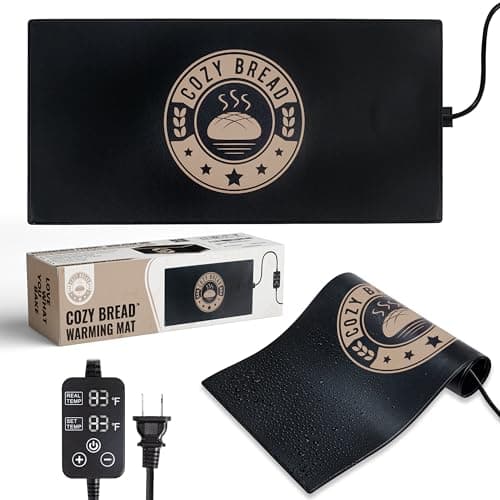 Cozy Bread Sourdough Proofing Mat with Thermostat A 10 x 21 inch heating mat with a thermostat, sold specifically for dough and starter rather than adapted from gardening. | A mat made for this job | |
| 02 | 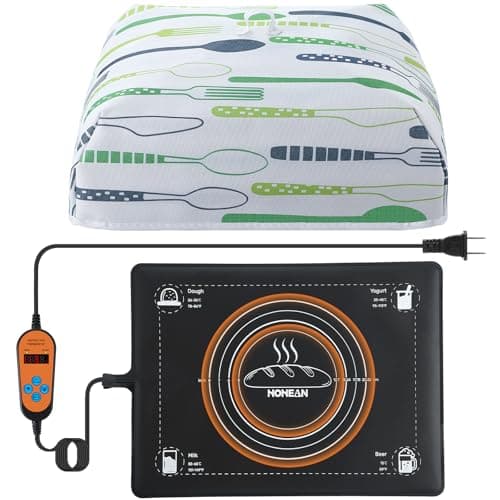 Hohean Sourdough Warming Mat with Heat Shield A mat that ships with a heat shield -- a cover that traps warm air around the jar instead of letting it escape into the kitchen. | Holding warmth around the jar | |
| 03 | 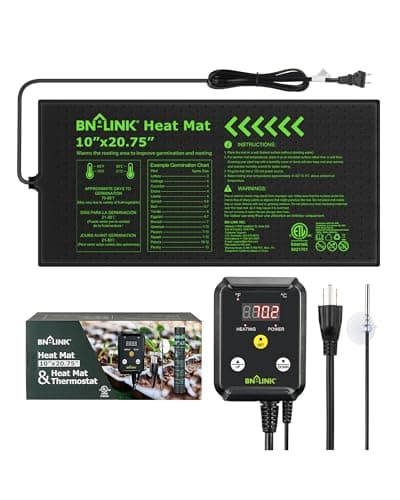 BN-LINK Seedling Heat Mat with Thermostat, 10 x 20.75 inch A gardening seedling mat with a thermostat controller. | Paying the honest price | $21.59 · View on Amazon
|
| 04 | 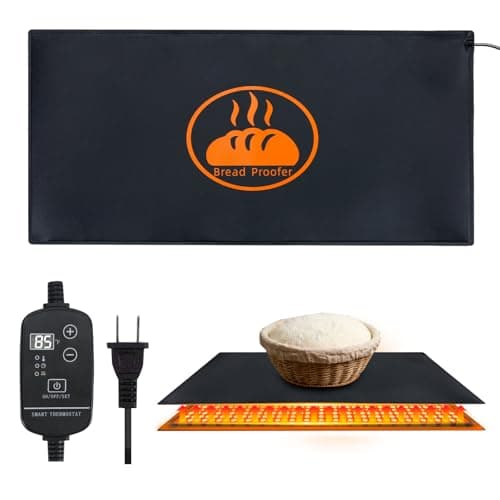 RusicEss Bread Proofing Warming Mat, 10 x 21 inch An adjustable mat with a stated range of 59 to 140F. | The widest temperature range |
#ad · We earn a commission on Amazon purchases. Prices come from Amazon and change.
A starter that has gone quiet is, far more often than not, a cold starter. Fermentation slows dramatically as temperature drops, so the same jar that doubled in five hours in August can take twelve in November and look, to someone watching it at the usual time, like it has died.
It has not. Before you buy anything, or throw anything away, read why your starter is not rising — temperature is the first thing on that list for a reason. This page is about what to do once you have established that cold is the problem.
What temperature are you aiming for?
Warmer ferments faster and more sourly; cooler ferments slower and, many people think, with better flavor. Somewhere in the mid-70s Fahrenheit is the range most bakers converge on for a starter on a daily feeding rhythm — warm enough to be predictable, not so warm that it peaks and collapses while you are at work.
The number that actually matters is not your kitchen’s air temperature. It is the temperature of the flour-and-water mixture in the jar, which lags the room and is affected by where the jar sits. A jar on a cold stone countertop is meaningfully cooler than the air three feet above it.
Try these first, because they are free
- Move the jar. The top of a fridge, a high shelf, or a cupboard above an oven are all several degrees warmer than a countertop. This fixes more cold-starter problems than anything you can buy.
- Use the oven with the light on. A closed oven with only the interior bulb running typically sits well above room temperature. Check it with a thermometer first — some ovens run far hotter than is useful, and a forgotten jar in a preheated oven is a sad way to lose a starter.
- Feed with warm water. Using water at around 80°F instead of cold tap water raises the mixture’s starting temperature immediately, and costs nothing at all.
- Insulate the jar. A tea towel wrapped around it, or the jar inside a small cooler, slows heat loss. This does not add heat, but it holds what the mixture generates.
- Change the ratio instead of the temperature. A cold kitchen and a bigger feed — a higher ratio of fresh flour to old starter — gets you to the same place on a schedule that suits the room. This is the answer that costs nothing and that most people never try.
When a mat is actually worth buying
Buy one if your kitchen is reliably below about 65°F through the winter, if you bake on a fixed schedule that a slow starter keeps derailing, or if you have tried the free fixes and the jar is still sluggish. Those are real problems and a mat solves them for the price of a couple of bags of good flour.
Do not buy one because your starter failed once, or because a video told you a starter needs 78°F. It does not. It needs a temperature you understand and a schedule that matches it.
Mats, proofers, and the gap between them
A heating mat is a flat pad that warms whatever sits on it. It is cheap, it is thin, and its weakness is obvious once you think about it: it heats the bottom of the jar, and the warmth escapes upward into the room. A tall jar is noticeably warmer at the base than at the top.
A folding proofer is an insulated box that holds a whole chamber at a set temperature. It solves the problem properly and costs several times as much. We have written separately about whether a proofing box is worth it and ranked the chambers themselves — the short answer is usually no, and that answer holds here too. But if you are buying a mat, the middle option is a mat that ships with a cover to trap the warmth, which gets you part of the way to a proofer for mat money.
| Option | How well it holds temperature | Rough cost |
|---|---|---|
| Move the jar somewhere warmer | Variable, but often enough | Free |
| Bare heating mat | Warms from below; the top of the jar lags | Low |
| Mat with a heat shield or cover | Traps air around the jar - much more even | Low to moderate |
| Folding proofer | Holds a whole chamber at a set point | Several times a mat |
Seedling mats, and why they are the same thing
A large share of the mats sold for sourdough are the same hardware sold to gardeners for starting seeds, with different packaging. That is not a scandal — the requirement is genuinely similar, which is gently warming a container a few degrees above room temperature — but it is worth knowing before you pay a premium for the word “sourdough”.
The one real advantage of a bread-branded mat is that its instructions and its thermostat presets are written for dough rather than soil. The one real advantage of a seedling mat is that it costs less and the category has a much longer track record. Both are legitimate reasons to choose.
Buy a thermostat, not just a mat
The most important thing on this page: a mat without a thermostat runs at whatever temperature it runs at, and some run far warmer than a starter wants. A thermostat with a probe lets you set a target and place the probe where the jar is, which means you are controlling the thing you care about rather than the thing the mat is doing.
Every pick here includes a controller for that reason. A bare mat with no control is the one configuration we would not buy.
The short version
Measure first. Move the jar and feed with warm water before you spend anything. If the kitchen is genuinely cold, buy a mat with a thermostat — and prefer one with a cover, because trapping the warm air around the jar matters more than how hot the pad gets.
Every pick, in order
The full write-ups
Pick 01 · A mat made for this job
Cozy Bread Sourdough Proofing Mat with Thermostat
Cozy Bread
A 10 x 21 inch heating mat with a thermostat, sold specifically for dough and starter rather than adapted from gardening. You pay a premium over a seedling mat for the labeling and the support, and the hardware underneath is much the same.
Size
10 x 21 inches
Control
Thermostat controlled
Thickness
0.125 inch
Sold for
Bread proofing and starter, per the manufacturer
Specs compiled from: Manufacturer product listing and product name
What is good
- Purpose-sold for dough, so the instructions talk about starters rather than seed trays
- Thermostat included rather than sold separately
- Large enough for a jar and a bowl at the same time
What is not
- Roughly twice the price of an identical-format seedling mat with a thermostat
- A mat warms from below only; the top of a tall jar stays cooler
- One more countertop appliance for a problem a cupboard often solves free
#ad Disclosure · Price as of October 17, 2026
Pick 02 · Holding warmth around the jar
Hohean Sourdough Warming Mat with Heat Shield
Hohean
A mat that ships with a heat shield -- a cover that traps warm air around the jar instead of letting it escape into the kitchen. That is the actual weakness of a bare mat, and this is the only option here that addresses it.
Size
16.54 x 12.6 inches
Control
Thermostat
Included
Heat shield cover
Use
Dough proofing and starter
Specs compiled from: Manufacturer product listing and product name
What is good
- The shield makes it an enclosure rather than a hot plate, which is what a starter needs
- More even temperature around the jar than a bare mat manages
- Still far cheaper than a folding proofer
What is not
- The shield adds bulk and another item to store
- Smaller mat area than the 21-inch options
- Unbranded, with no independent data on how accurate the thermostat is
#ad Disclosure · Price as of October 17, 2026
Pick 03 · Paying the honest price
BN-LINK Seedling Heat Mat with Thermostat, 10 x 20.75 inch
BN-LINK
A gardening seedling mat with a thermostat controller. It is the same class of hardware the sourdough-branded mats use, sold into a much bigger market at a lower price. The only thing you give up is packaging that mentions bread.
Size
10 x 20.75 inches
Control
Thermostat controller included
Sold for
Seed starting
Format
Mat and controller combo set
Specs compiled from: Manufacturer product listing and product name
What is good
- Cheaper than every bread-branded mat here for the same format
- Seedling mats are a mature, high-volume product category with long track records
- Separate probe thermostat lets you measure where the jar is, not where the mat is
What is not
- Instructions talk about seed trays; you work out the dough application yourself
- Designed to hold soil around 70-85F, which is warm but not precisely a starter target
- No heat shield, so warmth escapes upward from a tall jar
Pick 04 · The widest temperature range
RusicEss Bread Proofing Warming Mat, 10 x 21 inch
RusicEss
An adjustable mat with a stated range of 59 to 140F. The top of that range is far hotter than a starter ever wants, but a wide adjustable range means you can dial in the low-70s a starter actually likes rather than accepting whatever a fixed mat gives you.
Size
10 x 21 inches
Range
59F to 140F, adjustable, per the manufacturer
Control
Adjustable thermostat
Use
Dough and starter
Specs compiled from: Manufacturer product listing and product name
What is good
- Adjustable across a wide band, so you can set a true 75-78F rather than guess
- Cheapest thermostat-equipped mat here
- Same 10 x 21 footprint as the purpose-built mats
What is not
- 140F is hot enough to kill a starter -- the range is a risk as much as a feature
- Unbranded electronics with no track record on thermostat accuracy
- The stated temperature is the mat's, not the temperature inside your jar
#ad Disclosure · Price as of October 17, 2026
How we picked
We have not tested any of this equipment. What we did instead: compiled the published specifications from each manufacturer’s own listing, checked them against the task a beginner is actually trying to do, read the care instructions, and named the thing we would skip. Where a pick is a product type rather than a brand, it is because the category is sold mostly unbranded and the type is the real decision.
Frequently asked
Questions
+What temperature should a sourdough starter be kept at?
Somewhere in the mid-70s Fahrenheit suits a daily feeding rhythm. Cooler is not wrong — it just ferments more slowly, so you adjust the schedule or the feeding ratio rather than the thermostat.
+How do I keep my sourdough starter warm without buying anything?
Move the jar somewhere warmer (the top of a fridge, a high shelf, a closed oven with only the light on), feed with water around 80°F instead of cold tap water, and wrap the jar to slow heat loss. Between them these fix most cold-kitchen problems.
+Is my starter dead or just cold?
Almost certainly just cold, if it was healthy before. A cold starter is slow rather than dead — give it longer, or warm it, before judging. The starter-not-rising page walks through the other causes.
+Can I use a seedling heat mat for sourdough?
Yes, and many mats sold for sourdough are exactly that with different packaging. Use one with a thermostat controller so you can set a target temperature rather than accepting whatever the mat runs at.
+Do I need a proofing box for my starter?
No. A proofing box is a nicer solution and several times the price; for a starter jar a thermostat-controlled mat, ideally with a cover to trap warm air around the jar, does the job. See do you need a proofing box.
+Can a starter get too warm?
Yes. Well above the mid-80s a starter ferments very fast, peaks and collapses before you get to it, and the balance of the culture shifts. Heat is not a case of more being better, which is why a thermostat matters more than wattage.
Read next