Hub 05 · Kombucha, Kefir & Yogurt
Can you use a sous vide for yogurt?
Yogurt is one ingredient and one number: milk held at 110F for several hours. A circulator is the only appliance in this category that publishes how tightly it holds a number.
We earn a commission if you buy through our links, at no extra cost to you. We have not tested this equipment. Here is what we did instead.
Quick picks
Tap a row for the full write-up · Prices open on Amazon
| # | Product | Best for | Price |
|---|---|---|---|
| 01 | 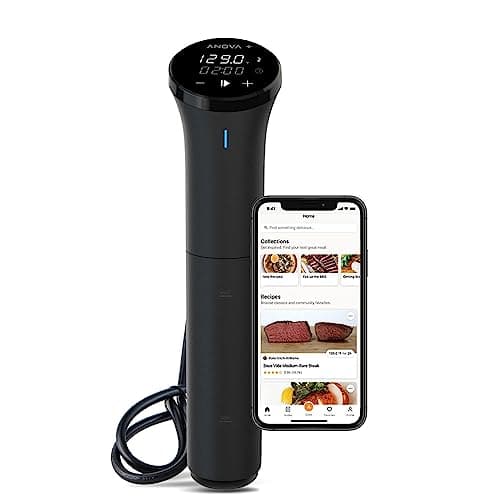 Anova Precision Cooker Nano 3.0 The one to buy for yogurt if you do not already own a circulator. | The cheapest precise incubator | $78.99 · View on Amazon
|
| 02 | 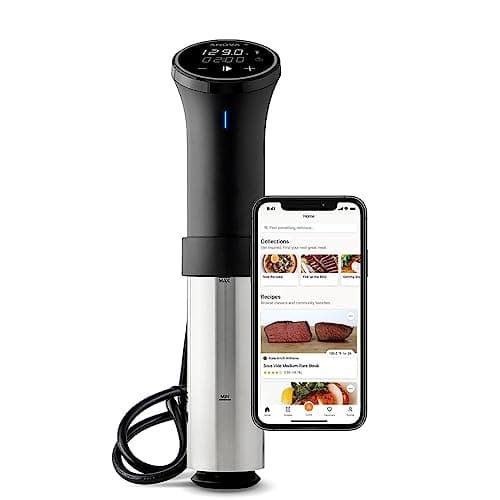 Anova Precision Cooker 3.0 (WiFi), 1100 W The full-size circulator, and worth the difference over the Nano only if you want to watch a long culture from another room or you are heating a big tub. | Long unattended batches | $169.79 · View on Amazon
|
| 03 | 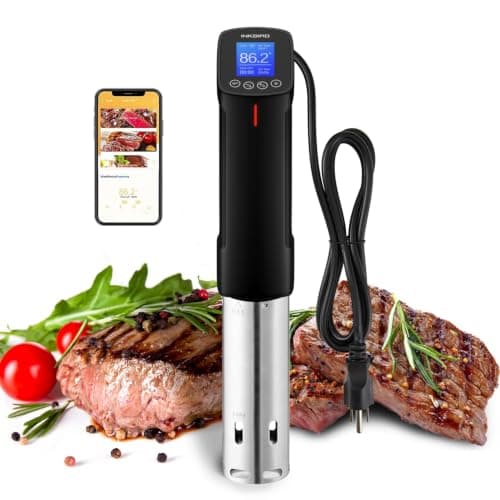 Inkbird ISV-100W Sous Vide Cooker The value circulator, from the same brand as the temperature controller we recommend on the kimchi fridge page. | Undercutting Anova | |
| 04 | 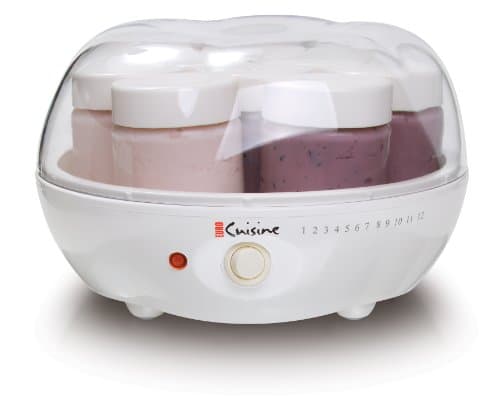 Euro Cuisine YM80 yogurt maker Seven small glass jars in a heated base with a timer dial. | Single-serving jars |
#ad · We earn a commission on Amazon purchases. Prices come from Amazon and change.
Yes — and if you already own a circulator you should not buy a yogurt maker at all. If you do not own one, the Anova Precision Cooker Nano 3.0 is the pick: it is the cheapest device on this page that publishes a temperature accuracy figure, and accuracy is the entire job. For someone who wants one switch and no thinking, a dedicated yogurt maker like the Euro Cuisine YM80 is still the easier object to live with.
Yogurt is the simplest ferment we cover. There is no airlock, no weight, no shaping and no SCOBY. There is milk, a spoonful of live culture, and a temperature held steady for hours. Which means the only question worth asking about the hardware is how well it holds a temperature — and on that question, the specialist appliance loses to the general-purpose one.
The number, and who publishes it
Yogurt incubates at about 110F (43C). America’s Test Kitchen holds a 110F bath for five to twenty-four hours; Anova’s own recipes use 109.4 to 110F for five to twelve. Shorter is milder and looser, longer is tangier and thicker. The milk is heated and then cooled to 110F before the culture goes in, because residual heat kills the bacteria you just paid for.
Now the part that decides this page:
- Anova publishes a range and a tolerance. For the Nano line: 32 to 197F, accurate to plus or minus 0.2F (0.1C), 8 liters a minute of flow, two-year warranty.
- Yogurt makers publish neither. Across our yogurt maker roundup and Greek yogurt page, no manufacturer states how tightly its appliance holds its setpoint. Most do not publish the setpoint itself.
So the circulator is not merely adequate at this. It is the only appliance in the category whose maker will tell you, in writing, what it does. That is the same argument we end up making about proofing boxes and kimchi fridges: in temperature-controlled appliances, published tolerance is rare and worth paying attention to when you find it.
Why circulating water is genuinely better
A yogurt maker is a warm box. Heat comes from an element at the base or the side, and the jars nearest it run warmer than the jars furthest from it. With seven small jars that is usually fine. It is also why some makers produce one jar that sets differently from the rest.
A water bath removes that problem physically. Water conducts heat far better than air, and a circulator moves it continuously, so every jar sits in the same temperature. There is no warm side to the batch and no hot spot against the element.
How we picked
Criteria first, as always:
- Is an accuracy figure published? The whole premise of using a circulator is precision. A circulator that does not publish its tolerance has given up its only advantage.
- Does it reach 110F comfortably? All of these do; it is the bottom of their range, not a stretch.
- What does it cost against a yogurt maker? And what does it do on the other days?
- What does the user have to supply? This is where the circulator loses, and we have not hidden it.
The honest case against doing this
A yogurt maker is one switch. A circulator is a set point, a deep enough vessel, a water level above the minimum line, jars that will not float, and lids left loose so gas escapes. None of it is difficult. All of it is more steps than pressing a button, and more steps is how a weekly habit becomes a monthly one.
Three specific frictions worth knowing before you buy:
- Jars float. Milk is less dense than water; a part-filled jar will tip. You need a rack, a weight, or clips.
- Your pot may be too shallow. A circulator has a minimum water line it must reach, and many saucepans do not reach it with jars taking up the floor space.
- Lids stay loose. Tightened lids trap fermentation gas. Loose lids in a water bath mean being careful about the water line.
The method, start to finish
Nothing here is specific to a circulator except the bath. The sequence is the same one any yogurt uses.
- Heat the milk to about 180F and hold it briefly. This denatures the whey proteins, which is what makes a thick set rather than a thin one. Skipping this step is the usual reason homemade yogurt is loose.
- Cool it to 110F. Not approximately — this is the step that kills cultures. Residual heat above about 115F damages the bacteria you are about to add.
- Stir in the culture: a few spoonfuls of live yogurt, or a powdered starter. Whisk it smooth into a little of the milk first, then into the rest.
- Into jars, lids on loose, and into the bath at 110F. Weight or clip them so they cannot tip.
- Five to twelve hours. America’s Test Kitchen goes as far as twenty-four for a markedly tangier result. Shorter is milder and looser.
- Chill for at least four hours, ideally overnight, before you judge it.
Three things that go wrong
It came out thin. In order of likelihood: you judged it warm; you skipped the 180F hold; the milk was ultra-pasteurized; or the culture was old. The bath temperature is the least likely cause when a circulator is holding it, which is rather the point of using one.
A jar tipped and took on water. Milk is less dense than water and a part-filled jar is buoyant. Weight them, clip them, or stand them in a rack.
It is too sour. Shorten the incubation. Sourness is a direct function of time at temperature, and five hours and twelve hours are genuinely different products from the same ingredients.
The milk matters more than the machine
Worth saying on a page about appliances: the biggest variable in homemade yogurt is not the device. Whole milk sets thicker than skim. Ultra-pasteurized milk behaves differently from pasteurized and is the usual culprit behind a batch that will not set at all, because the protein structure has already been altered by the heat treatment.
Before you blame hardware for thin yogurt, change the milk — the same advice we give for Greek yogurt and for milk kefir. A circulator holding 110F to a tenth of a degree cannot fix the wrong milk.
Side by side
| Sous vide circulator | Yogurt maker | Oven with the light on | |
|---|---|---|---|
| Published accuracy | Plus or minus 0.2F (Anova) | None published | None; it is not a control system |
| Even heat across jars | Yes, circulating water | Mostly; element side runs warmer | No |
| Setup steps | Five or so | One | Two |
| Jars float | Yes, must be weighted | No | No |
| Cost | Mid | Low | Nothing |
| Batch size | Whatever the vessel takes | Fixed by the jars supplied | Large |
| Other uses | Cooking, all week | None | n/a |
| Best for | Precision and an existing circulator | One switch, every week | Finding out if you like it |
What else a circulator does for a fermenter
This is the part that changes the value calculation, and it is why we rank the circulator first for anyone who does not already own a yogurt maker. A thermostat that holds any temperature between 32F and 197F to a published tolerance is useful well beyond yogurt:
- Reviving a dried culture. Any of the dehydrated cultures we cover want a steady warm spot for their first days, and a water bath is the steadiest one in a kitchen.
- Holding a kefir or a long culture through a cold kitchen, where a counter in February is the actual problem.
- Pasteurizing milk precisely before culturing, which is the 180F step above, in the same vessel.
- Cooking, which is what it was sold for.
A yogurt maker does one thing. That is a feature when the one thing is all you want, and it is the reason we have not simply declared the circulator the winner.
The cost question, honestly
A basic yogurt maker and an entry circulator are closer in price than people expect, and the circulator is not always the more expensive of the two. What separates them is not really money:
If you cook, the circulator is the better buy at almost any price difference, because it is an appliance you will use on days you are not making yogurt. A yogurt maker sits in a cupboard between batches.
If you do not cook, the yogurt maker is the better buy even when it costs the same, because the five setup steps are a tax you pay every single time and it compounds. The device that gets used is worth more than the device with the better specification.
If you own neither and are not sure you will keep doing this, buy nothing this week. The oven light will tell you whether yogurt is a habit for about zero dollars, and our first-batch troubleshooting page covers what to expect from a less controlled first attempt.
What we would do
If you own a circulator: make yogurt in it tonight and buy nothing. Set 110F, cool your scalded milk to 110F, stir in the culture, loose lids, weight the jars, five to twelve hours.
If you own neither: the Nano 3.0 if you also cook, because the price difference against a yogurt maker buys an appliance that works all week. The Euro Cuisine YM80 if you want one switch and nothing else — it is a perfectly good machine and simplicity is a real feature.
If you want thick Greek-style yogurt, note that neither device gets you there on its own: that is a straining step, and our Greek yogurt page covers the strainers.
Every pick, in order
The full write-ups
Pick 01 · The cheapest precise incubator
Anova Precision Cooker Nano 3.0
Anova Culinary
The one to buy for yogurt if you do not already own a circulator. Anova publishes what no yogurt maker publishes: a temperature range and an accuracy figure. For the Nano line that is 32 to 197F and plus or minus 0.2F, against a yogurt maker that simply states a fixed setpoint and no tolerance at all. Yogurt wants 110F held for five to twelve hours, and this holds a set point to a tenth of a degree Celsius.
Range
32 to 197F (0 to 92C), Nano line, per Anova
Accuracy
Plus or minus 0.2F (0.1C), per Anova
Power
800 W, per the listing
Flow
8 L/min, per Anova
Warranty
2 years, per Anova
Specs compiled from: Manufacturer published specification sheet
What is good
- A published accuracy figure -- the only product across our yogurt pages that has one
- Circulating water transfers heat evenly, so there is no warm side to the batch
- Two-year warranty, double the usual one year in small appliances
- It is a sous vide cooker the rest of the week, which no yogurt maker is
What is not
- You supply the vessel, the jars and something to stop them floating -- it is not a kit
- A yogurt maker is one switch; this is a set point, a container, a water level and jar weights
- Needs a deep pot or tub that reaches the minimum water line, which many pans do not
- The accuracy figure is Anova's own published specification; we have not measured it
Pick 02 · Long unattended batches
Anova Precision Cooker 3.0 (WiFi), 1100 W
Anova Culinary
The full-size circulator, and worth the difference over the Nano only if you want to watch a long culture from another room or you are heating a big tub. A yogurt incubation runs five to twelve hours, which is exactly the length of job where a phone notification earns its keep. The thermal performance for a yogurt jar is not meaningfully better than the Nano's -- 1100 watts heats the bath faster, it does not hold it more tightly.
Power
1100 W, per the listing
Connectivity
WiFi, app monitoring
Body
Stainless steel
Use here
Holding 110F for 5 to 12 hours
Specs compiled from: Manufacturer product listing and product name
What is good
- App monitoring over a long overnight culture, which is the real use case for yogurt
- 1100 W brings a large tub up to temperature much faster than the Nano
- Stainless body rather than plastic, for a device that lives in hot water
- Handles a bigger batch -- several quart jars rather than two
What is not
- Roughly twice the Nano for a job where the extra wattage changes nothing once the bath is at temperature
- WiFi is another thing to fail, and a dropped connection on an app-managed cook is a known annoyance
- Anova publishes the accuracy for the line, not a tighter figure for this model -- you are not buying more precision
- Bigger and heavier to store for an appliance used occasionally
Pick 03 · Undercutting Anova
Inkbird ISV-100W Sous Vide Cooker
Inkbird
The value circulator, from the same brand as the temperature controller we recommend on the kimchi fridge page. A thousand watts, WiFi and an app for well under the full-size Anova. The reason it is third rather than first is documentation: Inkbird's listing states the wattage and the app features but we could not find a published accuracy figure, and accuracy is the entire argument for using a circulator instead of a yogurt maker.
Power
1000 W, per the listing
Connectivity
WiFi with app, per the listing
Accuracy
Not published
Presets
14 preset recipes, per the listing
Specs compiled from: Manufacturer product listing and product name
What is good
- Full-size wattage and WiFi for less than the Nano in many weeks
- Inkbird has a real track record in temperature control specifically
- App control, so a 12-hour culture can be checked without opening anything
- Cheap enough to justify for a single use case
What is not
- No published temperature accuracy figure, which is the one specification that justifies this whole approach
- The presets are cooking recipes, not culturing programs -- none of them is yogurt
- Build and finish are a step below Anova's at the same wattage
- Shorter warranty than Anova's two years
#ad Disclosure · Price as of October 17, 2026
Pick 04 · Single-serving jars
Euro Cuisine YM80 yogurt maker
Euro Cuisine
Seven small glass jars in a heated base with a timer dial. It does one thing at one temperature. If you want portioned yogurt and no thinking, that constraint is the point rather than a limitation.
Capacity
Seven glass jars, per the product listing
Control
Timer dial; fixed incubation temperature
Material
Glass jars with plastic lids
Extras
Jars sold separately as replacements
Specs compiled from: Manufacturer product listing and product name
What is good
- Portioned jars mean no scooping from a communal tub
- Fixed temperature removes the main variable
- Cheap enough to be an impulse purchase
What is not
- No temperature control, so it makes one style of yogurt
- Seven small jars are a lot of washing up
- Cannot strain for Greek-style yogurt in the jars
#ad Disclosure · Price as of October 17, 2026
How we picked
We have not tested any of this equipment. What we did instead: compiled the published specifications from each manufacturer’s own listing, checked them against the task a beginner is actually trying to do, read the care instructions, and named the thing we would skip. Where a pick is a product type rather than a brand, it is because the category is sold mostly unbranded and the type is the real decision.
Frequently asked
Questions
+What temperature do you set a sous vide for yogurt?
+Is a sous vide better than a yogurt maker?
+Do the jars need lids in a water bath?
+How long does sous vide yogurt take?
+Can I use an Instant Pot instead?
+Can I culture kefir in a sous vide?
Sources
Where the facts on this page came from
Read next