Hub 03 · Sourdough Baking Gear
Best Pullman loaf pan
The lid is what makes it a Pullman, and the dough weight is what makes it work. Size the dough to the pan and it is a very easy pan to use.
We earn a commission if you buy through our links, at no extra cost to you. We have not tested this equipment. Here is what we did instead.
Quick picks
Tap a row for the full write-up · Prices open on Amazon
| # | Product | Best for | Price |
|---|---|---|---|
| 01 | 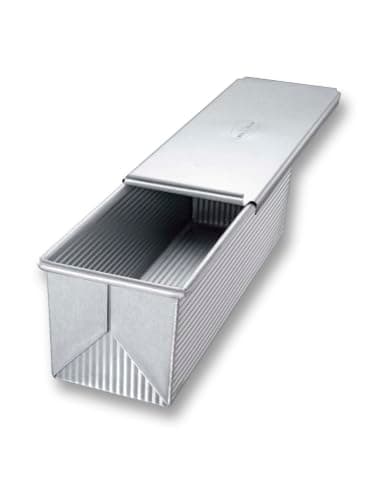 USA Pan Pullman Loaf Pan with Cover, 9 x 4 inch The same pan and the same coating in the medium size, which is the one most home bakers should buy. | A household that will not eat 13 inches of bread | |
| 02 | 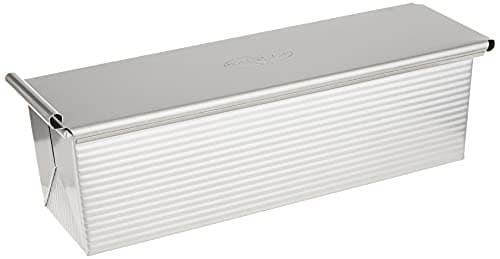 USA Pan Pullman Loaf Pan with Cover, 13 x 4 inch Heavy-gauge aluminized steel with a silicone-based nonstick coating, made in the USA, in the large size that a full sandwich loaf actually wants. | The full-size square loaf | $37.76 · View on Amazon
|
| 03 | EPPARN Uncoated Aluminized Steel Pullman Loaf Pan, 13 x 4 Bare aluminized steel with no nonstick coating, and the only listing here that publishes what actually matters: it holds up to 2.2 lb of dough. | Not wanting a coating at all | |
| 04 | 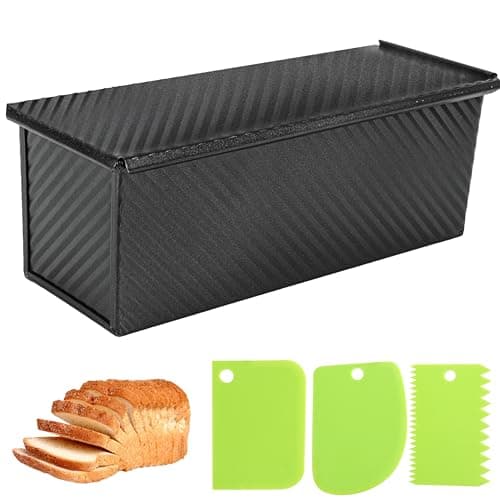 Spmarkt Pullman Loaf Pan with Lid, 13 inch A coated 13-inch pan with a sliding lid, a stated 2.2 lb dough capacity and vent holes in the base, at well under the price of the name-brand equivalent. | A lidded pan at a sensible price | |
| 05 | 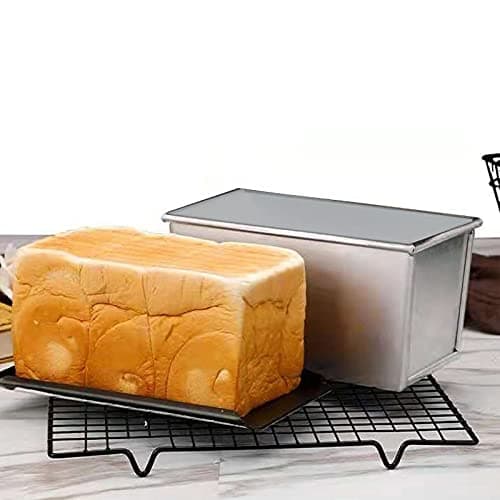 TA BEST Pullman Loaf Pan with Lid, 10 inch A ten-inch coated pan with a lid at the bottom of the price range, and the listing is unusually honest about what the lid is for: with it you get a square loaf, without it you get a domed one. | Spending the least | $16.99 · View on Amazon
|
| 06 | 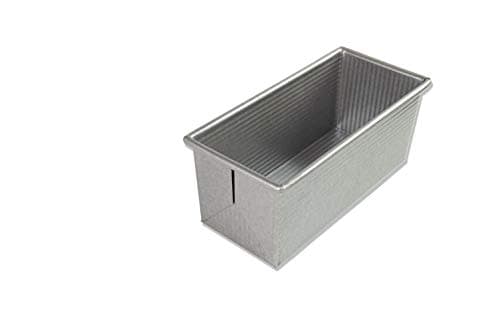 USA Pan Pullman Loaf Pan, 9 x 4 inch, No Cover The same 9 x 4 x 4 pan as the covered version, sold without the lid for a third less. | Deciding you do not want the lid |
#ad · We earn a commission on Amazon purchases. Prices come from Amazon and change.
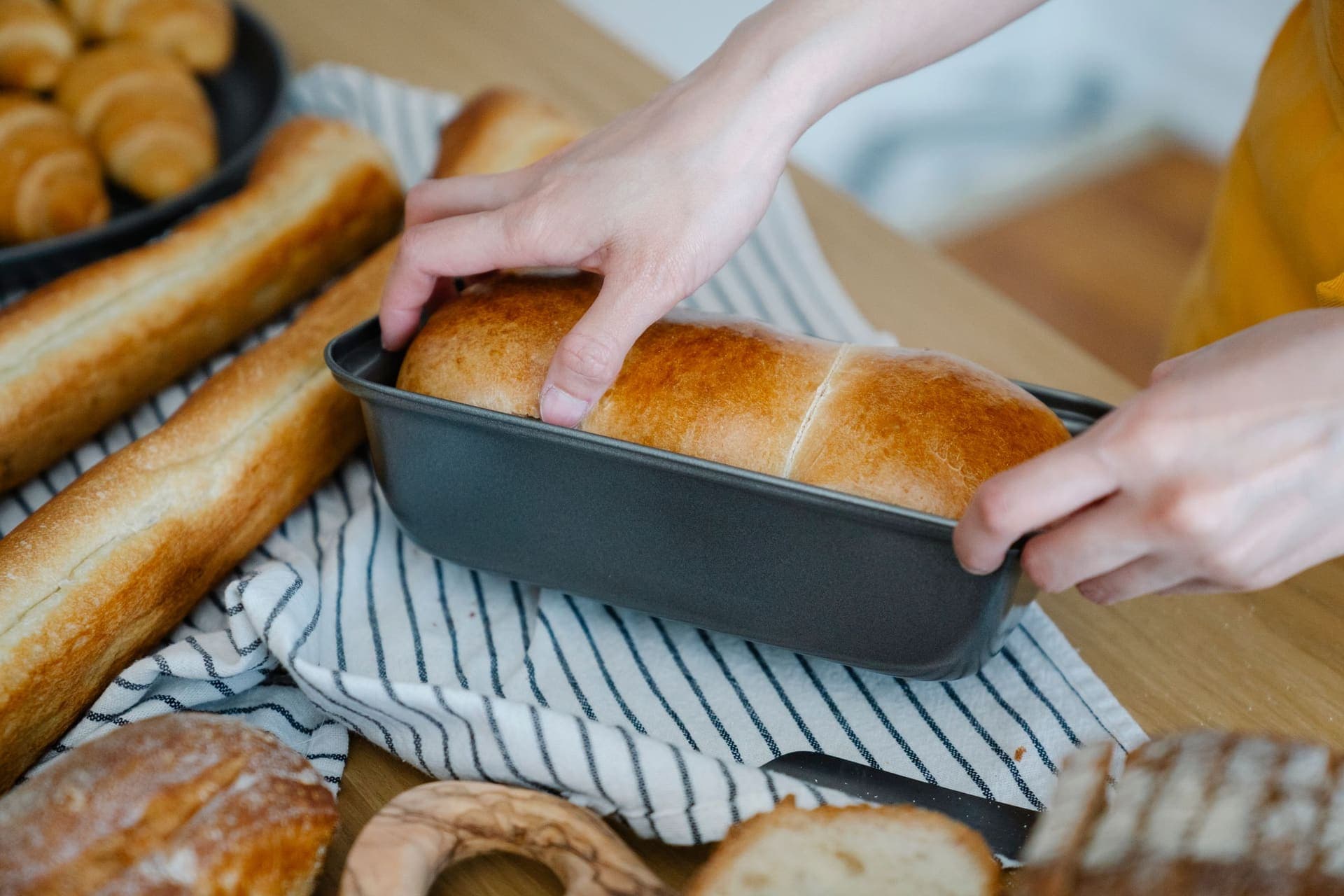
A Pullman pan is a straight-sided loaf tin with a lid that slides across the top. Bake with the lid on and the dough cannot rise into a dome, so you get a rectangular loaf with square corners, a tight even crumb and a thin soft crust — pain de mie, shokupan, the sandwich bread shape.
It is worth saying plainly that this is close to the opposite of what most sourdough baking chases. An open, irregular crumb and a thick blistered crust are what a Dutch oven is for. A Pullman pan is for the loaf you actually want to put in a toaster or build a sandwich from, and sourdough makes an excellent version of that bread. They are two different goals and one does not replace the other.
Dough weight is the whole game
Almost every Pullman problem is a volume problem. The pan is a closed box: the dough has nowhere to go but into the corners and up against the lid, so the amount you put in decides whether it works.
- Too little dough and the loaf never reaches the lid. You get a short loaf with a flat top and an air gap, and the slices are stubby.
- Too much dough and the rising loaf pushes against a lid that will not move. It forces dough out through the lid slot and the pan seams, the crumb compresses, and the lid can be genuinely hard to slide off afterwards.
The frustrating part is that most manufacturers do not publish a dough capacity. Of the pans here, the two that do — both 13-inch models — each state 2.2 lb (about 1 kg) of dough. That is a useful anchor for a 13 x 4 x 4 pan. For other sizes you are scaling by volume, and the first bake is a calibration bake.
How we judged these
- Whether the lid is included. It sounds obvious. It is not: the same pan is often sold in lidded and unlidded versions at similar-looking prices, and the lid is most of the difference.
- Published dough capacity. The single most useful number and the one most makers omit. A pan that publishes it saves you a wasted bake.
- Size against your household. Thirteen inches is a large quantity of bread. Nine inches is the size most homes should buy, and ten sits between.
- Coating, or the honest absence of one. Silicone-based coatings, unspecified nonstick, or bare aluminized steel that seasons with use. All three are defensible; an unnamed coating is the least informative.
- Gauge and construction. A lidded pan is a box under pressure from the inside. Thin, light pans warp first, and a warped pan is one whose lid no longer slides.
Lid on, lid off
One pan gives you two different breads, and this is the most underrated thing about the format. With the lid on you get the square, fine, even crumb. With the lid off it is simply a tall loaf tin and you get a domed loaf with an open top that you can score.
| Lid on | Lid off | |
|---|---|---|
| Shape | Square block, sharp corners | Domed top, rounded shoulders |
| Crumb | Tight and even | More open toward the top |
| Crust | Thin and soft all round | Browner and firmer on top |
| Slices | Uniform rectangles, stack flat | Vary in size down the loaf |
| Dough margin for error | Small - the lid is a hard ceiling | Generous - it can rise freely |
If you are new to the pan, bake the first loaf with the lid off. You will learn how far your dough rises in that specific pan without any risk of it fighting a lid, and then you will know what to scale to.
Sourdough in a Pullman pan
Two things differ from a standard artisan bake. The first is hydration: a very slack dough will not hold a square corner and tends to produce a dense band at the base. A stiffer dough — the sort of hydration you would use for a sandwich loaf rather than a rustic boule — suits the format much better.
The second is the final proof. In an open bake you can judge by feel and put it in when it looks right. In a Pullman you are proofing to a line, because the dough has to reach close to the lid before it goes in the oven — too far under and it never makes contact, too far over and it has nowhere to expand. Proofing to a visible level in a straight-sided pan is actually easier than judging a free-form loaf, which is one reason this pan suits people who find shaping frustrating.
Everything else carries over. The dough is mixed the same way, the starter is the same starter, and the loaf keeps the same way — see how to store sourdough bread.
Coated, or bare steel
Most Pullman pans are coated. The better listings name the coating — a silicone-based nonstick, stated as free of PTFE and PFOA — and the weaker ones just say "nonstick", which tells you nothing about what it is.
Bare aluminized steel is the other option and it is genuinely good: there is no coating to scratch through or wear out, it darkens and releases better with use, and it is usually cheaper. The trade is that you grease it properly every single time and you dry it rather than leaving it wet. If you already look after cast iron, this will not bother you at all.
Why the square loaf and a slicing guide go together
A Pullman loaf is the easiest bread in the world to slice evenly, because it is a rectangular block with flat sides that sits still on a board. It is also the shape that most bread slicing guides are actually designed around — the opposite of the round boule problem on that page.
If uniform slices for sandwiches or the freezer are why you are looking at a Pullman pan in the first place, that combination is the one that delivers it.
Lids warp, and that is the failure mode
The part that fails on these pans is not the coating, it is the fit. A thin pan that has been through a few hundred hot bakes can distort just enough that the lid stops sliding cleanly, and a lid that binds is a lid you will stop using.
That is the practical argument for a heavier gauge pan, and it is most of what you are buying when you pay the premium. It is also why a pan that arrives slightly stiff is worth returning rather than persevering with — it will not improve.
The short version
Buy the 9-inch lidded pan unless you know you want 13 inches of bread. Prefer a pan that publishes a dough capacity, because it saves you a bake. Take the uncoated steel if you are happy to grease and dry it, and the named silicone coating if you are not. Bake the first loaf with the lid off to learn your number, then put the lid on and stop thinking about it.
Every pick, in order
The full write-ups
Pick 01 · A household that will not eat 13 inches of bread
USA Pan Pullman Loaf Pan with Cover, 9 x 4 inch
USA Pan
The same pan and the same coating in the medium size, which is the one most home bakers should buy. A 13-inch Pullman loaf is a serious quantity of bread, and a loaf that goes stale before it is eaten is a worse outcome than a smaller one.
Baking surface
9 x 4 x 4 inches
Material
Heavy-gauge aluminized steel
Coating
Americoat silicone coating; PTFE, PFOA and BPA free, per the manufacturer
Lid
Included
Specs compiled from: Manufacturer product listing and product name
What is good
- The size that suits a household rather than a bakery
- Same construction and coating as the 13-inch for a third less money
- Four inches deep, so it takes a genuinely square loaf rather than a shallow one
What is not
- Still costs more than most complete budget pans with lids
- No published dough capacity, so the first loaf is a calibration bake
- Nine inches produces a short sandwich slice; a long loaf needs the 13
#ad Disclosure · Price as of October 17, 2026
Pick 02 · The full-size square loaf
USA Pan Pullman Loaf Pan with Cover, 13 x 4 inch
USA Pan
Heavy-gauge aluminized steel with a silicone-based nonstick coating, made in the USA, in the large size that a full sandwich loaf actually wants. It is the most expensive pan here and the one whose coating and corners are least likely to be the reason a loaf sticks.
Baking surface
13 x 4 x 4 inches; 14.25 x 4.5 x 4 with the lid on
Material
Commercial-grade aluminized steel
Coating
Americoat silicone coating; PTFE, PFOA and BPA free, per the manufacturer
Care
Hot water, mild soap and a soft brush, per the manufacturer
Specs compiled from: Manufacturer product listing and product name
What is good
- Heavy gauge, so it does not flex or warp the way thin pans do over repeated bakes
- A silicone-based coating rather than PTFE, which is the coating question most people are asking
- Long-established US manufacturer with parts and replacements actually available
What is not
- Roughly twice the price of a competent budget pan that bakes the same loaf
- The listing does not publish a dough weight capacity, so you size by volume rather than by a stated figure
- Thirteen inches is a lot of bread if you are baking for one or two people
Pick 03 · Not wanting a coating at all
EPPARN Uncoated Aluminized Steel Pullman Loaf Pan, 13 x 4
EPPARN
Bare aluminized steel with no nonstick coating, and the only listing here that publishes what actually matters: it holds up to 2.2 lb of dough. An uncoated pan has nothing to scratch off or wear through, and it darkens and releases better the more you use it.
Dough capacity
Up to 2.2 lb (about 1 kg), per the manufacturer
Inner dimensions
12 x 4.72 x 4.35 inches
Outer dimensions
12.6 x 4.8 x 4.5 inches
Material
Uncoated aluminized steel, one-piece construction
Specs compiled from: Manufacturer product listing and product name
What is good
- Publishes a dough weight, which is the number that decides whether your loaf fits
- No coating means nothing to scratch, blister or wear out over years of use
- Cheapest pan here despite being the one with the most useful published spec
What is not
- Uncoated means you grease it properly every time, and early loaves will stick more
- Bare steel needs drying to avoid rust; it cannot sit wet in a rack
- Unfamiliar brand with no track record on how the seams hold up
Pick 04 · A lidded pan at a sensible price
Spmarkt Pullman Loaf Pan with Lid, 13 inch
Spmarkt
A coated 13-inch pan with a sliding lid, a stated 2.2 lb dough capacity and vent holes in the base, at well under the price of the name-brand equivalent. It also ships with a dough scraper, which is filler but not unwelcome.
Dough capacity
2.2 lb, per the manufacturer
Size
13 x 5 x 4.5 inches
Lid
Sliding Pullman lid
Base
Vent holes to let moisture escape, per the listing
Specs compiled from: Manufacturer product listing and product name
What is good
- States a dough capacity, unlike the premium pans
- Sliding lid and a coated interior at roughly half the name-brand price
- Vent holes are a sensible idea in a fully enclosed lidded bake
What is not
- The listing does not name the coating type, which is the thing people want to know
- Five inches wide makes a slightly squatter slice than a 4-inch pan
- Bundled dough scraper is a giveaway item, not a reason to choose it
#ad Disclosure · Price as of October 17, 2026
Pick 05 · Spending the least
TA BEST Pullman Loaf Pan with Lid, 10 inch
TA BEST
A ten-inch coated pan with a lid at the bottom of the price range, and the listing is unusually honest about what the lid is for: with it you get a square loaf, without it you get a domed one. That is the whole product explained in one line.
Size
10 x 3.93 x 4.4 inches
Weight
About 600 g
Material
Aluminized steel, thickened carbon steel construction per the listing
Coating
Food-grade silicone coating inside and out; non-PTFE, per the manufacturer
Specs compiled from: Manufacturer product listing and product name
What is good
- Cheapest lidded pan here, and it does state a non-PTFE silicone coating
- Ten inches sits between the 9 and 13 sizes, which suits a lot of households
- Coated inside and out, so the exterior cleans up as easily as the interior
What is not
- No published dough capacity, and at a non-standard size you cannot borrow one
- Listing describes both aluminized steel and carbon steel, which do not mean the same thing
- Thin, light pans are the ones that warp first in a hot oven
Pick 06 · Deciding you do not want the lid
USA Pan Pullman Loaf Pan, 9 x 4 inch, No Cover
USA Pan
The same 9 x 4 x 4 pan as the covered version, sold without the lid for a third less. It is here to make a point: the lid is most of what you pay for, and if you want a domed loaf with an open top you are buying a part you will never fit.
Baking surface
9 x 4 x 4 inches
Lid
Not included
Material
Aluminized steel with a ridged surface texture
Coating
Americoat, per the manufacturer
Specs compiled from: Manufacturer product listing and product name
What is good
- Substantially cheaper than the same pan with a lid
- Four inches deep gives a taller loaf than a standard loaf tin
- Ridged surface is intended to help air move around the pan
What is not
- No lid, so no square crumb -- this is a deep loaf tin, not a true Pullman bake
- Lids are not reliably sold separately, so changing your mind means buying a second pan
- Same price as budget pans that do include a lid
#ad Disclosure · Price as of October 17, 2026
How we picked
We have not tested any of this equipment. What we did instead: compiled the published specifications from each manufacturer’s own listing, checked them against the task a beginner is actually trying to do, read the care instructions, and named the thing we would skip. Where a pick is a product type rather than a brand, it is because the category is sold mostly unbranded and the type is the real decision.
Frequently asked
Questions
+What is a Pullman loaf pan used for?
Baking a square sandwich loaf. The sliding lid stops the dough doming, so the loaf comes out rectangular with a tight even crumb and a thin soft crust — pain de mie, shokupan or plain sandwich bread. Without the lid it works as a deep loaf tin.
+How much dough goes in a Pullman pan?
It depends on the pan, and most makers do not publish a figure. The two 13-inch pans on this page that do each state 2.2 lb (about 1 kg). Too little and the loaf never reaches the lid; too much and it forces its way out of the lid slot.
+What size Pullman pan should I buy?
Nine inches suits most households. Thirteen inches makes a large loaf that is genuinely a lot of bread for two people, and ten sits between the two. Size it to how fast you eat bread rather than to the photograph.
+Can you bake sourdough in a Pullman pan?
Yes, and it makes very good sandwich bread. Use a stiffer dough than you would for a rustic boule — a very slack dough will not hold the square corners — and proof to a visible level in the pan rather than by feel.
+Do you have to use the lid on a Pullman pan?
No. Lid on gives the square loaf with a fine even crumb; lid off gives a domed loaf with a browner top that you can score. If the pan is new to you, bake the first loaf with the lid off to learn how far your dough rises in it.
+Are uncoated Pullman pans better than nonstick?
Neither is better, they fail differently. A coating can scratch or wear through; bare aluminized steel cannot, but it has to be greased properly every time and dried rather than left wet. Uncoated pans also tend to release better as they darken with use.
Read next