Hub 03 · Sourdough Baking Gear
Is Le Creuset worth it?
For baking bread, the honest answer is no. The premium buys things that matter on a stovetop and almost nothing that matters under a lid.
We earn a commission if you buy through our links, at no extra cost to you. We have not tested this equipment. Here is what we did instead.
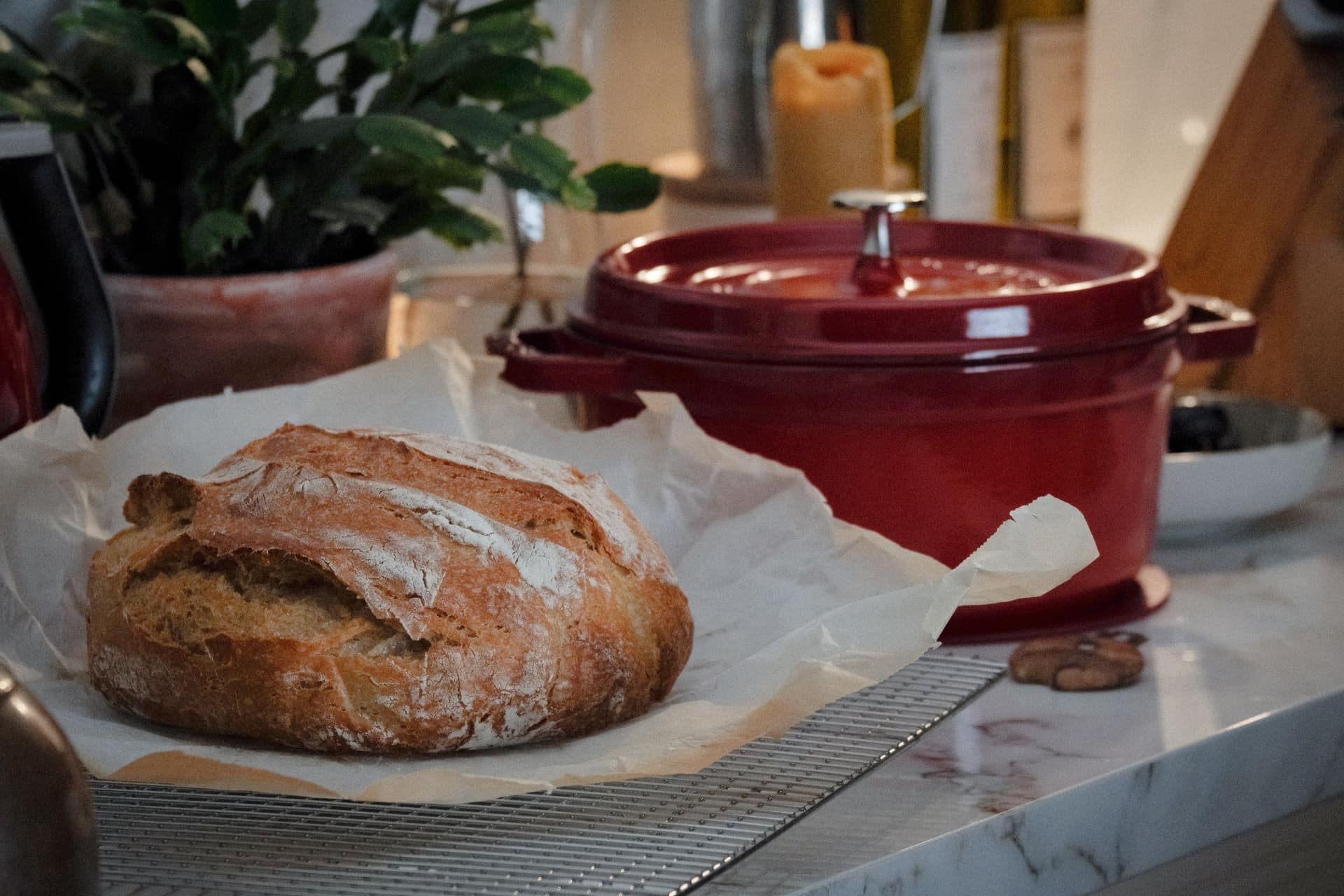
A Le Creuset costs roughly seven times an Amazon Basics Dutch oven and about four times a Lodge. The question people actually ask is not whether it is a good pot — it is whether the difference shows up in the bread.
It does not. A covered cast iron pot bakes a loaf by holding heat and trapping the loaf’s own steam, and every pot on this page does both. We have said this across the site and we are not going to soften it here to sell a more expensive pot.
Buy the cheap one if
Bread is the reason you are buying a pot
It preheats to the same temperature, traps the same steam and produces the same crust. Spend the difference on flour, a scale and a year of baking, and you will be further ahead than the person with the nicer pot.
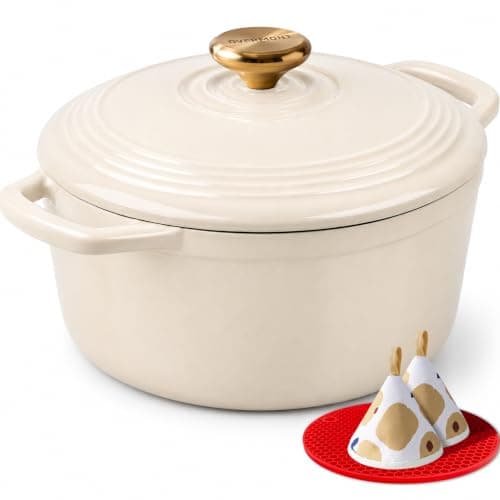
Overmont 5.5-Quart Enameled Cast Iron Dutch Oven
Buy the premium one if
You cook in it far more than you bake
Enamel quality, a cream interior you can read, and a company that will still be selling you a replacement knob in fifteen years. All of that is worth money on a stovetop. Almost none of it is worth money under a lid.
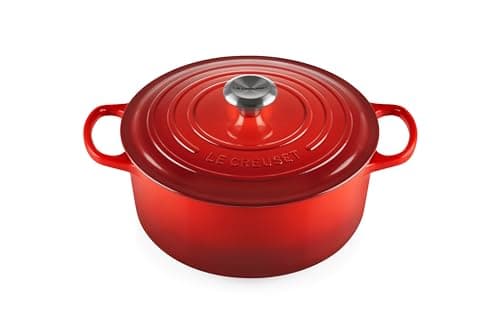
Le Creuset Signature Round Dutch Oven
What the extra money actually buys
- Enamel that is less likely to chip. This is the most defensible reason. Budget enamel is the part that fails first, usually at the rim, and a chipped pot is a pot you stop trusting.
- A cream interior you can read. Genuinely useful for browning and braising. Useless for bread, because the lid is on.
- Fit and finish. Smoother casting, a lid that sits with less rattle, better-balanced handles. All real, all noticeable, none of it structural.
- Parts and longevity. Replacement knobs and a company likely to honor a warranty in a decade. That matters if you intend to own one pot forever.
- How it looks. Worth saying out loud, because it is a real reason people buy these and there is nothing wrong with it.
Read that list again and notice how much of it is about cooking rather than baking. That is the whole answer.
What it does not buy
It does not buy more oven spring, a better crust, a more open crumb or a darker bake. Those come from the dough, the preheat and the steam, and a cheap pot delivers the last two identically. If your loaves are pale or flat, the pot is not why, and our page on whether you need a Dutch oven at all walks through what actually is.
| What you are buying | Matters for cooking? | Matters for bread? |
|---|---|---|
| Chip-resistant enamel | Yes | Only over many years |
| Cream interior | Yes - you can read color | No - the lid is on |
| Fit and finish | Somewhat | No |
| Replacement parts | Yes, long term | Yes, long term |
| Heat retention | Similar across cast iron | Similar across cast iron |
| Appearance | If you care | If you care |
The case for the middle
There is a sensible position between a thirty-dollar pot and a three-hundred-dollar one, and it is a Lodge. It is enameled cast iron from a company that has made cast iron for over a century, at roughly a quarter of the premium price, and its enamel has a better reputation than the cheapest tier.
If the thing genuinely worrying you is enamel chipping — which is the one legitimate durability concern at the bottom of the market — the Lodge answers it without spending Le Creuset money. That is the pot we would point most people at.
When the premium is genuinely the right call
- You cook in it several times a week. Braises, stews, stock, frying. The pot earns its price in the kitchen, and bread is a bonus.
- You want one pot for life and will actually keep it. Parts availability and warranty behavior over fifteen years is worth something real.
- It is a gift, or it pleases you. These are good objects. Liking your equipment is not irrational and we are not going to pretend it is.
What is not on that list: getting better bread. If someone told you a premium pot would improve your loaves, they were wrong, and the things beginners waste money on page exists largely for claims like that.
Our answer
For sourdough alone: no, and it is not a close call. Buy a budget enameled pot or a Lodge, and put the difference into flour. For a pot that cooks dinner several nights a week and bakes on the weekend: yes, it is defensible, and if you have decided on premium then Le Creuset versus Staub is the next question.
Frequently asked
Questions
+Is Le Creuset worth it for sourdough bread?
No. A covered cast iron pot bakes bread by holding heat and trapping the loaf’s own steam, and a forty-dollar enameled pot does both identically. The premium buys cooking advantages and longevity, not better bread.
+What is the difference between a Lodge and a Le Creuset for bread?
For the bread itself, nothing you can taste. The differences are enamel quality and chip resistance, a cream interior you can read when cooking, fit and finish, and long-term parts availability — all of which matter more on a stovetop than under a lid.
+Will a cheap Dutch oven crack at 500F?
Cast iron itself handles the heat. The realistic failure at the bottom of the market is enamel chipping over time, usually at the rim, and the knob — check its stated temperature rating, because it is often lower than the pot’s.
+What should I buy instead of a Le Creuset?
A Lodge enameled Dutch oven if you want the middle ground with better enamel than the cheapest tier, or a budget enameled pot if bread is the only reason you are buying. Both bake the same loaf.
+Does an expensive Dutch oven give better oven spring?
No. Oven spring comes from the dough, the fermentation, the preheat and the trapped steam. Pot price is not one of the variables, and if spring is disappointing the cause is upstream of the pot.
Read next